The Icons: Essential Red Rock Hikes in Sedona Arizona
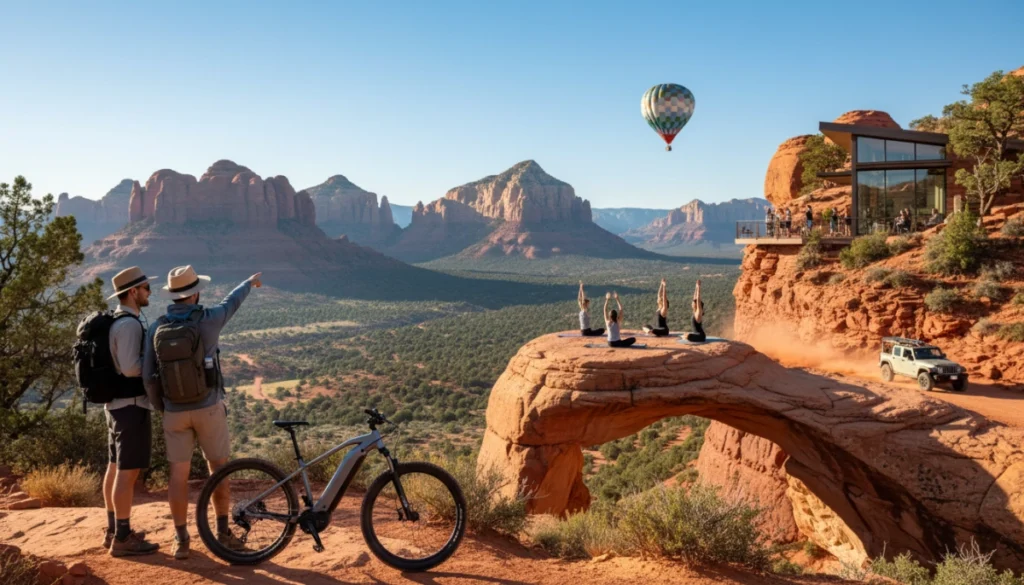
When people ask me for things to do in Sedona Arizona, I always start with the classic red rock hikes. These trails give you the big views, the famous photos, and a feel for the desert in just a few hours, whether you’re a casual walker or a seasoned hiker.
Before you lace up, know this: most popular Sedona hiking trails use fee parking. In many lots you’ll need a Red Rock Pass (day, week, or annual) or an America the Beautiful pass. Signs at the trailheads are clear, but:
- Buy a Red Rock Pass at kiosks or visitor centers and always display it on your dashboard
- Lots at popular trails fill by 7–8 a.m. in peak seasons
- Never park on the highway shoulder where it’s signed “No Parking” – tickets are common
Devil’s Bridge Sedona Hike
Devil’s Bridge is one of those “you’ve definitely seen it on Instagram” spots and a must-do if you want that iconic Sedona photography shot. The payoff is a natural sandstone arch with sweeping views of the red rock valley.
Basic breakdown:
- Distance & difficulty:
- From the paved lot on Dry Creek Road: ~4–4.5 miles round-trip, easy-moderate but exposed to sun
- From the actual Devil’s Bridge trailhead (4×4 road access): ~2 miles round-trip, shorter but still a steady climb at the end
- Trail options:
- Park at Dry Creek Vista or the Mescal trailhead and walk the dirt road to the main trail
- If you have a legit high-clearance 4×4 and are comfortable off-road, you can drive the rough road to the closer lot
How hard is it really?
- Most of the hike is a gradual incline on dirt road and trail
- The final climb includes steep rock steps; no ropes, but it’s a workout
- Good for fit beginners and intermediate hikers; just plan water and sun protection
Timing is everything here:
- Best time: sunrise or very early morning if you want fewer people and cooler temps
- Midday to early afternoon in high season can mean 30–90 minute waits for that bridge photo
- If you go later in the day, bring a headlamp just in case you linger at the top and hike back at dusk
4×4 vs walking:
- 4×4 pros: shorter hike, easier with kids or if you’re tight on time
- 4×4 cons: rough road, very limited parking at the end, and it’s often jammed with other vehicles
- Walking the road: less stress, more predictable, and you still get the same final views
Cathedral Rock Trail Sedona
If you want a short, steep challenge with epic Sedona sunset views, Cathedral Rock is your hike. It’s a famous Sedona red rock hike and feels more like a rock climb than a simple walk.
What to expect:
- Distance: about 1.2 miles round-trip
- Difficulty: short but strenuous, with sections of hands-and-feet scrambling
- You’ll be climbing slickrock (smooth red rock) marked by small rock cairns and white paint lines
- No real exposure for most hikers, but the incline is serious and not ideal for anyone with knee or balance issues
Who this hike is best for:
- Sunset chasers who want incredible color on the rocks
- Adventurous hikers comfortable using hands on rock
- Photographers who want dramatic silhouettes and panoramic Sedona views
Safety for sunset:
- Go up at least 60–90 minutes before sunset so you’re not rushed or climbing in the dark
- Bring a headlamp or flashlight – your phone light is not enough on the descent
- The slickrock gets tricky when it’s sandy or after rain; good traction hiking shoes are a must
Best viewpoints:
- The main saddle area at the top offers wide-open views of the valley and Courthouse Butte
- Small side viewpoints branch off just below the saddle – follow well-used paths only, and don’t push past your comfort level near any drop-offs
Bell Rock Pathway Sedona
When people ask for easy hikes in Sedona that still deliver views, I send them to Bell Rock Pathway. It’s beginner-friendly, flexible on time, and perfect for a quick sunrise or sunset walk.
Why it’s great:
- Wide, mostly gentle trail with optional short scrambles if you want to climb higher
- Works for families, casual walkers, and anyone adjusting to the higher elevation
- Constant views of Bell Rock and Courthouse Butte, two of the most recognizable formations on any Sedona itinerary
Trail options:
- Out-and-back: Start at Bell Rock or Courthouse Vista and walk toward the base, turning around when you’re ready
- Loop variations: Use connecting trails to make a 1–4 mile loop, depending on how much time you have
- You can scramble partway up Bell Rock for a higher vantage point if you’re comfortable on rock
Parking tips:
- Bell Rock lots are right off Highway 179 and fill early on weekends and holidays
- Aim for before 8 a.m. or near sunset in busy months (spring and fall)
- Display your Red Rock Pass or equivalent pass to avoid a ticket
Using Bell Rock for sunrise or sunset:
- Sunrise: quieter, cooler, and great for photography with soft light on the buttes
- Sunset: a favorite spot if you don’t want a steep hike like Cathedral Rock
- The trail is easy to follow, but still bring a small light if you stay until it’s fully dark
These three trails – Devil’s Bridge, Cathedral Rock, and Bell Rock Pathway – are the core of my Sedona travel guide for first-time visitors. If you only have a couple of days and want the best mix of views, photos, and effort levels, start here.
Chasing Energy: The Sedona Vortex Experience
What Is A Sedona Vortex?
When people talk about a “Sedona vortex,” they’re usually describing a spot in the red rocks where they feel sharper, calmer, or more emotionally stirred than usual. Think of it as a place where:
- You feel more present and focused
- The scenery naturally pulls you into quiet or reflection
- You’re more aware of your body, breath, and thoughts
Locals and visitors talk about different “energy types” at Sedona vortex sites:
- Masculine / upward energy – feels energizing, bold, motivating
- Feminine / inward energy – feels calming, nurturing, reflective
- Balanced energy – a mix of the two, steady and grounding
You don’t have to buy into the spiritual side to enjoy these Sedona energy vortex spots. I always recommend:
- Go in with curiosity, not pressure to feel something
- Use it as a chance to slow down, sit quietly, and notice how you feel
- Keep a healthy skepticism and treat it like a unique Sedona travel experience, not a test
Airport Mesa Vortex And Sunset
Airport Mesa is one of the easiest Sedona vortex sites to visit and one of the best things to do in Sedona Arizona at sunset.
How to get to the Airport Mesa viewpoint
- Plug “Airport Mesa Vortex” or “Airport Mesa Overlook” into your maps app
- There’s a small pay parking lot right at the overlook off Airport Road
- If the lot is full, park lower on Airport Road (signed roadside parking) and walk up a short, steep hill
Why Airport Mesa is a top Sedona sunset spot
- Nearly 360° views of the Sedona red rocks
- Quick walk from the car, great for families and casual travelers
- Easy place to end a busy Sedona itinerary without a long hike
People often call Airport Mesa a “masculine” upward energy vortex because:
- The hill rises steeply above town, so you feel lifted and exposed to big views
- The wind, wide horizon, and bright light can feel more “charged” and intense
Airport Mesa photography & crowd tips
- Arrive 45–60 minutes before sunset in peak season (spring, fall, weekends)
- Bring:
- Light jacket (windy up top)
- Tripod or phone tripod
- Polarizing filter if you shoot with a DSLR
- Walk a bit along the Airport Loop Trail to escape the tight crowd at the main overlook and grab cleaner foregrounds
Boynton Canyon Vortex And Hikes
Boynton Canyon is where Sedona’s resort side meets real wilderness. You’ve got a high-end resort near the canyon mouth and then long, quiet trail miles that feel far from town.
Why Boynton Canyon is unique
- Mix of luxury resort, forested canyon, and red rock walls
- Popular with hikers, photographers, and Sedona spiritual site seekers
- One of the better spots for a longer, moderate hike on a Sedona weekend getaway
Finding the Boynton Canyon vortex area
- Start at the signed Boynton Canyon Trailhead (fee or Red Rock Pass parking permit required)
- Follow the Boynton Canyon Trail a short distance to the Boynton Vista Trail spur
- The vortex area is on the rocky knoll at the end of Boynton Vista, with strong views over the canyon
Many people describe Boynton Canyon as a balanced or mixed-energy vortex:
- The open views feel energizing
- The canyon walls and trees feel calming and grounding
Subway Cave Sedona Side Trail (From Boynton Canyon)
Subway Cave has blown up on social media, so you need to be smart about when and how you go.
Subway Cave basics
- Accessed from Boynton Canyon Trail via an unmarked, but well-worn side path
- The cave looks like a “subway tunnel” carved into the red rock, popular for Sedona photography spots
- Expect:
- Narrow ledges
- Steep rock sections
- Crowds and lines for photos during peak hours
Safety and timing tips
- Wear grippy hiking shoes, not sandals
- Avoid going if you’re uncomfortable with heights or drop-offs
- Go early morning to:
- Beat the heat
- Avoid trail congestion
- Find easier parking
Best Time To Hike Boynton Canyon
Heat and crowds can sneak up on you here. I recommend:
- Spring & fall – best overall Sedona weather by season (mornings are cool, afternoons warm)
- Summer – start at sunrise, be off the trail by late morning to dodge heat and thunderstorms
- Winter – cooler temps, possible ice in shaded sections; bring layers and traction if it recently snowed
Quick cheat sheet:
| Goal | Best Time Of Day |
|---|---|
| Avoid heat | Sunrise start |
| Fewer people | Sunrise / weekday early |
| Softer photo light | Early morning or late pm |
If you build your Sedona day trip planning or Sedona itinerary around these vortex sites, you’ll cover some of the most interesting viewpoints, easy hikes in Sedona, and classic Sedona photography spots without overcomplicating your trip.
Water & Valleys: Cooling Off Around Sedona Arizona
Slide Rock State Park Sedona
Slide Rock State Park is where I go when I want to cool off fast without giving up the red rock views. It’s a natural waterpark in Oak Creek, with smooth sandstone chutes that turn the creek into a cold, shallow waterslide. Kids love it, but it’s just as fun for adults who don’t mind getting dunked.
In peak season (late May–early September), Slide Rock gets packed and the parking lot closes early. On busy summer weekends, I plan to be at the gate by 8–9 a.m. or I risk waiting in a long car line or getting turned away. Midday is shoulder-to-shoulder crowds and full sun.
For most travelers, the best time to visit is:
- Spring (April–May): Cooler air, cold water, lighter crowds.
- Early fall (September–early October): Warm days, fewer families, more open space.
- High summer: Fun but hot, crowded, and parking is the pain point.
What I always pack for a day at Slide Rock:
- Water shoes or old sneakers (the rocks are slick and rough)
- Quick-dry towel and a small blanket for the rocks
- Swimwear and a change of clothes
- Snacks and plenty of water (there are some concessions, but prices are higher)
- Sun protection: hat, sunglasses, reef-safe sunscreen
If you’re planning things to do in Sedona Arizona with kids or a mixed-age group, Slide Rock State Park is one of the easiest “everyone has fun” options on a hot day.
Oak Creek Canyon Scenic Drive
The Oak Creek Canyon scenic drive is one of the most underrated “things to do in Sedona Arizona” if you don’t want to hike hard but still want real scenery. It runs along Highway 89A between Sedona and the top of the canyon, following Oak Creek through tall cliffs and forest.
Highlights I recommend:
- Midgley Bridge: Short stop with classic Sedona red rock views.
- Grasshopper Point: Creek access and cliff views (day-use fee area).
- Slide Rock State Park turnoff: Even if you don’t enter, the area is scenic.
- Oak Creek Vista (at the top of the switchbacks): Big overlook of the entire canyon, good for photos and a quick stretch.
Compared to the main Sedona valley, Oak Creek Canyon:
- Runs cooler by several degrees, especially in the shade near the creek.
- Feels more forest and canyon than wide-open red rock desert.
- Offers more shade and water, which is a win in summer.
If I’m building a Sedona itinerary for a weekend, I almost always add this drive as a half-day: Sedona breakfast, Oak Creek Canyon drive, short stop by the creek, and then back into town before afternoon traffic.
West Fork Trail Sedona
West Fork Trail in Oak Creek Canyon is one of the most popular Sedona hiking trails for a reason: it’s shady, scenic, and not brutally steep. If you’re looking for easy hikes in Sedona that still feel special, this is high on my list, especially for families and casual hikers.
Trail basics:
- Distance: About 6–7 miles round-trip if you go to the end; you can turn around earlier.
- Difficulty: Easy to moderate, mostly flat, with lots of creek crossings.
- Creek crossings: Expect multiple shallow crossings on rocks or logs; wear shoes that can get wet.
The best time of year for West Fork:
- Fall (October–early November): Peak fall colors; this is prime Sedona photography and gets very busy.
- Late spring and summer: Cooler than town thanks to shade and water, great for mid-day hikes.
Parking is the catch. The West Fork lot is small and fills up fast:
- On weekends and during fall color season, I aim to arrive by 7:30–8:00 a.m.
- Once the lot is full, they operate one-in, one-out, so be ready to wait or adjust your Sedona itinerary.
For travelers planning things to do in Sedona Arizona that mix hiking, water, and easy access, this whole Oak Creek corridor—Slide Rock State Park, the canyon drive, and West Fork Trail—delivers cooler temps, big views, and a break from the exposed desert heat.
Architecture & Spirit in Sedona Arizona
Chapel of the Holy Cross Sedona
The Chapel of the Holy Cross is one of the most unique things to do in Sedona Arizona if you like architecture and views. It’s a modern Catholic chapel built right into the red rock cliffs in the 1950s, with clean lines and a huge cross-shaped window that frames the Sedona red rocks. Even if you’re not religious, it feels more like an art and design landmark than a traditional church.
Inside, the space is small, quiet, and very still. You get panoramic views of the buttes and canyons through the front glass, with simple pews, candles, and soft light. Most people walk in, sit for a few minutes, and just take it in. It’s a good reset during a busy Sedona itinerary.
To avoid the heavy tour bus crowds, I’d go:
- Early morning (opening hour) for calm, easy parking, softer light
- Late afternoon on weekdays for fewer groups and mellow views
Parking is limited on the hill leading up to the chapel. There’s a loop road with angled spots and a turnaround at the top. During busy times, Sedona often runs a shuttle from lower parking areas—check current Sedona travel guide info or local signs when you arrive. Accessibility is solid for most visitors:
- Paved paths and ramps up to the chapel
- A short but somewhat uphill walk from parking
- Benches along the way for quick breaks
If you’re planning a Sedona weekend getaway, I’d lock this in as a low-effort, high-impact stop with big views and minimal walking.
Amitabha Stupa and Peace Park Sedona
Amitabha Stupa and Peace Park is a quieter Sedona spiritual site and a nice break from the big crowds. The park sits at the base of red rock formations with walking paths, Buddhist stupas, prayer flags, benches, and shaded spots for Sedona meditation or just a peaceful sit. It’s one of those Sedona hidden gems that feels local and low-key.
You don’t need to be spiritual to visit. Just:
- Walk slowly, keep voices low, and treat it like a place of reflection
- Don’t climb on the stupas or move offerings
- Step aside if people are praying or circling the stupa
Why I like it:
- It’s a calm alternative to packed Sedona vortex sites and busy viewpoints
- You still get strong Sedona photography spots with red rock backdrops
- Easy, short paths make it good for families and anyone tired from big hikes
It pairs well with nearby sunset viewpoints—you can stop at Amitabha Stupa in the late afternoon, take a slow walk, then drive a few minutes to a west-facing pullout or viewpoint for golden hour. For U.S. travelers building a Sedona itinerary, this is an easy plug-in stop that mixes culture, nature, and quiet time without a big time or energy commitment.
Local Vibe: Things To Do In Sedona Arizona (Arts, Shopping, Dining)
Tlaquepaque Arts and Shopping Village Sedona
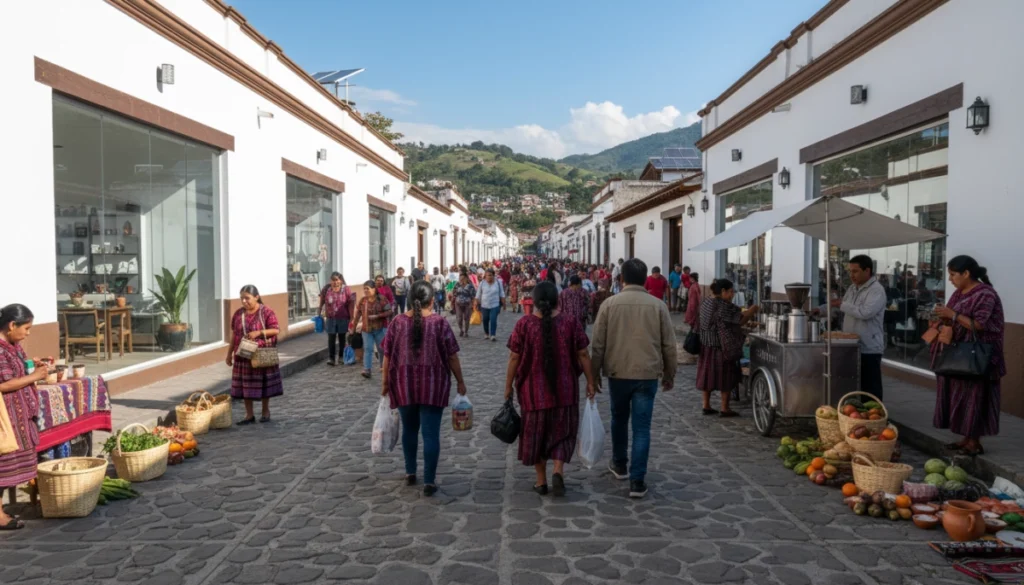
Tlaquepaque Arts and Shopping Village feels like a small Mexican town dropped into the red rocks—cobblestone walkways, shaded courtyards, tile fountains, and ivy-covered walls. It’s one of the most relaxed, walkable things to do in Sedona Arizona when you want a break from hiking.
What to do:
- Browse fine art galleries, Native American art, and photography studios
- Pop into local maker shops for jewelry, ceramics, leather, and home goods
- Catch live music or seasonal events in the main courtyard on weekends
Food and drink options:
- Sit-down restaurants with patios and partial Red Rock views
- Taprooms and wine bars for Arizona wine flights and local beer
- Coffee shops and bakeries for a quick break between galleries
When to visit:
- Go early morning or late afternoon for lighter crowds and easier parking
- Evenings and weekends are best if you want live music and a livelier scene
- Holidays and festivals get busy fast, so plan to park once and linger
Uptown Sedona Things To Do
Uptown Sedona is the classic tourist strip: busy sidewalks, big Red Rock views, and rows of shops and restaurants. It’s crowded but convenient, especially for first-time visitors building a Sedona itinerary.
What Uptown feels like:
- Lined with outfitters, jeep tour check-ins, and Sedona travel guide booths
- Constant views of the red cliffs from the main drag
- Very walkable, but traffic moves slowly during peak hours
Best quick stops:
- Crystal and metaphysical shops if you’re curious about Sedona vortex sites
- Fudge and ice cream spots for families and post-hike treats
- Souvenir stores for T-shirts, magnets, and Red Rock photography prints
How long to stay:
- For most people, 1–2 hours is enough to walk the strip and grab a snack
- Add extra time only if you’re doing a tour, a sit-down meal, or deep shopping
Parking and walking routes:
- Use public lots just off the main road and follow signs to free parking
- Park once, then walk the length of Uptown on the sidewalk side with the best Red Rock views
- Expect paid or time-limited parking near the busiest intersections
Dining With A View In Sedona Arizona
Sedona restaurants with a view are a big part of the local experience, especially if you’re planning a Sedona weekend getaway or celebrating a special night.
What to know about reservations:
- Book sunset tables weeks ahead in spring and fall (peak season)
- Prime dinner slots go fast Thursday–Sunday and around holidays
- Ask for “patio” or “view seating” specifically when you reserve
Mariposa Sedona Restaurant:
- Menu: Latin-inspired steaks, seafood, salads, and strong cocktails
- Dress: Smart casual—jeans are fine, but it feels like a special night out
- Price: Expect big-city pricing; you’re paying for the food and the panoramic Red Rock views
The Hudson Sedona:
- Vibe: Modern, relaxed, and social with a neighborhood feel
- Views: Great Red Rock backdrop from the patio and big windows
- Best time: Aim for late afternoon to sunset for happy hour drinks and golden light
Casual spots after Sedona red rock hikes:
- Local taco joints and burger spots close to the main highway for easy post-hike meals
- Breweries and casual bars for craft beer and simple bar food
- Many casual restaurants offer partial views, patios, and quick service—ideal when you’re dusty, hungry, and not in the mood to dress up
Adventure Without the Sweat: Sedona Tours
If you want the big views without grinding out miles of steep trails, these Sedona tours are the way to go. I always recommend mixing at least one guided experience into any Sedona itinerary.
Pink Jeep Tours Sedona
Pink Jeep Tours are the classic “things to do in Sedona Arizona” if you like adventure but don’t want a full workout.
Main tour options (quick guide):
| Tour | Best For | What to Expect |
|---|---|---|
| Broken Arrow | First-timers, thrill-seekers | Steep rock climbs, big drops, famous photo spots |
| Scenic Rim | Families, nervous riders | Wider views, less intense bumps |
| Ancient Ruins | History buffs | Short hike to ruins + storytelling |
| Combination tours | Limited time | Mix of off-road + viewpoints |
Why Broken Arrow is the classic:
- It’s the signature Sedona off-road route with huge Red Rock views.
- You drive over slickrock, edge near ledges, and hit “The Stairs” and “The Road of No Return.”
- You get multiple photo stops with wide-open Sedona photography spots.
What the ride feels like:
- Expect real bumps and a few “whoa” moments around heights.
- Drivers are pros; they keep it fun but controlled.
- Kids usually love it; anyone with serious back/neck issues should pick a milder route.
Booking + what to wear:
- Book 1–2 weeks ahead for weekends and peak seasons (spring, fall, holidays).
- Sunrise and late-afternoon departures are best for cooler temps and softer light.
- Wear:
- Closed-toe shoes
- Comfortable clothes you don’t mind getting dusty
- Light jacket in cooler months
- Sunglasses, hat, and sunscreen year-round
Hot Air Balloon Rides Sedona
Sunrise hot air balloon rides in Sedona are all about quiet, unreal views of the Red Rocks waking up with the sun.
What it’s really like:
- Early pickup (often before 5 a.m.), then a short drive to the launch site.
- About 45–60 minutes in the air on average, with a calm, smooth ride.
- You drift above mesas and canyons, watching the light hit Cathedral Rock and the surrounding formations.
Safety + weather basics:
- Pilots are licensed; operators cancel if wind or weather isn’t safe.
- Cancellations are common in windy seasons—keep your schedule flexible.
- If your flight gets canceled, most companies will rebook or refund.
Photography tips for sunrise views:
- Use your phone’s wide-angle mode for the full Red Rock landscape.
- Avoid bulky lenses; space in the basket is tight.
- Wear neutral colors to reduce weird color casts in photos.
- Bring a small wrist strap so you don’t worry about dropping your phone.
Budget + is it worth it?
- Expect roughly mid- to high-hundreds per person (varies by season and operator).
- Worth the splurge if:
- You love photography
- You’re celebrating something big (anniversary, milestone trip)
- You want a once-in-a-lifetime Sedona travel experience without hiking
Other Guided Tours in Sedona
If you’d rather stay on the ground, there are plenty of Sedona guided tours that keep things low-effort but high-reward.
Most popular guided options:
Guided hiking tours
- Great if you want a local expert for Sedona hiking trails, vortex sites, or hidden gems.
- Guides handle navigation, timing, and safety, especially helpful for families.
Photography tours
- Tailored to Sedona photography spots and lighting.
- You get help with composition and camera settings, even if you’re mostly a phone shooter.
E-bike tours
- Easy way to cover more ground around the Red Rocks with minimal effort.
- Good for travelers who want views but not long hikes.
Stargazing experiences
- Dark skies + telescopes + a guide who knows constellations.
- Ideal for kids, couples, and anyone who’s never really seen the Milky Way.
Tours vs. DIY exploring in Sedona Arizona:
Guided tours – Pros:
- You learn local history, geology, and vortex stories without Googling.
- Less stress about parking, trailheads, and Sedona traffic at the Y.
- Safer if you’re unsure about desert conditions or hiking in heat.
Guided tours – Cons:
- Higher cost than DIY.
- Fixed schedule and group pacing.
DIY exploring – Pros:
- Cheaper and fully flexible with your own rental car.
- Easy to tweak your Sedona itinerary as you go.
DIY exploring – Cons:
- You handle all planning, parking, and navigation.
- Easier to end up at overcrowded spots at the wrong time of day.
For most United States travelers, I like a mix: one big guided experience (Pink Jeep Tour, hot air balloon, or a guided hike) plus DIY exploring with a solid Sedona travel guide in hand.
Travel tips: Practical lifenotes for things to do in Sedona Arizona
Best time to visit Sedona Arizona
If you’re planning a Sedona itinerary, timing matters more than most people expect.
- Spring (March–May): Best overall mix of weather and crowds. Highs usually in the 60s–80s, cool mornings, wildflowers, and prime Sedona red rock hikes. It’s busy and prices climb, so book early.
- Summer (June–August): Hot, often 90s+ with intense sun and afternoon monsoon storms. Good for Oak Creek swimming spots and Slide Rock State Park, but you need very early morning or sunset hikes. Lodging deals can be better, but crowds spike on weekends and school holidays.
- Fall (September–November): My pick for most visitors. Warm days, cool nights, fewer storms, solid visibility for Sedona photography spots. Late October–early November is prime for West Fork Trail Sedona fall colors. Prices stay moderate to high.
- Winter (December–February): Chilly mornings, some snow, but lighter crowds and lower rates. Great if you want quiet Sedona hiking trails and moody red rock shots. Some days are T‑shirt hiking weather, others are cold and windy.
For hiking and Sedona sunset hikes, aim for March–May and late September–November. For swimming and Oak Creek Canyon time, late May–early September works, as long as you plan around heat.
Sedona transportation and parking tips
For most travelers from the U.S., I strongly recommend a rental car in Sedona.
- Why a car matters: Trailheads, Sedona vortex sites, and Oak Creek Canyon are spread out. Public transit is limited, and rideshare can be spotty early morning and late night.
- Traffic at the “Y”: The main bottleneck is where Hwy 89A and 179 meet (“the Y”). Expect slowdowns late morning and mid‑afternoon, especially on weekends and holidays.
- How to dodge jams:
- Start hikes at sunrise or very early morning.
- Plan a midday break (pool, lunch, Tlaquepaque Arts and Shopping Village, Uptown Sedona restaurants).
- Stack trailheads in the same corridor (e.g., Bell Rock pathway + Cathedral Rock trail Sedona on 179).
- Parking + Red Rock Pass basics:
- Many federal land lots require a Red Rock Pass parking permit (daily, weekly, or annual). You can grab it at machines at major trailheads or local visitor centers.
- Some high‑demand spots use fee machines or America the Beautiful passes instead; always read signs.
- On peak days, trailhead lots for Devil’s Bridge Sedona, West Fork Trail Sedona, and Airport Mesa sunset fill early.
- Shuttles: Sedona runs free shuttle routes to certain busy trailheads in peak seasons. Use them when possible to skip parking stress and reduce traffic.
What to pack for Sedona Arizona
Think light, layered, and sun‑smart. Sedona weather swings hard between day and night.
- Clothing layers:
- Breathable hiking tops, quick‑dry shorts or pants.
- A light fleece or puffy jacket for cool mornings and nights, even in spring and fall.
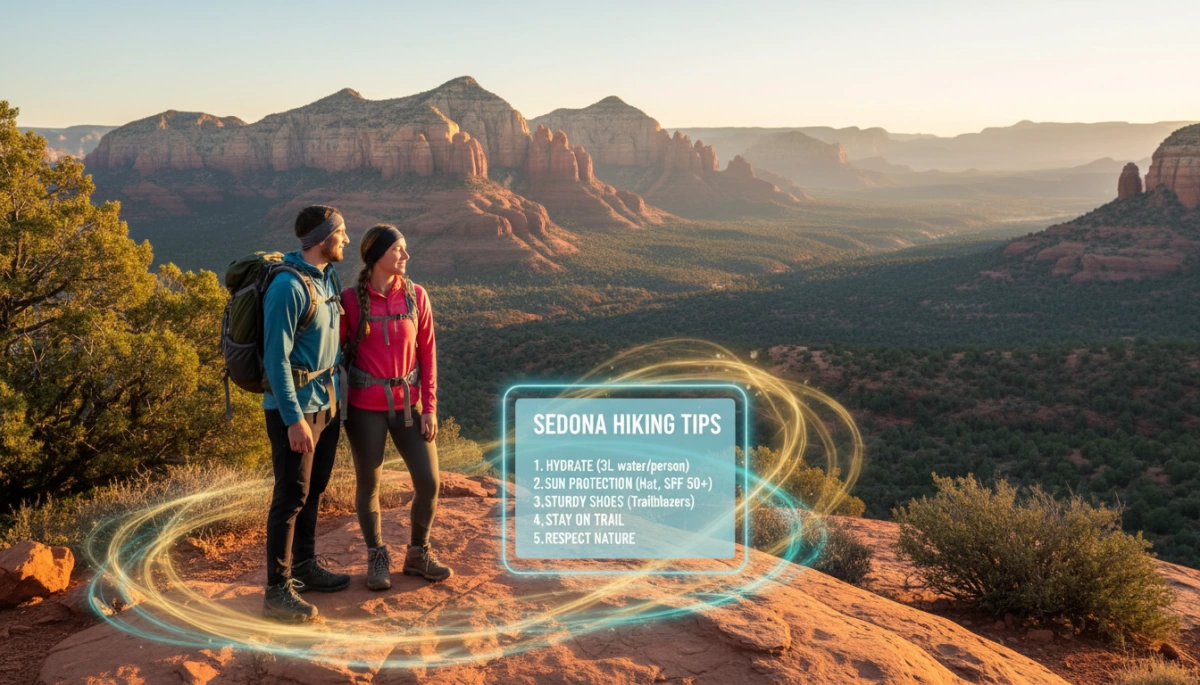
- Sun hat, sunglasses, and a buff or bandana if you’re sensitive to dust.
- Hiking essentials:
- Real hiking shoes or trail runners with grip for slickrock (key for Cathedral Rock trail Sedona and Bell Rock pathway).
- At least 2–3 liters of water per person on moderate hikes.
- Electrolytes, salty snacks, and a small first‑aid kit.
- Lightweight daypack, sunscreen, and SPF lip balm.
- Tech + extras:
- Camera or smartphone with plenty of storage for Sedona photography spots.
- Power bank; GPS and photo apps chew battery, especially on vortex hikes like Airport Mesa and Boynton Canyon trail.
- Offline maps (AllTrails, Gaia, or downloaded Google Maps) since service can drop in canyons.
For families, throw in cheap water shoes and extra towels if you’re hitting Oak Creek swimming spots or Slide Rock State Park.
Safety and Leave No Trace in Sedona
Sedona is incredible, but it’s still desert. I build my Sedona travel guide content around staying safe and keeping the place intact.
- Heat + slickrock safety:
- Start bigger Sedona red rock hikes at sunrise, especially in summer.
- Watch for heat exhaustion: headache, dizziness, nausea. Turn around early if something feels off.
- On steep slickrock (Cathedral Rock, Devil’s Bridge Sedona approach), go slow, keep three points of contact, and use grippy shoes.
- Leave No Trace basics:
- Stay on established trails and rock surfaces. The dark, crusty “dirt” in some areas is cryptobiotic soil—step on it and you kill decades of growth.
- Pack out all trash, including tissues and food scraps.
- Use restrooms at trailheads when you can; if you have to go outside, follow desert bathroom guidelines.
- Local rules:
- Drones are generally banned in many Sedona spiritual sites, wilderness areas, and near crowds—check current regulations, but assume “no” in busy scenic zones.
- Fires are highly restricted; don’t assume campfires are allowed just because it’s cool at night.
- Keep a respectful distance from wildlife; don’t feed squirrels, birds, or coyotes.
- Respect Sedona meditation spots and vortex areas like Amitabha Stupa and Peace Park and Chapel of the Holy Cross—stay quiet, no climbing on structures, and follow posted signs.
Handled right, these Sedona travel tips keep your trip smooth, safe, and respectful—and help keep Sedona Arizona wild and gorgeous for the next round of visitors.