
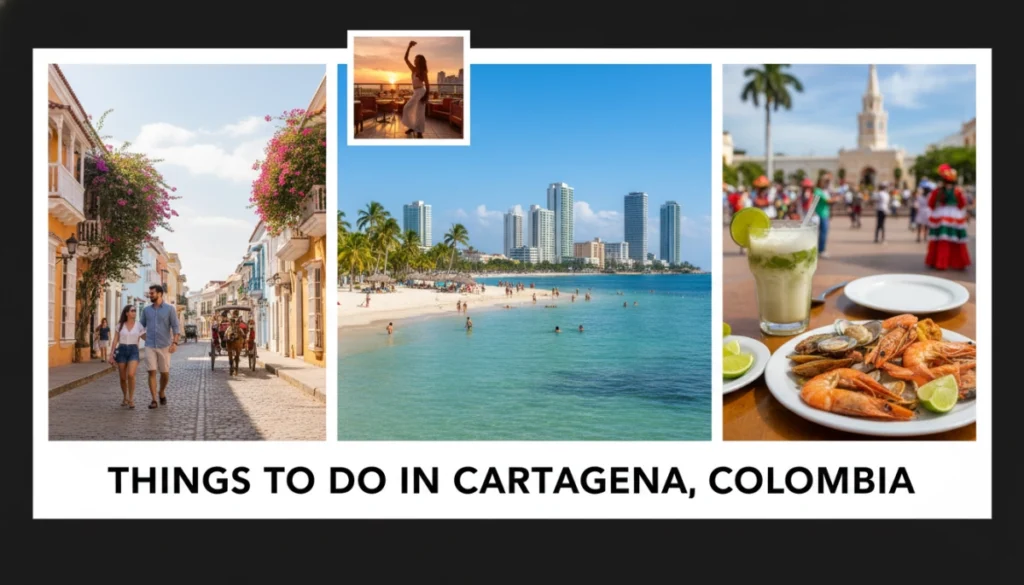
Explore the Cartagena Walled City
When people ask me what to do in Cartagena Colombia first, I always say: start inside the Cartagena Walled City. This is the historic heart of the city, and walking through its stone gates feels like stepping into a movie set—only with Caribbean heat, honking chivas, and salsa floating through the air.
Las Murallas Sunset Walk & Café del Mar
If you do just one thing here, walk the Las Murallas (city walls) at sunset. The breeze up on the walls is a lifesaver after a hot day, and the views over the Caribbean Sea and the terracotta rooftops are unreal.
- Start near Café del Mar, a popular sunset bar built right into the wall.
- Go early (about an hour before sunset) to grab a spot and avoid the tight crowds.
- Expect premium prices for drinks here, but you’re paying for the view + vibe, not a budget cocktail.
If you don’t want to sit at the bar, you can still walk the wall for free, pause along the battlements, and watch the sky go orange behind the cannons.
Best Photo Spots in the Walled City
The Cartagena Walled City is packed with photo-perfect corners, but a few spots always stand out:
- Clock Tower (Torre del Reloj) – The main gate and one of the most iconic spots in Cartagena Colombia. Come early morning for fewer people and softer light.
- Plaza de la Aduana – Wide, open square with colorful colonial buildings and balconies. Great for wide shots and “I’m in Cartagena” photos.
- Side streets like Calle de los Estribos – Balconies overflowing with flowers, horse-drawn carriages passing by, and pastel walls that make every quick snap look intentional.
Tip: Bring a small hand towel and water. The humidity in Cartagena can fog up lenses and drain your energy fast.
Respectful Photos with Palenqueras Fruit Ladies
You’ll see the Palenqueras, the women in bright dresses balancing fruit baskets on their heads, almost immediately. They are an important part of Colombian culture, with roots in San Basilio de Palenque, one of the first free Black towns in the Americas.
If you want photos, do it respectfully:
- Always ask first – a simple “¿Foto, por favor?” goes a long way.
- Be ready to pay a tip; this is their work. Around 5,000–10,000 COP (roughly a few dollars) is fair for a quick posed photo.
- Don’t sneak photos from a distance and then walk away. That’s one of the fastest ways to have an awkward moment in the Walled City.
Treat them like working professionals, not props, and the interaction usually feels warm and genuine.
Must-See Historic Stops
Inside the Cartagena Walled City, a few historic spots are absolutely worth your time if you care about the story behind the pretty façades:
- Palace of the Inquisition (Palacio de la Inquisición) – Heavy history here. The building is beautiful, but the museum covers dark chapters of colonial Cartagena. Go if you want context, not just photos.
- San Pedro Claver Church and Cloister – A peaceful escape from the heat and noise. The stone courtyard, arches, and religious art tell the story of San Pedro Claver, known for defending enslaved Africans in Cartagena.
Both of these stops give you a deeper understanding of Cartagena’s colonial past and its role on the Colombian Caribbean coast, beyond the Instagram-perfect balconies.
If you’re planning what to do in Cartagena Colombia in a single afternoon, combine a late-day walk through the Walled City, a sunset stroll along Las Murallas, and a calm evening near San Pedro Claver—you’ll see why this old city hooks so many travelers.
Getsemaní Neighborhood Things To Do in Cartagena Colombia
If you’re wondering what things to do in Cartagena Colombia after dark, Getsemaní is where the city really feels local, creative, and loud in the best way.
Street Art Walks on Calle de la Sierpe
Calle de la Sierpe is the heart of Getsemaní’s street art scene. I always tell U.S. travelers to start here:
- Walk early morning or late afternoon for cooler temps and better light.
- Look for large murals that reflect Cartagena’s Afro-Caribbean and Champeta culture.
- Join a local street art tour if you want the stories behind the artists and political messages.
- Keep cash on hand to tip guides or buy art prints from small studios and vendors.
It’s one of the easiest spots in the Cartagena Walled City area to get strong photos without heavy crowds.
Evenings in Plaza de la Trinidad
Plaza de la Trinidad is the main hangout in Getsemaní and an easy win for U.S. visitors who want local energy without committing to a full club night:
- Grab street food like arepas, skewers, or fresh juices from carts around the square.
- Sit on the church steps and watch breakdancers, musicians, and performers rotate through.
- Expect things to pick up after 7–8 p.m. and stay lively late, especially on weekends.
- Keep your phone and wallet secure; the plaza is fun but busy.
This is a low-cost, relaxed way to experience Cartagena nightlife and people-watch for hours.
Salsa and Champeta Nightlife: Café Havana & Bazurto Social Club
For classic Getsemaní nightlife, two spots deliver very different sides of Cartagena Colombia:
Café Havana
- Known for live salsa bands, strong cocktails, and a more polished vibe.
- Great if you’re new to salsa; you can watch, then jump in when you’re ready.
- Dress smart casual; it leans touristy but still worth the experience.
Bazurto Social Club
- Focuses on Champeta music, rooted in Cartagena’s Afro-Colombian Caribbean coast culture.
- Louder, more local, with wild energy and packed dance floors.
- Ideal if you want something less polished and more “real Cartagena night out.”
If you’re building a short list of things to do in Cartagena Colombia at night, a street art walk in Getsemaní, snacks in Plaza de la Trinidad, and dancing at Café Havana or Bazurto Social Club makes a complete, high-impact evening.
Best Day Trips and Islands Near Cartagena Colombia
When I plan things to do in Cartagena Colombia, I always carve out at least one full day for the islands and nearby day trips. This is where the Caribbean side of the city really shines.
Rosario Islands Day Trip & Island Hopping
A Rosario Islands day trip is the classic escape from the heat and crowds of the Cartagena Walled City.
- Book a catamaran or speedboat from the Cartagena marina (shared boats cost less, private boats give you full control of the route).
- Aim for Isla Grande, Isla Cholón, and Isla Coralina for clear water, good snorkeling, and more relaxed vibes.
- Choose operators that include lunch, snorkeling gear, and port taxes in the price, so you’re not nickel-and-dimed all day.
- If you get seasick easily, pick a larger, slower catamaran and sit toward the back.
Beach Clubs vs. Playa Blanca Barú
Playa Blanca Barú is famous, but it’s usually packed, loud, and full of vendors. For a smoother experience, I send people to beach clubs instead.
- Look for day passes at beach clubs on Barú or in the Rosario Islands that include a lounger, lunch, and boat transport.
- For a group, a private boat often becomes cost-effective, lets you control the playlist, and keeps you away from the most crowded areas.
- Confirm return time, towel policy, and bar prices in advance—especially if you’re used to straightforward pricing back in the States.
- If you still want to see Playa Blanca, go early morning on a weekday and leave by mid-afternoon before it gets chaotic.
Snorkeling & Bioluminescent Plankton
The Colombian Caribbean coast around Cartagena is great if you want low-effort, high-reward water time.
- Snorkeling near the Rosario Islands gives you coral reefs, colorful fish, and warm, clear water—ideal if you’re not a hardcore diver.
- Make sure your tour limits group size and provides decent masks and fins, or bring your own gear from the U.S.
- For something unique, book a bioluminescent plankton tour at night (usually around Barú or nearby lagoons).
- Check the moon phase: darker nights mean stronger bioluminescent glow when you move in the water.
El Totumo Mud Volcano: What To Expect
Totumo Mud Volcano is one of those “do it once” things to do in Cartagena Colombia—fun, weird, and very local.
- The volcano is small, more like a big muddy pit with stairs, not a giant mountain.
- You’ll climb a wooden staircase, get into thick warm mud, and local attendants may offer massages and photos (tips are expected; agree on prices first).
- After, you’ll wash off in a nearby lagoon where more locals help you rinse—keep small bills handy and secure your phone and cash before you go in.
- Wear swimwear you don’t mind ruining, bring a quick-dry towel, and pack flip-flops you’re okay getting muddy.
For U.S. travelers, I’d lock in at least one full-day island trip and decide if Totumo fits your style: if you like quirky experiences and don’t mind getting messy, it’s a solid add-on to your Cartagena itinerary.
Cartagena Colombia Food And Drink Guide
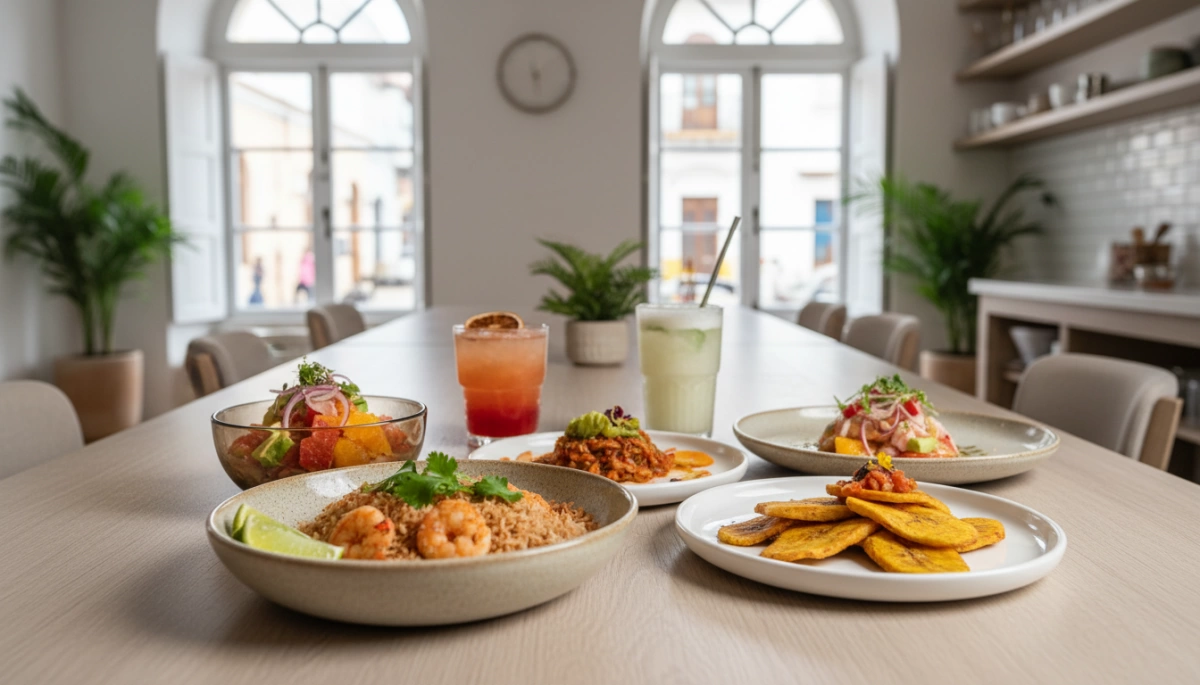
Cartagena’s food scene is one of the best parts of the trip, especially if you’re coming from the US and want local flavor without guessing what to order. I treat this city like my own testing ground for Caribbean comfort food, so here’s how I’d eat and drink my way through it.
Must-Try Cartagena Street Food
If you skip street food, you’re missing half of Cartagena. I go for:
- Arepa de huevo – Corn patty deep-fried, stuffed with egg (sometimes meat).
- Best for: quick breakfast or late-night bite
- Tip: Ask for it “bien tostada” (well fried) if you like it extra crispy.
- Carimañolas – Yuca fritters stuffed with ground beef or cheese.
- Texture: crispy outside, soft inside, super filling
- Great with: a cold beer or fresh juice
- Empanadas cartageneras – Smaller, crunchy, usually with beef or chicken.
- Low-risk option if you’re new to Colombian street food
- Patacones – Twice-fried plantain rounds with cheese, shrimp, or meat on top.
- Easy to share and good if you’re not super hungry but want to try “Cartagena street food.”
I always look for stands where locals are lined up and food is coming straight out of the fryer. That’s your signal.
Refreshing Cartagena Drinks
Cartagena is hot and humid, so cold drinks aren’t optional—they’re survival:
- Limonada de coco – The Cartagena classic.
- Blended lime, coconut, sugar, ice
- Not too heavy, perfect beach or rooftop drink
- Jugos naturales (natural juices) – Passion fruit, guava, soursop, tamarind.
- Ask for it “con agua” (with water) or “con leche” (with milk) depending on how rich you want it.
- Agua de panela with lemon – Lightly sweet, hydrating, good if you’re drained from the heat.
- Local beers – Aguila, Club Colombia, or Poker are basic but cold and reliable on a hot day.
If you’re sensitive to ice abroad, stick to places with good turnover and more polished setups rather than random coolers on the street.
Best Restaurants In Cartagena (Fine Dining And Rooftops)
If you want a nicer sit-down meal instead of just snacking all day, Cartagena has serious restaurants that still feel relaxed:
- Fine dining
- Look for spots that do modern Colombian or Caribbean fusion instead of international-only menus. You’ll get seafood, coconut rice, plantains, and fresh ceviches done right.
- Many of the best restaurants in Cartagena sit inside restored colonial houses, so you get good food and atmosphere at the same time.
- Rooftop restaurants
- Great for sunset and date nights, especially inside the Cartagena Walled City.
- Expect: smaller portions, higher prices than street food, but better views and cocktails.
- Tip: Reserve for prime-time (around sunset) and ask for outdoor seating with a view if you can handle the heat.
If you’re coming from the US, think of these places like your “one or two splurge dinners” where you book ahead and dress a bit nicer, while keeping lunch and snacks more casual.
Cartagena Rooftop Bars And Cocktails (Alquímico And More)
Rooftop bars are where Cartagena really sells itself. I treat them as my “reward” after walking all day:
- Alquímico – The headline spot.
- Multi-level cocktail bar in a restored mansion.
- Each floor has its own menu style; the rooftop mixes city views with Colombian ingredients in creative cocktails.
- Dress code: casual-nice works—think warm-weather night out in Miami.
- Other rooftops
- You’ll find plenty on top of boutique hotels in Cartagena around the Walled City and Getsemaní.
- Ideal for: pre-dinner drinks, small groups, or a chill night if you’re not into heavy clubbing.
- What to order
- Cocktails with local fruits (passion fruit, lulo, tamarind) to actually taste the Colombian Caribbean coast in your drink.
- If you don’t drink alcohol, most places do solid mocktail versions.
From a US traveler point of view, I’d budget for a mix: cheap street food during the day, one or two “best restaurants in Cartagena” at night, and at least one rooftop bar like Alquímico for the full Cartagena Colombia food and drink experience.
Historic Things To Do in Cartagena Colombia Beyond the Walled City
Castillo San Felipe de Barajas
If you’re into history, Castillo San Felipe de Barajas is non‑negotiable on any list of historic things to do in Cartagena Colombia. This massive fortress sits on a hill just outside the Cartagena Walled City and shows how seriously Spain defended the Colombian Caribbean coast.
- Plan 1.5–2 hours to walk the ramparts and explore the maze-like tunnels.
- Go early (opening time) or after 3 p.m. to avoid peak heat and cruise-ship crowds.
- Wear breathable clothes, a hat, and closed shoes; the stone gets hot and there’s very little shade.
- Grab an audio guide or local guide at the entrance for context on battles and construction.
When To Go To Avoid Crowds And Heat
Cartagena is hot and humid year-round, but you can still time it right:
- For Castillo San Felipe de Barajas and La Popa, go at sunrise or late afternoon.
- Weekdays are calmer than weekends and cruise days.
- December–April is high season (drier, more people); May–November is hotter and stickier but less crowded.
- If you’re coming from the U.S., treat midday (11 a.m.–3 p.m.) as pool/AC time, not sightseeing time.
Convent Of La Popa Views
The Convent of La Popa (Convento de la Popa) sits on the highest hill in Cartagena and gives you the best city views in one shot: the Walled City, Bocagrande skyline, and the Colombian Caribbean coast.
- The convent itself is small but peaceful, with a courtyard and chapel worth a quick look.
- Budget 45–60 minutes for photos and a short walk around.
- Aim for early morning for clearer skies or golden hour for softer light and cooler temps.
Transport And Safety Tips For La Popa
Reaching La Popa needs a bit more planning than other things to do in Cartagena Colombia:
- Don’t hike up alone; the road is steep, exposed, and not recommended for tourists on foot.
- Use a registered taxi or trusted driver service; ask your hotel, boutique hotel, or Airbnb host to book it.
- Agree on a round-trip price and have the driver wait while you visit (usually 30–45 minutes).
- Bring minimal valuables, keep your phone secure, and avoid flashing cash or jewelry.
Handled right, Castillo San Felipe de Barajas and La Popa are two of the most rewarding historic experiences you can have in Cartagena beyond the Walled City.
Essential Travel Tips for Cartagena Colombia
Is Cartagena Safe For Tourists?
Cartagena is generally safe for tourists, especially in the Cartagena Walled City, Bocagrande, and Getsemaní, but you still need street smarts like you would in any busy U.S. city.
- Stick to well‑lit, busy areas at night (Plaza de la Trinidad, main plazas, popular streets).
- Use ATMs inside banks or malls, not on the street.
- Keep valuables minimal: no flashing jewelry, big cameras hanging from your neck, or open wallets.
- Use registered taxis, rideshare apps, or your hotel to call a cab.
- Keep copies of your passport and travel insurance.
Common Scams To Avoid
Most issues in Cartagena Colombia are petty scams, not violent crime.
- “Free” photos or services: Palenqueras fruit ladies, performers, and costumed characters expect payment after photos.
- Overpriced tours: Book Rosario Islands day trips and Totumo Mud Volcano tours through reputable agencies or your hotel.
- Menu surprises: Always confirm prices for seafood, cocktails, and beach services before you order.
- Fake guides: Only follow official guides with ID at places like Castillo San Felipe de Barajas.
How To Deal With Street Vendors
Street vendors are part of Cartagena’s daily life, especially around the Cartagena Walled City and Getsemaní nightlife spots.
- Be direct and polite: “No, gracias” with a smile, and keep walking.
- If you want to buy, agree on the total price first.
- Avoid taking “free samples” you don’t actually want—those usually come with pressure to pay.
- Don’t argue; just disengage and move on if someone is pushy.
Cartagena Climate, Heat, And What To Pack
Cartagena sits on the Colombian Caribbean coast, so it’s hot and humid year‑round.
Pack for heat:
- Lightweight, breathable clothes (linen, cotton, moisture‑wicking shirts).
- Hat, sunglasses, and high‑SPF reef‑safe sunscreen.
- Comfortable walking shoes or sandals for cobblestones in the Cartagena Walled City.
- Small daypack, refillable water bottle, and a light scarf or wrap for sun and AC.
- Minimal makeup and hair products; humidity is strong, especially for U.S. travelers used to drier climates.
Best Time To Visit Cartagena
Cartagena Colombia doesn’t really have “cold” months, but seasons change how your trip feels.
- December–April (dry season): Best weather, less rain, more sun; also peak crowds and higher prices.
- June–November (rainy season): Short, heavy showers, more humidity, better deals; plan indoor time midday.
- For fewer crowds and decent weather, I aim for shoulder months like late January, early February, or late April.
- Avoid midday heat when you can: sightsee early morning or after 4 p.m., then enjoy Café del Mar sunset, Getsemaní nightlife, and rooftop bars once it cools down.