

The Side Sleeper Pillow Problem
If you sleep on your side and wake up with a sore neck, tight shoulders, or a dead arm, your side sleeper pillow is almost always the real problem—not your body.
Why Side Sleepers Wake Up With Neck And Shoulder Pain
When your pillow doesn’t fit your side-sleeping position, your head is forced to tilt up or drop down all night. That leads to:
- Neck pain from your head being bent instead of supported in line with your spine
- Shoulder pain because your shoulder takes too much pressure and gets jammed into the mattress
- Numb arms and tingling hands when nerves get compressed between the pillow, shoulder, and mattress
A proper side sleeper pillow for neck pain and shoulder pain keeps your head resting in one clean line with your spine instead of hanging or straining.
How The Wrong Side Sleeper Pillow Messes With Spinal Alignment
For side sleepers, spinal alignment is simple: your nose, neck, and spine should form a straight line from the side. The wrong pillow ruins that:
- A pillow that is too flat or too soft collapses, dropping your head toward the mattress and bending your neck downward
- A high loft pillow for side sleepers that’s too tall cranks your head upward and overloads the side of your neck
- A lumpy, worn-out pillow creates hot spots and forces you to twist your neck or curl your shoulder in awkward angles
Over time, this poor spinal alignment for side sleepers shows up as morning stiffness, tension headaches, and deep shoulder aches that don’t fully go away.
When It’s Time To Replace Your Side Sleeper Pillow
You don’t need to wait until you’re in serious pain. It’s time to replace your side sleeper pillow when:
- You see a permanent dent in the middle that doesn’t fluff back up
- You need to fold or stack pillows to feel supported
- You wake up with more neck or shoulder pain than you had before bed
- You notice your head clearly tilting up or down when you lie on your side
- Your pillow is older than 18–36 months (especially for foam or fiber fill)
If your pillow can’t keep your head level with your spine in your normal side-sleeping position, it’s not doing its job—and it’s time to upgrade to a side sleeper pillow that actually supports your body.
Side Sleeper Pillow And Spinal Alignment
If you sleep on your side, the right side sleeper pillow is basically a spacer between your head and the mattress. Its job is simple: fill the gap created by your shoulder so your neck isn’t bending all night.
The Gap Between Head And Mattress For Side Sleepers
When I lie on my side, there’s a natural space between my ear and the mattress because of my shoulder width. If that gap isn’t filled by a properly sized side sleeper pillow:
- My head tilts down if the pillow is too flat
- My head tilts up if the pillow is too thick
- My neck ends up twisted, which is a fast track to morning neck and shoulder pain
This “gap math” is the foundation of sleep ergonomics for side sleepers and what I look at whenever I’m testing a new side sleeper pillow for neck pain or shoulder pain.
How A Side Sleeper Pillow Supports Neutral Spine Alignment
A good side sleeper pillow keeps your spine neutral: ears lined up with shoulders, and neck in a straight line with the rest of your back. That’s the same stacked posture you’d want standing up, just turned on your side.
The right pillow usually has:
- Enough loft (height) to match your shoulder width
- A medium firm to firm feel so your head doesn’t sink too deep
- Consistent support across the whole pillow so your cervical spine stays stable
If you’ve ever tried a contour neck pillow or orthopedic neck pillow and felt instant relief, that’s because it finally put your head and neck into true neutral alignment.
Signs Your Pillow Is Too High Or Too Low For Side Sleeping
You can tell fast if your side sleeper pillow height is wrong:
- Too low: your head drops toward the mattress, you wake up with neck stiffness on the “lower” side, sometimes with a dull headache
- Too high: your head is pushed up toward the ceiling, you feel tightness on the “upper” side of your neck and often tension between the shoulder and ear
- Either way: you wake up needing to stretch your neck, adjust your shoulders, or feeling tingling from shoulder pressure
If I notice I’m constantly folding my pillow in half or stacking pillows, that’s a clear sign I need a high loft pillow for side sleepers or an adjustable fill pillow I can dial in better. When I’m helping customers fine-tune fit, I treat pillow height the same way I’d fine-tune a mattress in a buying guide, like I do with my broader sleep ergonomics advice on LifeNotes Journal’s sleep resources.
Key Features Of A Good Side Sleeper Pillow
Why Loft (Height) Matters For Side Sleepers
For side sleepers, pillow height isn’t optional – it’s everything.
- Your side sleeper pillow has to fill the gap between your head and the mattress so your neck doesn’t bend down or crank up.
- Too low: your head drops, causing neck and shoulder pain by morning.
- Too high: your neck tilts up, leading to headaches and a stiff upper back.
- As a rule of thumb in the U.S. market:
- Narrow shoulders: low–medium loft side sleeper pillow
- Average build: medium loft pillow for side sleeping
- Broad shoulders: high loft pillow for side sleepers or cube pillow
| Shoulder Width | Ideal Loft Type | Notes |
|---|---|---|
| Narrow | Low–Medium loft | Better for softer mattresses |
| Average | Medium loft | Safest pick for most side sleepers |
| Broad | High loft / cube pillow for side sleepers | Keeps spine more level, reduces shoulder crunch |
Best Firmness Level For A Side Sleeper Pillow
I always steer side sleepers toward support first, softness second.
- Soft pillows usually collapse, so your head sinks and you lose spinal alignment.
- A medium firm pillow for side sleeping works for most people: some cushion on top, solid support underneath.
- A firm pillow for neck support can help if:
- You’re heavy-set or have broad shoulders
- You wake up with chronic neck pain or headaches
- If your pillow feels comfy for 5 minutes but you wake up sore, it’s not firm enough.
Side Sleeper Pillow Shapes – Standard, Contour, And Cube
Shape changes how your neck and shoulders are supported, even with the same loft.
- Standard rectangular side sleeper pillow
- Easiest to find and style with regular pillowcases
- Best when it’s a supportive memory foam or latex pillow for side sleepers
- Contour neck pillow for side sleeping / cervical support pillow
- Curved shape cradles the neck
- Great as an orthopedic neck pillow or side sleeper pillow for neck pain
- Cube pillow for side sleepers
- High, boxy shape – perfect pillow height for broad shoulders
- Keeps your head level and reduces shoulder pressure
| Shape Type | Best For | Key Benefit |
|---|---|---|
| Standard | Side sleepers who want a familiar feel | Easy to use, works with most bedding |
| Contour/Cervical | Side sleeper pillow for neck pain & headaches | Targeted neck support, better spinal alignment |
| Cube | Broad-shouldered side sleepers | Fills the full gap between head and mattress |
When I design a side sleeper pillow for the U.S. market, I always combine:
- Correct loft for your shoulder width
- Medium firm to firm support
- A shape (standard, contour, or cube) that matches how locked-in or “cradled” you like to feel at night.
Choosing the Right Loft for a Side Sleeper Pillow
Low, Medium, and High Loft Side Sleeper Pillows
For side sleepers in the U.S., pillow height (loft) is a big deal. I look at it like this:
- Low loft (under 4\”) – Works only if you’re very petite, have narrow shoulders, or sleep on a softer mattress that your shoulder sinks into.
- Medium loft (4\”–5\”) – The sweet spot for most side sleepers; a solid choice if you’re average height and use a medium mattress.
- High loft (5\”+) – Best if you have broad shoulders, a firmer mattress, or want a more “lifted” feel from a high loft pillow for side sleepers.
If you’re shopping for the best pillow for side sleepers 2026, always check the actual loft number, not just “high” or “low” on the tag.
How Shoulder Width Affects Pillow Height
Your shoulder is the main spacer between your head and the mattress. The wider your shoulders, the taller your side sleeper pillow needs to be to keep good spinal alignment for side sleepers.
Here’s a quick way to dial it in:
- Narrow shoulders → usually low to medium loft
- Average shoulders → usually medium loft
- Broad shoulders / athletic build → usually high loft pillow for side sleepers or even a cube pillow for side sleepers
If you wake up with neck pain or shoulder pain, your pillow height for broad shoulders might simply be off by an inch.
Adjustable Loft Side Sleeper Pillows with Removable Fill
For my own brand, I push adjustable fill pillows because they solve most loft problems right away.
An adjustable loft side sleeper pillow with removable fill (usually shredded memory foam or latex blend) lets you:
- Add fill for more lift and firmer neck support
- Remove fill if your neck feels jammed up or your head tilts up
- Fine-tune the loft over time as your body, mattress, or sleep style changes
If you’re unsure between medium firm and firm pillow for neck support, or between medium and high loft, go adjustable. You get one side sleeper pillow for neck pain and shoulder pain that you can tweak instead of guessing and re-buying.
Best Firmness For Side Sleeper Pillows
Why Soft Pillows Fail Most Side Sleepers
For most side sleepers, a soft pillow feels great for a week and then turns into a flat pancake. When the loft collapses, your head sinks, your neck bends down, and you wake up with neck and shoulder pain. A soft side sleeper pillow usually:
- Can’t keep your head in line with your spine
- Bottoms out under the weight of your head
- Makes you scrunch or stack pillows to feel supported
If you’re constantly folding your pillow in half or waking up stiff, your pillow is too soft for side sleeping.
Medium Firm vs Firm For Neck Support
For side sleepers in the U.S., a medium firm pillow is usually the safest starting point. It gives enough give to feel comfortable, but enough pushback to hold your neck up.
- Medium firm pillow for side sleeping: Best for most people, especially if you switch sides or change positions. It balances comfort and cervical support.
- Firm pillow for neck support: Better if you have broad shoulders, a heavier head, or chronic side sleeper pillow for neck pain or shoulder pain. Firm holds its shape and keeps your neck from dipping.
If you wake up sore but your pillow still feels “comfy,” you probably need to move from soft to medium firm. If you still sink too much on medium firm, step up to firm.
How Mattress Firmness Changes Pillow Feel
Your mattress changes how your side sleeper pillow feels and how high it should be. I always tell customers to think of pillow and mattress as one system:
- On a soft mattress (like plush memory foam or a pillow-top): Your shoulder sinks into the bed, so you usually need a slightly lower or softer-feeling pillow to avoid over-tilting your head.
- On a medium mattress: A medium firm side sleeper pillow with a mid-to-high loft works for most people.
- On a firm mattress: Your shoulder doesn’t sink much, so you need a firmer, higher loft pillow for side sleepers to fill the bigger gap between head and mattress.
If you recently upgraded your mattress and your pillow suddenly feels “off,” the firmness change is probably why. Matching pillow firmness to your mattress is key to good sleep ergonomics for side sleepers.
Side Sleeper Pillow Shapes And Designs
Standard Side Sleeper Pillow (Rectangular)
For most U.S. side sleepers, a standard rectangular side sleeper pillow still works well when the loft and firmness are right. I focus on:
- A consistent medium-firm feel so your neck doesn’t sink or tilt.
- Enough height to fill the gap between your head and mattress.
- A hypoallergenic pillow cover that’s easy to wash and holds up to weekly use.
If you like to flip your pillow or change sides a lot, this classic shape is usually the easiest to live with.
Contour And Cervical Support Pillows
If you wake up with neck pain or headaches, a contour or cervical support pillow can be a game changer. These are shaped with a dip under the head and higher “rolls” under the neck.
- Designed to keep spinal alignment for side sleepers more neutral.
- Acts like an orthopedic neck pillow, cradling the neck instead of just the head.
- Best if you stay mostly on your side and want targeted firm pillow for neck support.
When customers ask me for a side sleeper pillow for neck pain, this is usually where I start.
Cube Pillow For Broad-Shouldered Side Sleepers
A cube pillow for side sleepers is a more niche design, but it’s powerful if you have broad shoulders or a very soft mattress.
- Shaped like a cube to keep a high loft pillow for side sleepers consistent.
- Helps prevent your head from tilting down, which is key for pillow height for broad shoulders.
- Works best with a medium to firm mattress so the overall height feels balanced.
If standard pillows always feel too flat and your neck still drops toward the mattress, a cube-style side sleeper pillow for shoulder pain is worth trying.
Side sleeper pillow materials compared
Solid memory foam side sleeper pillow
A solid memory foam side sleeper pillow works if you want strong, consistent neck support. It keeps your head from sinking too far, which helps spinal alignment for side sleepers with neck pain.
- Best for: medium to firm feel, people who like a “cradled” head and steady support
- Pros: Great contouring, good for orthopedic neck pillow needs, often pairs well with contour neck pillow for side sleeping designs
- Cons: Can trap heat unless it’s a cooling gel pillow or has ventilation channels
Shredded memory foam side sleeper pillow
A shredded memory foam side sleeper pillow gives you more flexibility and airflow. You can usually add or remove fill, turning it into an adjustable fill pillow that fits your shoulder width and mattress.
- Best for: Side sleepers who want to fine‑tune loft and prefer a softer, moldable feel
- Pros: Better cooling than solid foam, customizable height, easier to shape under your neck and shoulder
- Cons: Needs occasional fluffing, support can feel less “precise” than solid foam
Latex pillow for side sleepers
A latex pillow for side sleepers feels bouncy and supportive instead of slow‑sinking like memory foam. It’s great if you move a lot at night and don’t want your head stuck in a dent.
- Best for: Hot side sleepers, people who want a medium firm pillow for side sleeping with quick response
- Pros: Naturally more breathable, durable, often hypoallergenic, keeps a stable loft for years
- Cons: Less “hug” than memory foam, not ideal if you love a very soft, squishy pillow
Down and down alternative for side sleeping
Down and down alternative pillows feel light and plush, but most are too soft for long‑term side sleeper neck support. They can still work if you stack them or choose a high loft pillow for side sleepers.
- Best for: Side sleepers who love a hotel‑style, soft pillow feel
- Pros: Easy to fluff, great for hugging and fine‑tuning comfort, breathable with a cotton or bamboo cover
- Cons: Can go flat fast, often not firm enough for firm pillow for neck support, down can trigger allergies without a hypoallergenic pillow cover
Buckwheat pillow for side sleepers
A buckwheat pillow for side sleepers uses hulls that shift and lock in place, giving very stable support and excellent airflow.
- Best for: Side sleepers who want precise height control and natural cooling, especially in warmer U.S. climates
- Pros: Highly adjustable loft, strong support for spinal alignment for side sleepers, stays cool all night
- Cons: Heavier, can feel “rustly” when you move, and the feel is more firm and grainy than foam or down
Cooling Side Sleeper Pillow Options
Best Cooling Materials for Hot Side Sleepers
If you sleep hot on your side, the right cooling side sleeper pillow makes a huge difference. I focus on materials that pull heat away and don’t trap humidity.
Top cooling materials I recommend:
| Material | Feel & Support | Best For |
|---|---|---|
| Cooling gel–infused memory foam | Slow contouring, cooler surface | Side sleepers with neck pain who run warm |
| Open-cell memory foam | Softer, more airflow | Medium firm pillow for side sleeping |
| Natural latex | Responsive, bouncy, naturally cooler | Hot side sleepers who change positions often |
| Buckwheat hulls | Very breathable, adjustable loft | Extra-hot sleepers needing max airflow |
| Gel fibers / down alternative | Softer, more “cloud-like” feel | Hot side sleepers who dislike solid foam |
I design every cooling side sleeper pillow to balance spinal alignment for side sleepers with real temperature control, not just a “cool-to-touch” gimmick that fades in minutes.
Gel-Infused Foam and Cooling Gel Pillows
A lot of my U.S. customers want pressure relief but hate that standard memory foam sleeps hot. That’s where a gel-infused side sleeper pillow for neck pain and shoulder pain works well.
How gel helps side sleepers:
- Gel-infused foam: Gel mixed into the foam helps spread heat instead of trapping it under your head.
- Cooling gel layer/pads: A dedicated gel sheet on top gives an instant cool feel for hot side sleepers.
- High loft pillow for side sleepers: Keeps your neck aligned while the gel manages heat buildup.
If you like a firm pillow for neck support, go for a denser gel-infused foam. If you want more give, a shredded memory foam pillow with cooling gel lets you adjust the loft and feel.
Breathable Covers Like Bamboo and Cotton
Even the best cooling gel pillow fails if the cover can’t breathe. That’s why I always pair my side sleeper pillows with breathable, skin-friendly fabrics.
Best cover options for U.S. side sleepers:
- Bamboo cover: Naturally cool, moisture-wicking, and soft; great for hot and humid states.
- 100% cotton cover: Classic, breathable, easy to wash; ideal for sensitive skin.
- Performance knit blends: Add stretch and airflow; good for people who toss and turn.
Look for:
- A removable, washable, hypoallergenic pillow cover
- Breathable knit or percale weave, not heavy or plasticky fabric
- A cover that stays cool and dry through the night, not just for the first 10 minutes
When I build a cooling side sleeper pillow for hot sleepers, I always match cooling foam or latex with a bamboo or cotton cover so you get real temperature control plus consistent support on your side.
Fixing Common Side Sleeper Problems With The Right Side Sleeper Pillow
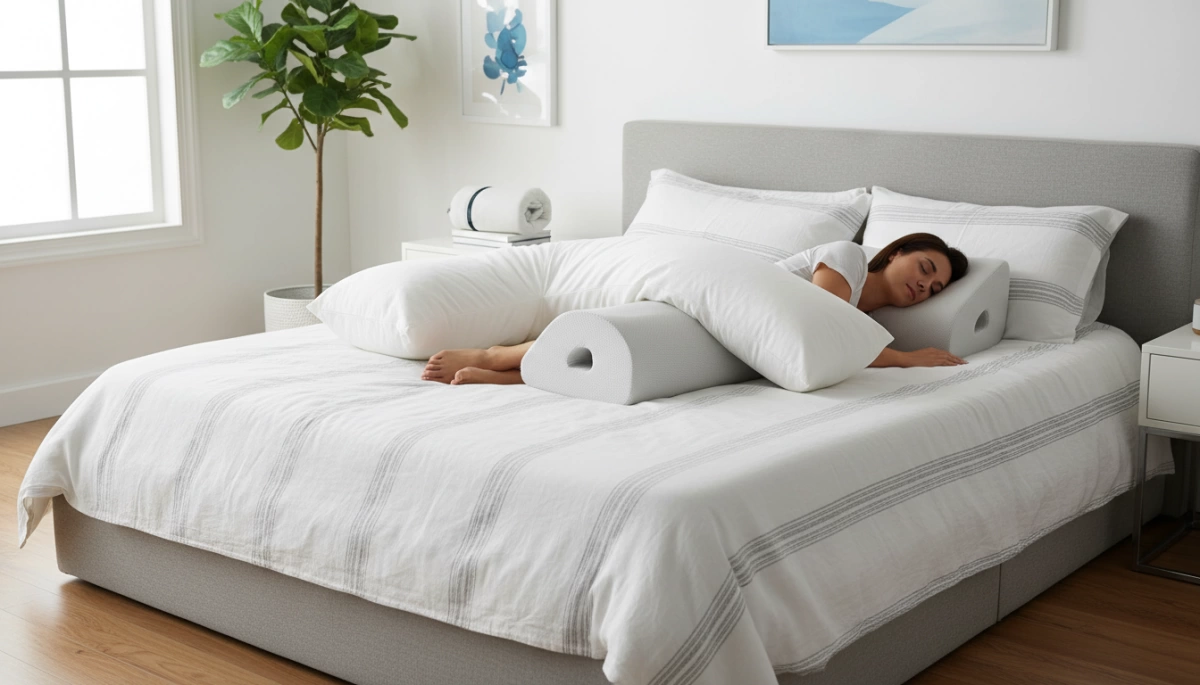
Side sleeper pillow for hot sleepers
If you overheat at night, your side sleeper pillow has to stay cool and dry. For my customers who run hot, I focus on:
- Cooling materials: a breathable shredded memory foam pillow or latex pillow for side sleepers instead of dense solid foam.
- Cooling gel pillow options: light gel-infused foam or a thin cooling gel layer to pull heat away from your head.
- Breathable covers: a bamboo or cotton hypoallergenic pillow cover that wicks sweat and doesn’t trap heat.
This combo gives hot side sleepers in the U.S. a cooler surface without feeling “wet” or slippery.
Side sleeper pillow for arm numbness and shoulder pressure
If your arm goes numb or your shoulder burns, your pillow height is usually off. The fix is a side sleeper pillow for shoulder pain with:
- Proper loft: a high loft pillow for side sleepers if you have broad shoulders, medium loft if your frame is average.
- Adjustable fill pillow: so you can add or remove fill until your shoulder sinks into the mattress without being crushed.
- Targeted support: a slightly firmer edge under the neck to open up space for your shoulder and arm.
When the loft matches your pillow height for broad shoulders, you reduce pinch points and pressure.
Side sleeper pillow for people who toss and turn
If you roll around all night, you need a side sleeper pillow that keeps its shape and support when you move:
- Medium firm pillow for side sleeping: soft enough to feel comfortable, firm enough to hold your neck in place.
- Responsive fill: latex or high‑quality shredded memory foam that bounces back fast, so you don’t land in a flat spot.
- Stable shape: a slightly wider or cube pillow for side sleepers can give you a consistent surface when you flip sides.
This setup keeps support steady so your body doesn’t have to “search” for a comfortable position.
Side sleeper pillow for neck pain and headaches
Neck pain and morning headaches usually point to poor spinal alignment for side sleepers. In this case, I recommend:
- A cervical support pillow or contour neck pillow for side sleeping that cradles the neck curve.
- A firm pillow for neck support or at least medium‑firm, so your head doesn’t sink below your spine.
- Matching pillow firmness to your bed: on a softer mattress, go a bit firmer; on a firm mattress, a medium‑firm orthopedic neck pillow often feels better.
Dialing in the right side sleeper pillow for neck pain can reduce tension, cut down on headaches, and help you wake up actually rested.
Side Sleeper Pillow Care And Lifespan
Taking care of your side sleeper pillow is the only way to keep support, loft, and spinal alignment consistent night after night.
How long a side sleeper pillow should last
For most side sleepers in the U.S., a good side sleeper pillow should last:
- Memory foam / latex side sleeper pillow: about 2–4 years
- Shredded memory foam / adjustable fill pillow: about 2–3 years
- Down or down alternative pillow: about 1–2 years
- Buckwheat pillow for side sleepers: about 3–5 years (you’ll replace hulls over time)
Replace your side sleeper pillow when you notice:
- It stays flat or lumpy after you fluff it
- You wake up with more neck or shoulder pain
- You can fold it in half and it doesn’t spring back
How to wash and care for side sleeper pillows
Always check the care tag first, but this is how I set up care for our side sleeper pillows:
- Use a hypoallergenic pillow cover under your pillowcase to block sweat, oils, and dust
- Wash covers and pillowcases weekly in warm water and dry fully
- Solid memory foam / contour neck pillow / orthopedic neck pillow:
- Spot clean only, never machine wash
- Air out the foam monthly to release odor and moisture
- Shredded memory foam pillow / adjustable fill pillow:
- Remove the foam, wash only the cover unless the tag says otherwise
- Make sure everything is 100% dry before re-assembling
- Down and down alternative:
- Wash on gentle with mild detergent, low heat dry with dryer balls
- Buckwheat:
- Never wash the hulls, only wash the outer cover
For hot side sleepers, keeping the pillow clean and dry also helps your cooling gel pillow, bamboo cover, or breathable cotton stay cooler through the night.
How to fluff and revive a flat side sleeper pillow
If your side sleeper pillow is feeling flat or uneven, I use these quick fixes before replacing it:
- Daily shake: Grab both ends and shake to move the fill back into the center
- Tumble in dryer (no heat or low heat):
- Add 2–3 clean tennis balls or dryer balls
- Run 10–20 minutes to re-fluff down, down alternative, or shredded memory foam
- Break up clumps by hand: For shredded memory foam or adjustable fill, open the zipper and manually break up clumps, then redistribute
- Add or remove fill: With an adjustable fill pillow, add more for broad shoulders and side sleeping, or remove some if the pillow height feels too high
If it still goes flat fast or your neck pain comes back, it’s usually a sign the pillow has reached the end of its lifespan and it’s time to upgrade to a fresh side sleeper pillow for neck pain and shoulder support.
How To Pick The Best Side Sleeper Pillow For You
Measuring Shoulder Width And Pillow Height
For side sleepers, pillow height isn’t guesswork – it starts with your shoulders. I always tell customers to do this quick home check:
- Stand against a wall, measure from the base of your neck to the tip of your shoulder – that’s your ideal pillow loft range.
- As a rough guide:
- Narrow shoulders: low–medium loft side sleeper pillow
- Average shoulders: medium loft pillow for side sleepers
- Broad shoulders: high loft pillow for side sleepers or a cube pillow for side sleepers
- When you lie on your side, your nose should line up with your breastbone. If your head tilts up or drops down, your pillow height is off and you’re stressing spinal alignment for side sleepers.
Matching Pillow Type To Your Sleep Habits
Your best side sleeper pillow also depends on how you actually sleep at night:
- Hot sleeper: choose a cooling gel pillow, latex pillow for side sleepers, or shredded memory foam pillow with a breathable bamboo or cotton cover.
- Neck pain or shoulder pain: go with a medium firm pillow for side sleeping or a firm pillow for neck support that keeps your head level and doesn’t collapse.
- Toss-and-turn side sleeper: an adjustable fill pillow lets you add or remove fill until your neck feels supported but not jammed.
- Allergic or sensitive: look for a hypoallergenic pillow cover and fill (latex or down alternative instead of feather).
I design my side sleeper pillows around these use cases because they’re what I see most from U.S. customers dealing with neck pain, shoulder pressure, and heat.
When To Try An Orthopedic Or Cervical Side Sleeper Pillow
If a standard side sleeper pillow hasn’t solved your pain, it’s time to step up:
- Consider a cervical support pillow or orthopedic neck pillow if:
- You wake up with daily neck pain or headaches
- You feel pinching or burning in one shoulder
- Regular pillows go flat or force your chin down toward your chest
- A contour neck pillow for side sleeping cradles the neck curve and fills that gap between your neck and mattress, keeping your spine neutral.
- If you have a diagnosed neck issue (like a bulging disc), talk with your doctor or physical therapist and pair their advice with a proper cervical side sleeper pillow instead of buying blind.
Dial in shoulder measurement, match pillow type to your habits, and don’t hesitate to move up to an orthopedic side sleeper pillow when regular options just aren’t cutting it.