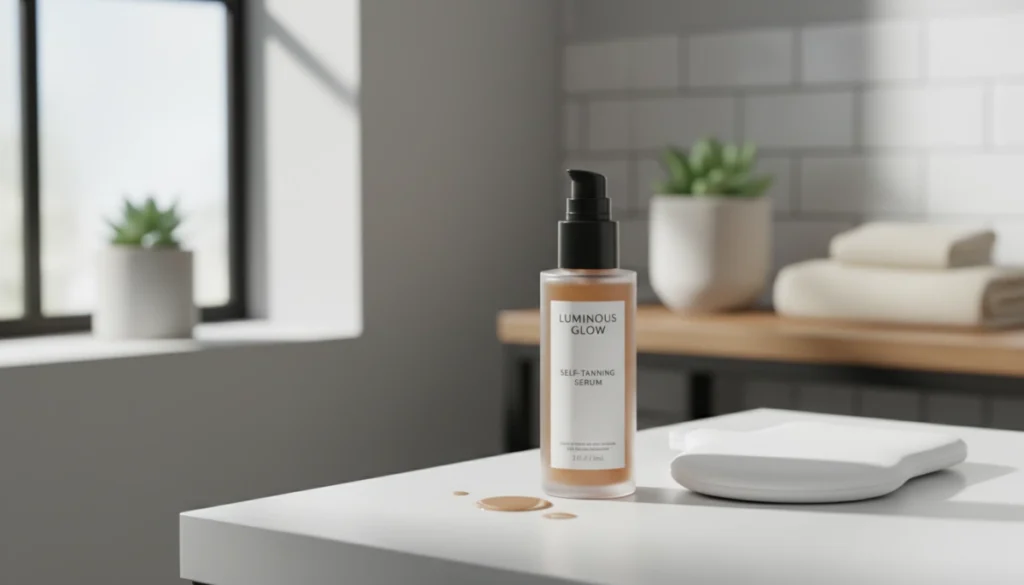
Want that just‑back‑from‑vacation glow… without the UV damage, streaks, or scary orange self tanner horror stories?
You’re not alone. Most people love the idea of a sunless tanning lotion or mousse—but panic when it comes time to actually apply it. DHA (dihydroxyacetone), developing time, tanning mousse vs lotion, tanning mitt, guide color… it can feel like a chemistry class on your bathroom floor.
In this guide, I’ll break down exactly how self tanner works, how to choose the right formula for your skin (from gradual tanner to tanning drops for face), and how to get a truly streak-free application—even if you’re pale, a beginner, or have been burned by bad tans before.
If you’re ready for a believable, low‑maintenance glow that actually looks like your skin (just better), keep reading.
How Self Tanner Works
I hear the same fears all the time: streaky legs, orange ankles, patchy hands, and that classic “self tanner smell.” The good news? When you understand how self tanner actually works on your skin, it gets way easier to choose the right formula and get a believable, golden glow.
DHA And The Science Behind Sunless Tanning
Self tanner is basically a sunless tanning lotion (or mousse, drops, or mist) powered by an active called DHA (dihydroxyacetone). Here’s what it does:
- DHA reacts with your skin’s amino acids in the very top layer (the stratum corneum), not deeper layers.
- This reaction is called the Maillard reaction – the same type of browning that happens when you toast bread.
- Over 4–8 hours of developing time, those surface cells slowly turn a golden to bronze color, giving you a tan without UV damage.
- No pigment is “dyed” into your skin; it’s a chemical reaction with dead skin cells, which is why the color naturally fades as you shed them.
That’s why exfoliating before tanning and applying with a tanning mitt makes such a difference for a smooth, streak-free application.
Natural DHA vs Synthetic DHA
Most self tanners use one of two DHA sources:
Synthetic DHA
- Lab-made, very common in drugstore and older formulas.
- Can be more likely to have that strong “fake tan” scent and sometimes lean more orange if the formula isn’t balanced.
Natural or naturally-derived DHA
- Usually sourced from sugar cane or sugar beet and then purified.
- Often used in clean self tanner formulas that avoid heavy dyes, mineral oil, and harsh alcohols.
- Tends to feel gentler and can give softer, bronze undertones that look more like a real tan on pale skin.
In my own products, I always choose naturally-derived DHA and build the formula around:
- Non-comedogenic self tanner bases that won’t clog pores.
- Minimal, skin-friendly scent so you don’t feel like you’re wearing a “fake tan cloud.”
- Hydrating ingredients that help the DHA develop evenly for a smoother finish.
The core idea: self tanner doesn’t stain your skin; it reacts with it. When the DHA source is clean and the formula is balanced, you get a believable glow, less smell, and way fewer orange surprises.
Types of self tanner
Self tanner mousse and foam for beginners
Self tanner mousse and foam are my go-to picks for beginners because they’re light, easy to blend, and give quick, streak-free application. A whipped mousse shows where you’ve applied, spreads fast with a tanning mitt, and works great as fake tan for pale skin when you want instant bronze undertones without sitting in the sun. In the U.S., most customers tell me they like mousse for full-body sunless tanning lotion results before events or vacations because the developing time is predictable and the color payoff is strong after one use.
Self tanner lotion and gradual tanner for dry skin
Self tanner lotion and gradual tanner are ideal if you have dry or sensitive skin or you just want a softer, buildable glow. These formulas feel like a daily body lotion, so you get hydration plus a slow, even tan over a few days. I lean on gradual tanner for customers who don’t want a dramatic shift overnight and who are worried about streaks; using it every other day gives a natural look that’s easier to control and maintain.
Self tanner drops for face and mixing with skincare
Self tanner drops for face are the most flexible option if you already love your skincare routine. You just mix a few tanning drops for face into your regular moisturizer or serum so you can keep using your favorite non-comedogenic products. I always recommend this to U.S. customers who have acne-prone skin or want a subtle glow that matches the body without clogging pores—especially if they’re using actives like retinol and need tight control over how deep the tan goes.
Self tanner water and mist for sensitive skin and hard-to-reach areas
Self tanner water and mist are great for sensitive skin and hard-to-reach spots like your back. These clear, lightweight sprays feel like a facial mist, usually come fragrance-light, and work well for anyone who hates the feel of heavier lotion. I see a lot of people use tanning water as a face and body top-up between full tan sessions; it’s easy to spray on and blend with a mitt for a quick, even refresh.
Self tanner with guide color vs clear formulas for beginners
If you’re new, I always steer you toward self tanner with guide color first. The temporary tint shows exactly where the product is going, which helps prevent missed patches and helps you nail a streak-free application. Clear formulas are cleaner on sheets and clothes and work well once you’re confident with your routine, but they’re harder to see during application. For most beginners in the U.S., a tinted mousse or lotion with a visible guide color plus a good tanning mitt is the safest way to learn before graduating to clear formulas.
Prepping Skin For Self Tanner
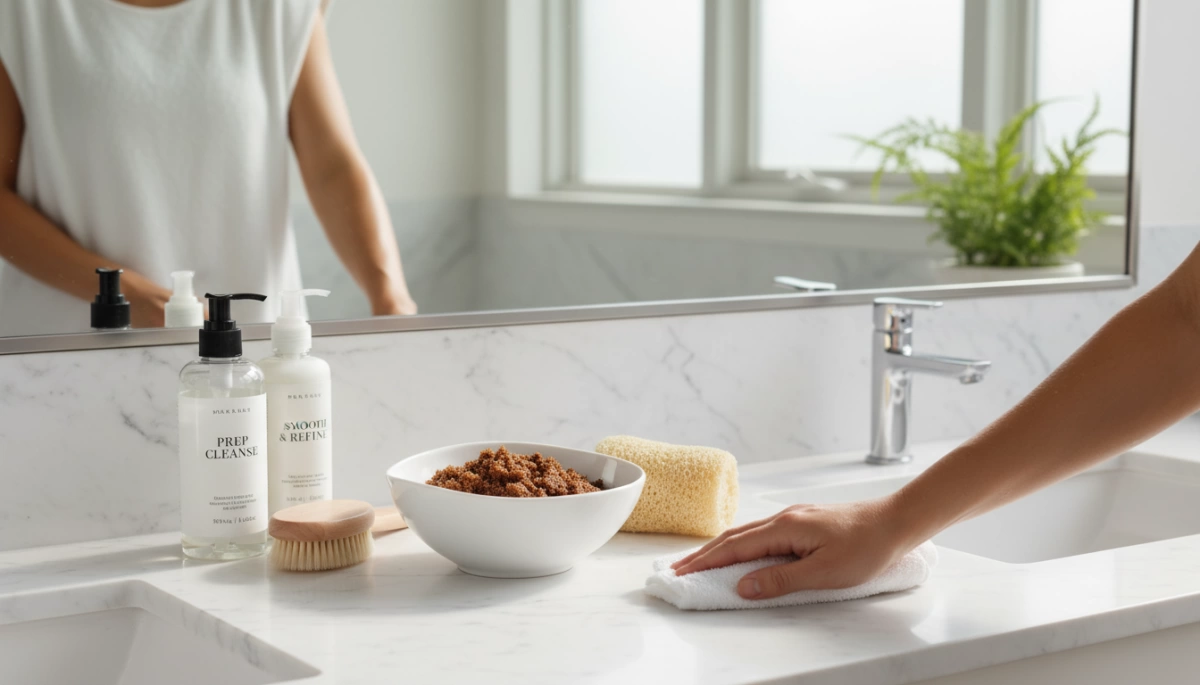
Exfoliating Before Self Tanner
If I want a smooth, even self tanner color, I always start with exfoliating before tanning:
- Exfoliate 12–24 hours before using self tanner or sunless tanning lotion.
- Use a gentle scrub, exfoliating mitt, or chemical exfoliant (AHA/BHA body wash) on elbows, knees, ankles, and heels.
- Rinse well so there’s no oily residue that can block DHA (Dihydroxyacetone) from developing.
This step removes dry patches so the color doesn’t grab and turn dark or patchy.
Shaving And Hair Removal Timing
Shaving and waxing timing can make or break a streak-free application:
- Shave or wax at least 12–24 hours before self tanner to avoid irritation and dotty “strawberry legs.”
- Rinse off any shaving cream completely and skip heavy oils right after.
- If you must shave same day, do it in the morning, then apply self tanner at night once skin has calmed down.
This keeps the skin smooth but not overly sensitive when the tanning mousse or lotion goes on.
pH-Balanced, Clean Skin
Self tanner develops best on clean, pH-balanced skin:
- Shower with a mild, pH-balanced body wash and rinse thoroughly.
- Avoid bar soaps that leave a film; they can interfere with DHA and cause uneven color.
- Make sure skin is completely dry before you start your self tanning routine.
Clean, balanced skin helps your fake tan develop with natural bronze undertones instead of orange.
Barrier Cream On Dry Areas
Barrier cream is my go-to trick for a professional, streak-free application:
- Apply a light, non-greasy lotion or barrier cream to:
- Knuckles
- Elbows
- Knees
- Ankles
- Heels
- Use just enough to soften, not soak, these dry spots so they don’t over-absorb color.
- Blot any extra product before you start applying self tanner with a tanning mitt.
This keeps those high-risk areas from turning too dark while still blending with the rest of your tan.
How To Apply Self Tanner (Start To Finish)
Best Tools For Self Tanner
For an even, streak-free application, I always recommend:
- Tanning mitt: Non‑negotiable for self tanner mousse, foam, and lotion. It blends better and saves your palms from turning orange.
- Back applicator: Helpful if you tan solo and can’t reach your mid‑back.
- Detail brush or small makeup sponge: For ankles, wrists, and around the nose and hairline.
- Barrier cream: A basic unscented lotion for dry areas like elbows, knees, and heels.
Full-Body Self Tanner Routine
Here’s the simple order I follow for sunless tanning lotion or mousse:
- Work in sections: lower legs → upper legs → stomach → chest → arms → back.
- Pump self tanner onto the mitt, not directly on skin.
- Use long, circular motions, blending up and out so you don’t miss side areas.
- Use less product on joints (knees, elbows, ankles) and blend any extra from nearby skin over them.
- For the back, use a back applicator or load your mitt lightly and move in side‑to‑side sweeps.
Self Tanner Technique For Hands And Feet
Hands and feet are where fake tan looks fake fastest, so I keep it light:
- Apply body self tanner to arms and legs first.
- With what’s left on the mitt (no extra pumps), lightly sweep over the tops of hands and feet.
- Bend fingers and toes so product gets into creases without building up.
- Wipe knuckles, nails, and between fingers/toes with a slightly damp washcloth after 1–2 minutes to soften the color.
Self Tanner For Face, Neck, And Hairline
For the face, I usually use tanning drops for face or a non‑comedogenic self tanner:
- Mix a few self tanner drops with your regular moisturizer in your palm.
- Apply like skincare: center of face outwards, then down the neck.
- Blend carefully along the jawline, ears, and behind ears so there’s no line.
- Use a clean, dry brush or sponge to soften color around the hairline, brows, and sides of the nose.
- Wash hands and under nails right after to avoid dark palms.
Used this way, self tanner gives a natural, bronze undertone without streaks or harsh lines, even on pale skin.
Drying and developing self tanner
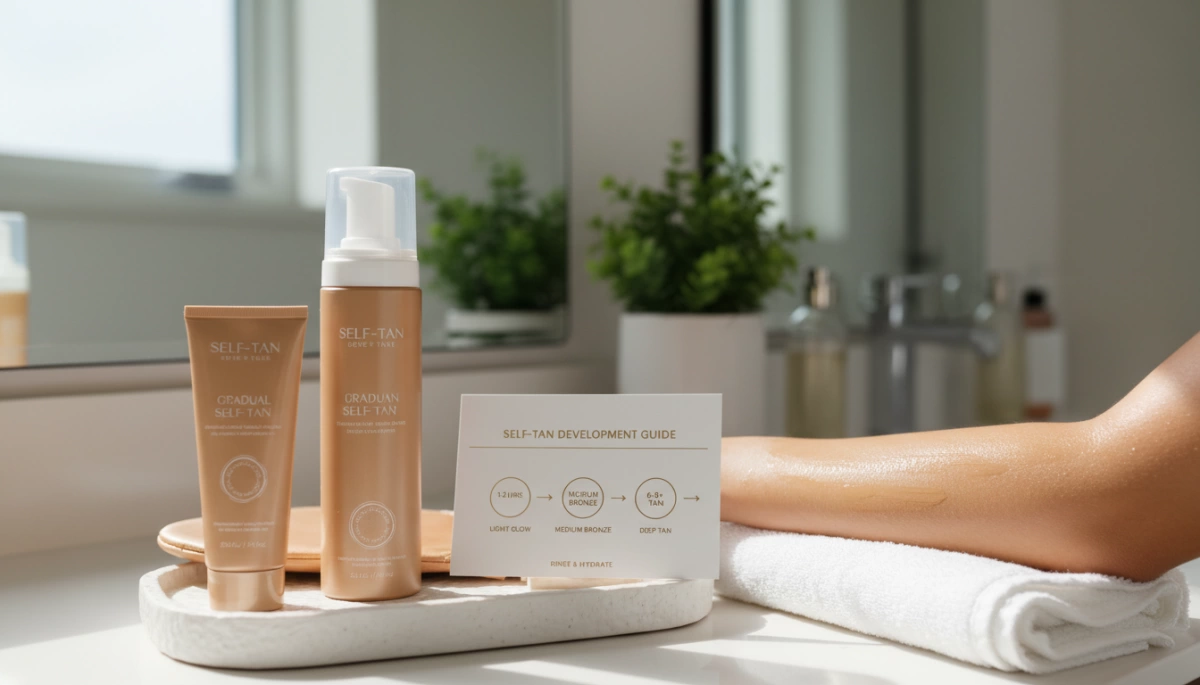
How self tanner dries and develops
Once I apply self tanner, I give it time to dry on top of the skin before it starts to develop underneath. The DHA (dihydroxyacetone) reacts with the top layer of my skin over a few hours to build that sunless tanning lotion color. For a streak-free application, I:
- Wait at least 10–20 minutes before sitting or getting dressed
- Avoid sweating, working out, or washing my hands too early
- Use a tanning mitt so my hands stay clean and the formula lays evenly
Most self tanners reach full color in 6–8 hours, depending on the formula and my natural skin tone.
What to wear while self tanner develops
What I wear while self tanner develops makes a big difference in how even my tan looks. To avoid marks and patchiness, I stick to:
- Loose, dark cotton clothes (oversized tee, soft joggers, or a flowy dress)
- No tight waistbands, bras, or socks that can rub off product
- Open-toe slides instead of sneakers to protect my fake tan on feet
Light colors can stain, so I keep my best white sheets and pajamas for non-tan nights.
Express self tanner vs overnight self tanner
Both express self tanner and overnight self tanner work, but I choose based on my schedule:
Express self tanner
- Ideal when I need a fast glow before an event
- Developing time is usually 1–3 hours
- I control depth by how long I leave it on:
- 1 hour: light, fake tan for pale skin
- 2 hours: medium bronze undertones
- 3+ hours: deeper tan
Overnight self tanner
- Best when I don’t mind sleeping in it
- Usually 6–8 hours of developing time
- Great for a more gradual, long-lasting result
If I have sensitive or acne-prone skin, I look for non-comedogenic self tanner formulas, especially for the face, in both express and overnight options.
First rinse after self tanner and what to avoid
The first rinse can make or break how my tan looks the next day. When it’s time to shower:
- I wait until the recommended developing time is up (check the bottle)
- I do a lukewarm water-only rinse for 30–60 seconds
- I avoid:
- Hot water and long showers
- Harsh soaps, scrubs, or loofahs
- Shaving or waxing right away
I gently pat dry with a towel instead of rubbing. Any guide color (the temporary bronze layer) will rinse off—that’s normal. The real tan continues to develop over the next few hours, leaving a smooth, even, bronzed result.
Maintaining A Self Tanner Glow
How To Moisturize To Extend Self Tanner
If I want my self tanner to last, I treat my skin like it’s dry and fragile. A few simple rules:
- I use a fragrance-free, oil-free body lotion morning and night to lock in moisture without breaking down my sunless tanning lotion.
- I look for hyaluronic acid, glycerin, shea butter, and ceramides instead of heavy plant oils.
- I pat skin dry after showers instead of rubbing with a towel to avoid scrubbing off color.
- On my face, I stick with non-comedogenic self tanner–friendly moisturizers, so I don’t clog pores or streak my tan.
Products That Fade Self Tanner Faster
Certain products will strip a fake tan for pale skin almost overnight. I avoid these on any day I want to keep my bronze undertones:
- Body scrubs, loofahs, and rough washcloths
- Glycolic, lactic, and salicylic acids on the body
- Retinol/retinoids on areas I’ve tanned
- Oily shower gels, bath oils, and cleansing balms on the body
- Chlorine and hot tubs, which pull color out faster
If I need to use strong actives on my face, I accept that I’ll reapply tanning drops for face more often.
Topping Up With Gradual Self Tanner
To keep a streak-free application all week, I “top up” instead of starting from scratch:
- Every 2–3 days, I apply a gradual tanner lotion after my regular moisturizer has sunk in.
- For my face, I mix a few tanning drops for face into my night cream 1–2 times a week.
- If my legs fade faster than my arms (which happens a lot in the U.S. climate with shaving), I only reapply self tanner mousse or lotion there to keep everything even.
This “little and often” routine keeps my self tanner glow smooth, even, and low-maintenance between full tanning sessions.
Fixing self tanner mistakes
When self tanner goes wrong, I don’t start over from scratch—I fix the spots that bug me most.
How to remove fake tan with exfoliation
To fade or remove a bad sunless tanning lotion or mousse, I rely on gentle, steady exfoliation, not harsh scrubbing.
- Take a warm (not super hot) shower to soften skin.
- Use a mild body scrub, exfoliating mitt, or washcloth in circular motions on streaky areas.
- Focus on elbows, knees, ankles, wrists, and neck where DHA (Dihydroxyacetone) grabs more.
- Exfoliate every day or every other day until the fake tan fades—slow and consistent keeps it streak-free and less patchy.
Lightening dark self tanner patches on palms and heels
Dark palms, fingers, and heels are the most common self tanner mistake, especially for beginners.
Quick fixes I like:
- Dish soap + baking soda: Mix into a paste, rub on stained areas for 30–60 seconds, then rinse.
- Lemon juice or glycolic toner: Swipe over dark patches with a cotton pad to lift color gradually.
- Warm water soak: Soak hands or feet for 5–10 minutes, then gently buff with a washcloth.
Always moisturize after, so your skin doesn’t dry out and grab more color next time.
Using tan eraser products for self tanner gone wrong
If the fake tan is really uneven, or you want a clean slate:
- Use a tan eraser mousse or foam (I like formulas that are fragrance-light and gentle for U.S. skin sensitivities).
- Apply to dry skin, leave on for the recommended developing time (usually 5–15 minutes).
- Rinse in warm water and lightly exfoliate with a mitt for a more complete removal.
I always do a quick patch test with any tan eraser or remover, especially if I’m using it on my chest, neck, or face.