The Golden Rule of Hair Dye for Colored Hair
When you’re working with hair dye for colored hair, the golden rule is simple:
Color can deposit on color, but it cannot truly lift (lighten) permanent color.
Why Color Doesn’t Lift Color
Once permanent dye is in your hair, the natural pigment is altered and replaced with artificial pigment. When you try dyeing over dyed hair with another permanent box dye to go lighter, here’s what really happens:
- The dye mostly “sees” artificial pigment, not virgin hair.
- Developers like 10 volume vs 20 volume are designed to lift natural pigment, not old dye.
- You usually end up with uneven warmth, banding, or patchy results, not a clean lighter shade.
If you want to lift color from dyed hair, you need bleach or a hair color remover, not just another box shade.
Hot Roots and Uneven Results
That classic “hot roots on colored hair” problem happens because:
- Roots are virgin hair vs processed hair (usually lighter, healthier, and closer to body heat).
- The same formula lifts your natural root more than your already dyed mids and ends.
- Result: bright orange/yellow roots with darker, duller lengths.
To reduce hot roots and patchiness:
- Use a lower developer or shorter timing at the roots.
- Avoid pulling strong permanent dye through lengths that are already saturated with pigment.
- Focus on root touch-up techniques instead of re-dyeing your whole head every time.
When to Deposit Color vs Remove Pigment First
Before you grab any hair dye for colored hair, decide if you need to deposit or remove:
Deposit color (add pigment) when you:
- Want to darken previously dyed hair slightly.
- Need to refreshing faded hair color in the same depth or darker.
- Are toning brassiness or cooling down warmth with demi-permanent hair color or semi-permanent hair color.
Remove pigment first when you:
- Want to go lighter than your current permanent shade.
- See built-up dark box dye and want a softer, brighter result.
- Are fixing very uneven or muddy color where just adding more dye will make it worse.
In my brand, I design at-home, damage-conscious color around this rule:
If you’re not lifting your natural hair, stick to gentle deposit (demi, semi, gloss). If you’re trying to go lighter than your existing permanent color, you’re in color-remover-or-salon territory—no shortcut box dye can change that safely.
Pre-Dye Checklist for Hair Dye for Colored Hair
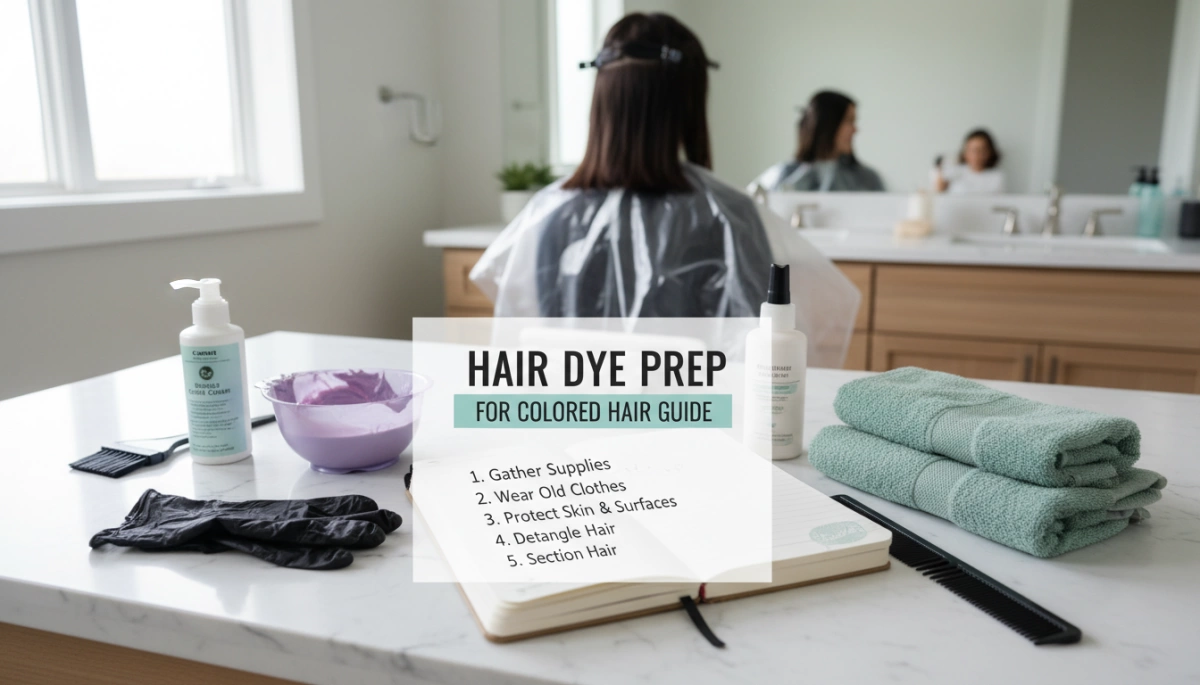
Before I put any hair dye for colored hair back on my head (or a customer’s), I always walk through a quick pre-dye checklist. This is how I avoid breakage, banding, and surprise results when dyeing over dyed hair.
Simple Hair Porosity Test at Home
Porosity decides how fast your hair grabs color and how fast it fades. Here’s an easy test you can do with stuff you already have:
Float test:
- Wash a few shed strands with shampoo only, let them dry.
- Drop them in a clear cup of room‑temperature water.
- Hair that floats for a while = low porosity (color grabs slower, needs more time).
- Hair that sinks fast = high porosity (soaks up color quickly, can go dark or dull fast).
Slip test:
- Take one strand, slide your fingers from ends to root.
- Smooth = lower porosity/less damage.
- Rough and bumpy = high porosity/damaged.
I use this to decide if I go with demi‑permanent hair color, semi‑permanent hair color, or just a color depositing conditioner/gloss on already colored hair.
Checking Hair Damage Before Using Hair Dye on Colored Hair
If your hair is already processed, you need to be honest about damage before you reach for more hair dye for colored hair:
- Look for white dots, frayed ends, or hair snapping when you tug it – that’s structural damage.
- Stretch a wet strand gently:
- Returns to normal = healthier.
- Stays stretched or breaks = over‑processed.
- If hair feels mushy, gummy, or like overcooked noodles when wet, skip permanent dye and reach for:
- Bond builders for colored hair (like Olaplex, K18)
- Hydrating hair masks and gentle protein treatments
- Semi‑permanent or color depositing hair masks instead of harsh lifting
When damage is high, I position my own products and services as “repair first, recolor second.” It’s cheaper than a color correction later.
Why a Strand Test Matters on Previously Colored Hair
On previously dyed hair, a strand test is non‑negotiable if you want predictable results:
What to do:
- Mix a small amount of your chosen hair dye for colored hair and developer.
- Apply to a hidden section (underneath in the back).
- Process the full time, rinse, dry, and check in natural light.
What it tells you:
- How the shade looks over your existing color (especially if you’re trying to darken previously dyed hair).
- Whether your hair grabs too dark or too cool/warm.
- If your hair feels drier, rougher, or weaker after that formula.
If the strand test looks patchy, too dark, or too ashy, you know to adjust your formula, switch to a demi‑permanent, or use a color depositing gloss instead of committing to a full head. This is exactly how I protect clients and at‑home users from “I hate my color” moments in the U.S. market.
Choosing the Best Hair Dye for Colored Hair
When I choose hair dye for colored hair, I treat it differently than virgin hair. The goal is to protect the lengths, fix tone, and avoid buildup.
Best Options to Go Darker on Colored Hair
If you’re dyeing over dyed hair and just want to go deeper or richer, going darker is usually the safest move at home.
Best ways to darken previously dyed hair:
Demi-permanent hair color
- Great for refreshing faded hair color and adding depth.
- Blends old color, adds shine, and fades softly instead of leaving harsh lines.
- I reach for demi when someone wants richer brunette, deeper red, or to tone down brassiness without a drastic change.
Pigment fillers for going darker
- If your hair is very light or highlighted, warm “filler” shades (gold, copper, red) keep dark color from turning muddy or green.
- I like using a warm demi shade first, then the target darker shade on top for more even, long-lasting color.
Avoid throwing straight black or very ashy dark dye on light, porous hair; that’s how you get flat, inky, or greenish results.
Using Demi-Permanent and Semi-Permanent Hair Dye on Colored Hair
Demi-permanent and semi-permanent formulas are my go-tos for maintaining hair dye for colored hair because they’re lower-commitment and gentler.
Demi-permanent hair color
- Uses low-volume developer (usually 10 volume) and deposits color only.
- Ideal for root touch-up on previously colored hair when you’re not lifting, or to tone mids and ends.
- Great for brassiness correction, richer tone, and blending grays without the hard regrowth line.
Semi-permanent hair color
- No developer, sits on the surface, and slowly washes out.
- Perfect for trying fun tones, refreshing faded color, or using a color depositing hair mask between salon visits.
- I like semi-permanent options for safe hair dye for damaged hair, especially if you’re nervous about more chemical processing.
Ammonia-Free Hair Dye and Color Depositing Glosses
When hair is already processed, I lean hard into ammonia-free and gloss formulas to keep it shiny and strong.
Smart options for maintaining and refreshing colored hair:
Ammonia-free hair dye
- Gentler on the cuticle and better for fragile, color-treated hair.
- Great if you’re sensitive to strong smells or want non-damaging hair color options for small tweaks instead of major lifts.
- Works well for subtle changes and refreshes, not big level jumps.
Hair gloss for colored hair / color depositing gloss
- Adds shine, smooths frizz, and boosts tone (cool, warm, or neutral).
- I like glosses to keep brunette from going flat, blondes from going brassy, and reds from looking dull.
- Easy at-home way for U.S. customers to maintain hair color vibrancy between full color sessions.
Color depositing conditioner or color depositing hair mask
- Quick way to refresh faded hair color in the shower.
- Use once a week or as needed to keep tone on point and cut down on frequent dye jobs.
For most people in the U.S. wanting to keep their color looking fresh without wrecking their hair, I recommend this order: demi-permanent for real color changes, ammonia-free dye for gentle shifts, and glosses/conditioning masks for maintenance and shine.
Hair Dye for Colored Hair When You Only Want to Refresh
When your color is faded but you don’t want a full dye job, you can refresh at home without trashing your hair. I treat this as “maintenance mode,” not “makeover mode.”
Color Depositing Conditioners for Faded Colored Hair
Color depositing conditioner is the easiest way to freshen faded colored hair between salon visits.
- Use a color depositing conditioner or color depositing hair mask that matches your current shade (not lighter).
- Focus on mid‑lengths and ends, where your color looks dull or washed out.
- Leave it on longer for more intensity, shorter for a soft refresh.
- Rotate: use it once a week instead of your normal conditioner to maintain vibrancy without build-up.
This works especially well for red, copper, brunette with warmth, and vivid fashion colors.
Glaze and Gloss Treatments for Colored Hair
If your hair looks flat or matte, a hair gloss for colored hair or glaze is the move.
- Look for ammonia-free hair dye glosses or clear glazes labeled “shine,” “gloss,” or “topcoat.”
- Choose:
- Clear gloss: boosts shine, no color change.
- Tinted gloss: adds tone (cool, warm, golden) and softens brass.
- Apply from mid‑lengths to ends and comb through for even coverage.
- Use every 4–6 weeks to refresh shine without committing to permanent color.
Refreshing Ends Without Over-Processing Colored Hair
The biggest mistake I see at home is dragging permanent dye through the ends every time. That’s how you end up with fried, inky, over-saturated hair.
- For hair dye for colored hair, apply permanent or demi only to roots/new growth.
- Refresh mids/ends with:
- Color depositing conditioner
- Tinted gloss or glaze
- A low-ammonia demi-permanent formula
- Cut processing time on your ends in half compared to your roots.
- If your ends are dry or damaged, mix a bit of conditioner or bond builder into your gloss instead of using straight permanent dye.
This approach keeps your color rich, the ends soft, and avoids the “overdone” look that happens when you keep piling full-strength dye on already colored hair.
Changing Tone with Hair Dye for Colored Hair
Using the Color Wheel to Fix Brassiness
When I’m correcting brassiness on colored hair, I always go back to the color wheel. It’s the fastest way to get clean, balanced tone instead of orange or yellow:
- Yellow brass (pale yellow, gold): cancel with violet-based toner or purple-tinted hair dye for colored hair.
- Yellow-orange brass (gold/copper): cancel with blue-violet or “cool beige” formulas.
- Orange brass (strong copper): cancel with blue-based toner or blue shampoo as maintenance.
If you’re shopping at a U.S. drugstore or beauty supply, look for words like “cool,” “ash,” “smoky,” “platinum,” “beige” on the box or bottle. Those usually mean there’s blue/violet pigment inside to neutralize brassiness on previously dyed hair.
Toner and Demi-Permanent Hair Dye for Tone Correction
For most people in the U.S. who already have colored hair, toner and demi-permanent hair color are the safest way to adjust tone without over-damaging:
- Use a toner for brassy colored hair when you like your level (lightness) but hate the warmth.
- Reach for demi-permanent hair color when you need a bit more pigment and staying power than toner, but don’t want the commitment of permanent.
- Pick a low-volume developer (usually 10 volume) with toner or demi to avoid lifting and re-lightening your existing color.
- If your hair is very dry or damaged, a color depositing conditioner or color depositing hair mask can softly shift tone and refresh shine with less stress on the hair.
I position these as my go-to options for customers who want to change hair color tone on colored hair at home without a full color overhaul.
Ash vs Warm Hair Dye Choices on Colored Hair
Choosing between ash and warm shades when dyeing over dyed hair makes or breaks the final result:
Choose ash hair dye for colored hair if:
- You see yellow, orange, or red you want to tone down.
- You like neutral, beige, or smoky finishes.
- You’re refreshing faded brunette or blonde that turned brassy.
Choose warm hair dye for colored hair if:
- Your color looks flat, dull, or too gray.
- You want rich gold, copper, or chocolate tones.
- Your skin looks better with warmth and you don’t mind a little golden reflection.
One big rule: if your hair is very porous or over-processed, pure ash can sometimes grab too dark or look muddy. In those cases, I point people to neutral or soft beige shades instead of super-ash formulas, or I layer a gloss or hair gloss for colored hair after to soften the result while still keeping brass under control.
Going Lighter With Hair Dye for Colored Hair
Lightening already dyed hair is where most at‑home mistakes happen. If your hair is colored and you want to go lighter, you need to understand what actually works and what’s just wasting time (or causing damage).
Why Box Dye Alone Doesn’t Lighten Colored Hair
Most box dyes from the drugstore are designed to deposit color, not remove old pigment.
- Color doesn’t lift color: Permanent box dye can slightly lighten virgin hair, but it won’t reliably lift through layers of old dye. That’s why dark box dye usually just looks darker or muddy when you try to put a lighter shade on top.
- Result: darker, dull, or uneven: When you put a light blonde box dye over previously dyed brown hair, the artificial brown pigment is still there. The new dye just stacks on top, often making it look flat, murky, or warmer (brassy) instead of lighter.
- Developer isn’t strong enough on processed hair: Most “at‑home” kits use 20 volume developer, which is not meant to erase multiple rounds of box dye on colored hair.
- If you want to lift color from dyed hair, you’re not choosing “a lighter shade” of box dye – you’re choosing the right lightening process.
Color Remover vs Bleach on Previously Dyed Hair
When going lighter with hair dye for colored hair, you usually choose between color remover and bleach.
Color remover (for artificial pigment):
- Works best on permanent box dye or salon dye, especially darker shades.
- It shrinks and pulls out the artificial dye molecules, but doesn’t touch your natural pigment.
- Good first step if your hair is stained from repeated dark dyes and you want to soften or lift them before anything stronger.
- Results can be warm, coppery, or uneven, because it reveals the underlying color left behind.
Bleach (for bigger level jumps):
- Needed when you want to go significantly lighter or when color remover isn’t enough.
- Bleach lightens everything: artificial color + your natural pigment.
- Gives the most lift, but it’s also the most damaging, especially on already processed hair.
- A bleach bath on dyed hair (bleach mixed with shampoo) can be a gentler option for minor lightening, but it’s still a chemical lightener and needs caution.
How I usually position it for U.S. customers:
- Use a hair color remover for box dye first if you have heavy dark box dye build‑up.
- Only move to bleach (ideally low and slow with 10 volume or 20 volume developer) once you see what’s underneath and your hair condition allows it.
- Always follow up with a bond builder for colored hair (like Olaplex or K18) and deep hydration.
When to Stop and See a Pro for Big Color Changes
There’s a clear line where at‑home lightening on colored hair becomes risky, especially in the U.S. where people tend to layer years of box dye.
Stop DIY and book a professional colorist when:
- You have multiple layers of dark dye (black, dark brown, or red) and want to go light or blonde.
- Your hair feels mushy, stretchy, gummy, or breaks easily when wet – that’s a major red flag.
- You see banding (different color levels in roots, mids, ends) and want an even lighter result.
- You’re trying to fix patchy hair color at home from a previous failed lightening attempt.
- You want a big transformation (dark to bright copper, platinum blonde, or cool beige).
A pro can:
- Choose the right developer volume and lightener.
- Use bond builders, controlled timing, and toners to correct brassiness and balance your tone.
- Protect your hair from crossing that line into breakage.
If your goal is a subtle shift, like going one shade lighter or brightening slightly sun‑faded ends, you can often manage that at home with the right hair dye for colored hair strategy. But if you’re chasing a major before‑and‑after, the safest move is to let a colorist take over.
Step-by-Step Guide: Applying Hair Dye for Colored Hair
When I design a routine for hair dye for colored hair, I keep it simple, fast, and as low-damage as possible. Here’s exactly how I’d walk you through dyeing over dyed hair at home.
How to Prep Colored Hair Before Dyeing Again
Good prep makes or breaks dyeing over dyed hair:
- Wash 24–48 hours before with a sulfate-free shampoo for dyed hair; skip conditioner at the roots so the color can grab.
- Detangle completely and dry hair fully; hair dye grabs more evenly on smooth, dry, clean-feeling hair.
- Avoid heavy oils/silicone serums on the roots and mids the day before; keep them only on very dry ends if needed.
- Do a strand test with your chosen hair dye for colored hair to preview the shade and timing on your actual hair.
Sectioning and Application Order on Dyed Hair
Sectioning keeps refreshing faded hair color clean and controlled, especially on long or thick hair.
Basic section map for colored hair
| Step | What to Do | Why It Helps |
|---|---|---|
| 1 | Part hair down the middle (front to back) | Splits hair into left/right for easier control |
| 2 | Part ear-to-ear across the crown | Creates 4 main quadrants to work methodically |
| 3 | Clip each quadrant securely | Prevents overlap and missed patches |
| 4 | Start where hair is most resistant | Usually the back; it stays processed the longest |
General order for dyed hair:
- If you’re covering gray or going darker: apply to roots first, then mids, then ends.
- If you’re refreshing only faded mids/ends: skip roots and focus product on mid-lengths and tips.
Different Application Methods for Roots, Mids, and Ends
Colored hair rarely needs the same treatment from root to tip. Here’s how I break it down:
Roots (new growth or hot roots area)
- Use a small brush and bowl or a precision bottle for root touch-up techniques.
- Apply in ¼-inch sections, laying color only on the new growth.
- If you’re worried about hot roots on colored hair, use lower-volume developer at the roots than you’d use for lifting color on virgin hair.
Mids (previously dyed, not too damaged)
- After roots process partway (usually 10–15 minutes with permanent color), pull color through the mids if they need a refresh.
- Use a demi-permanent hair color on mids if you only want to deposit and add shine, not lift.
Ends (old, porous, most fragile)
- Ends soak up pigment fast, especially on damaged colored hair.
- Apply to ends last and often with a diluted formula or a color depositing conditioner instead of strong permanent dye.
- If ends are already dark and just dull, use a hair gloss for colored hair or color depositing gloss instead of more permanent color.
By treating roots, mids, and ends differently, you avoid overlapping hair color damage and keep your hair color looking even, shiny, and rich instead of flat or muddy.
Developer and Processing Rules for Hair Dye for Colored Hair
Developer Volume Guide for Previously Dyed Hair
When I design hair dye for colored hair, I always assume your hair is already fragile and uneven, so developer choice has to be conservative:
- 10 volume developer: Best for deposit only on previously dyed hair. Use when you’re refreshing faded color, darkening, or toning. It’s safer and helps avoid unnecessary damage.
- 15–20 volume developer: Use only when you need a bit of lift on dyed hair (like refreshing slightly darker mids/ends to match brighter roots). I keep 20 volume for controlled root touch-ups or small shifts, not huge changes.
- Avoid 30–40 volume on colored hair at home: High-volume developer on processed hair is one of the fastest ways to breakage, banding, and hot roots on colored hair. If you think you need 30–40 volume to move your color, that’s usually a sign you need a pro, not more power.
For most U.S. customers dyeing over dyed hair at home, 10 volume is the go-to for safe, predictable results.
How Long to Process Hair Dye on Colored Hair
Previously colored hair grabs and processes differently than virgin hair, so timing matters more than people think:
- For demi-permanent hair color with 10 volume, I usually recommend 15–25 minutes on mids/ends, then check every 5 minutes.
- For root touch-ups on colored hair with 10–20 volume, 25–35 minutes is typical, but you should always follow the specific product instructions and your hair history.
- On porous or damaged colored hair, cut the time. Your hair may darken or go muddy faster, especially when you’re trying to darken previously dyed hair or change hair color tone on colored hair.
When in doubt, process less, check more. You can always reapply; you can’t undo over-processed damage quickly.
Why You Shouldn’t Trust Box Dye Timing Blindly
Most box dyes are written for “average” virgin hair, not layers of old dye, highlights, and damage:
- Your roots, mids, and ends don’t process at the same speed. Colored ends can soak up pigment way faster than your new growth.
- If you follow box dye timing exactly on heavily processed hair, you risk overlapping hair color, banding, and breakage.
- Use the box instructions as a starting point, then adjust based on a quick strand test and how your hair responded to color in the past.
My rule for hair dye for colored hair: your hair history decides the timing, not the back of the box.
Big Mistakes To Avoid With Hair Dye For Colored Hair
When I talk to customers about hair dye for colored hair, these are the mistakes that wreck results fast. Avoid these and your color lasts longer and looks more professional at home.
Overlapping Permanent Dye On The Same Lengths
Putting permanent hair dye over the same lengths again and again is one of the fastest ways to fry your ends.
- Only apply permanent color on new growth; pull it through mids/ends only if they’re very faded and only for the last 5–10 minutes.
- For refreshing faded lengths, use demi‑permanent hair color, semi‑permanent hair color, or a color depositing conditioner/hair mask, not more permanent dye.
- Overlapping color on colored hair leads to breakage, dullness, and banding, especially on fine or damaged hair.
Ignoring Undertones And Getting Muddy Or Green
If you ignore undertones, you end up with muddy brown, khaki green, or a weird flat tone that never looks “salon good.”
- Hair that has been lightened or box dyed usually holds warm undertones (yellow, orange, red).
- If you’re going darker, use shades with warm or neutral bases or a pigment filler first so brunette shades don’t turn green.
- If you want to fix brassiness (orange/yellow), follow basic color wheel theory:
- Orange → cancel with blue
- Yellow → cancel with violet
- Use a toner for brassy colored hair or a demi‑permanent ash/neutral shade instead of guessing.
Using High Volume Developer On Colored Hair
High volume developer on already processed hair is almost always too much for at‑home use.
- On previously dyed hair, stick with 10 volume or 20 volume developer for most root touch‑ups or slight shifts.
- 30–40 volume developer on colored hair can cause severe damage, hot roots, and patchy lift, especially on fragile ends.
- If you need a big lift from dark box dye, that’s when I tell people to consider hair color remover vs bleach or see a pro instead of cranking up the developer.
Aftercare for Hair Dye on Colored Hair
When you use hair dye for colored hair, what you do right after matters just as much as the color you picked. The goal is simple: lock in pigment, protect your cuticle, and keep your hair from drying out or breaking.
First wash rules after re-dyeing colored hair
For the first wash after dyeing over dyed hair, I always follow a few non‑negotiables:
- Wait at least 48–72 hours before your first shampoo so the cuticle can close and hold onto the new color.
- Use cool to lukewarm water, never hot, to cut down on fading and frizz.
- Skip clarifying shampoos and heavy scrubs right after coloring; they strip out fresh pigment fast.
- Blot, don’t rough towel-dry to avoid breakage on already processed hair.
These small moves alone help maintain hair color vibrancy and make any fade‑resistant hair dye work harder for you.
Sulfate-free shampoo and hydrating hair masks
If you’re serious about refreshing faded hair color and keeping it rich, switch your wash routine:
- Use a sulfate-free shampoo for dyed hair or a color safe conditioner as your main cleanser (co-wash) to reduce color loss.
- Rotate in a hydrating hair mask or color depositing hair mask once a week to:
- Replenish moisture on dry, processed hair
- Add a soft tint back into dull mids and ends
- Look for formulas with ceramides, aloe, shea butter, or oils that are labeled safe for color-treated hair.
In my own line, I always focus on sulfate-free, low-foam cleansers that respect your dye and don’t leave the cuticle screaming for help.
Bond builders and protein care for processed hair
Anytime you’re dyeing over dark hair, lifting color from dyed hair, or fixing brassiness, you’re stressing the internal bonds. To keep colored hair strong:
- Work in a bond builder (like Olaplex or K18 for color-damaged hair) 1–2 times a week to reconnect broken bonds and improve elasticity.
- Use a protein treatment for colored hair every few weeks if your hair feels stretchy, gummy, or breaks when wet.
- Always follow protein with a deep moisture mask so your hair doesn’t feel stiff or brittle.
- Don’t overdo protein or bond builders; more is not always better on damaged colored hair.
A simple routine—sulfate-free shampoo, weekly hydrating mask, plus smart use of bond builders—keeps hair dye on colored hair looking fresh longer and helps you avoid overlapping hair color damage from constant touch-ups.
FAQ on Hair Dye for Colored Hair
Can You Use Box Dye Over Highlights or Balayage?
You can use box hair dye for colored hair over highlights or balayage, but you need to be careful.
- If you want to go darker and more solid:
- Pick a neutral or slightly warm permanent or demi-permanent shade.
- Avoid very ashy box dye; it can grab too dark on light pieces and look muddy.
- Focus most product on the lighter highlighted areas, then pull through the rest to even things out.
- If you want to keep dimension:
- Use a gloss or color depositing conditioner instead of full permanent dye.
- Choose a sheer tone that softens harsh highlights without turning everything one flat color.
Box dye over highlights is a one-way street at home. If you love your dimension, I’d use more gentle, sheer color options first.
How Soon Can You Re-Dye If You Hate Your Color?
If you hate your color, timing matters more than panic.
- If you used semi-permanent or a color depositing conditioner:
- You can usually re-tone or adjust within a few days, especially if the hair feels healthy.
- If you used permanent box dye on colored hair:
- Give it at least 2–3 weeks with hydrating masks and bond builders before doing more permanent color.
- In the meantime, use color depositing masks or glosses to tweak tone instead of re-dyeing fully.
- If the color is way too dark:
- Look into a hair color remover for box dye or see a pro; don’t just keep layering lighter box dye on top.
When hair feels stretchy, gummy, or super dry, stop coloring and move into repair mode first.
Does Semi-Permanent Hair Dye Damage Colored Hair?
Semi-permanent hair dye for colored hair is usually the safest way to play with tone.
- Most semi-permanent shades:
- Sit on top of the hair instead of lifting your natural pigment.
- Are ammonia-free and used without developer.
- Add shine and refresh faded color with minimal damage.
- Where you still need to be careful:
- Constantly layering deep, strong pigments (especially reds, blues, and blacks) on porous hair can make future lightening harder.
- Cheap formulas with lots of alcohol can dry the hair out over time.
For refreshing faded hair color or changing tone on colored hair, I reach for semi-permanent color, glosses, and color depositing conditioners first, then permanent dye only when we truly need a long-lasting base change.