Material Matters For Your Hair Comb
If your hair feels frizzy, tangled, or flat no matter what products you use, your hair comb material is probably working against you. I treat the hair comb like any other tool in my daily grooming ritual—it either protects the cuticle and supports growth, or it quietly causes damage every single day.
Why Cheap Plastic Hair Combs Cause Static And Damage
Most cheap plastic combs are light, rough, and full of seams. That’s a bad combo.
- They build up static, which lifts the cuticle and creates frizz.
- Rough, molded seams snag strands and cause breakage.
- They don’t help with sebum distribution, so the scalp gets oily while lengths stay dry.
Bottom line: if you hear snapping or see white dots on your ends, that plastic comb is part of the problem.
Wooden And Bamboo Hair Combs: Anti Static + Sebum Distribution
I design my wooden and bamboo hair combs as daily “hair guardians,” not just accessories.
Key benefits of a non static wooden comb or bamboo hair comb:
- Naturally anti static, so your hair lies smoother.
- Gentle, rounded, seamless teeth glide through without shredding the cuticle.
- They help move natural oils (sebum distribution) from scalp to ends for softer, more balanced hair.
- Eco friendly hair comb option if you’re trying to cut down on plastic.
Wide tooth wooden combs are especially great for detangling wet hair and curls with less breakage.
Neem And Sandalwood Hair Combs For Scalp Soothing
Neem wood hair comb and sandalwood hair comb options are my go-tos for scalp wellness.
- Neem wood is naturally resistant to microbes and feels clean on the scalp.
- Sandalwood has a subtle, calming scent that turns combing into a mini stress reset.
- Both materials stay gentle and smooth, ideal for scalp stimulation with comb teeth that don’t scratch.
If your scalp feels irritated, a neem or sandalwood anti static hair comb can make daily grooming feel therapeutic.
Cellulose Acetate Hair Comb: Polished Luxury
When you want a refined look with performance, a cellulose acetate hair comb is a strong choice.
- Heavier, smoother, and more durable than cheap plastic.
- Often hand-polished with seamless teeth for less snagging and better hair cuticle protection.
- Looks premium in your bag or on your counter, but still practical for daily use.
I use acetate mostly for fine tooth hair comb for styling, parting, and smoothing.
Animal Horn Hair Comb And Its Keratin-Like Smoothing
Animal horn hair combs are a traditional option with a unique feel.
- Horn is rich in keratin-like proteins, so it behaves more like hair than plastic.
- It glides softly, helping reduce static and friction.
- Often crafted with seamless teeth for preventing hair breakage with comb strokes.
For people who love natural materials and a classic ritual, a horn comb can feel very luxurious in hand.
Carbon Fiber Hair Comb For Heat-Resistant Styling
For professional styling or serious heat use, a carbon fiber hair comb is hard to beat.
- Highly heat resistant—ideal for blowouts, flat ironing, or salon-level styling.
- Strong, lightweight, and usually anti static, so it won’t warp or melt.
- Perfect as a professional styling comb, especially in fine tooth or rat tail designs for precision work.
Quick Comparison: Hair Comb Materials
| Material | Key Benefits | Best For |
|---|---|---|
| Cheap plastic | Low cost, easy to find | Backup only; not ideal for daily use |
| Wooden / bamboo | Anti static, eco friendly, sebum distribution | Daily grooming, wide tooth detangling |
| Neem / sandalwood | Scalp soothing, clean feel, light scent | Scalp care, relaxing daily grooming ritual |
| Cellulose acetate | Polished, durable, seamless teeth | Styling, smoothing, on-the-go luxury |
| Animal horn | Keratin-like, low static, classic feel | Traditional users, gentle daily detangling |
| Carbon fiber | Heat resistant, strong, anti static | Blowouts, flat ironing, pro-level styling |
Choose the hair comb material that supports your hair goals, not just what’s cheapest on the shelf. The right comb turns a basic task into a simple, effective self care habit.
Hair comb types and anatomy
When I choose a hair comb for my customers, I look at tooth spacing, edge smoothness, and handle control. The right hair comb shape changes how easy and gentle your daily grooming ritual feels.
Wide tooth hair comb for detangling wet and curly hair
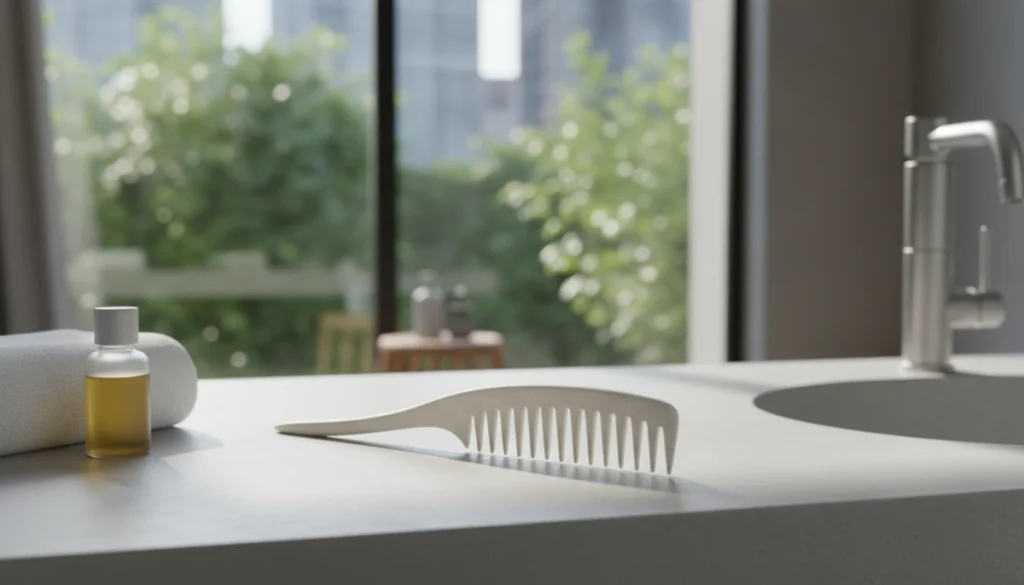
A wide tooth hair comb is my go-to for detangling wet hair and curls without breakage. The wide gaps let strands glide through instead of snagging.
- Best for: curly, coily, thick, and wavy hair
- Use in the shower as a wide tooth shower comb with conditioner
- Always start at the ends and work up to protect the hair cuticle
- Look for seamless teeth to prevent catching and split ends
This type of anti static hair comb, especially in wood or bamboo, respects your curl pattern and keeps frizz down.
Fine tooth hair comb for styling and smoothing straight hair
A fine tooth hair comb is made for detail work, not rough detangling. I use it to polish straight or slightly wavy hair.
- Best for: fine or thin hair, straight styles, sleek looks
- Ideal for smoothing flyaways, refining parts, and blending layers
- Pairs well with light styling products for a smooth, glassy finish
- Choose a seamless teeth hair comb in cellulose acetate for a polished, professional feel
Use gentle pressure; let the close-set teeth do the styling, not force.
Rat tail hair comb for sectioning and precise parting
A rat tail hair comb is a must for clean parts and controlled color or heat styling. The long pointed tail is where the magic happens.
- Use the tail to section hair for blowouts, flat ironing, or braids
- Create precise parting for middle parts, side parts, and zig-zag designs
- Great in a professional styling comb kit for at-home salon results
- Fine tooth edge helps smooth small sections before you style
If you like detailed looks, a rat tail hair comb belongs in your drawer.
Rake handle hair comb vs pocket comb for control and portability
I keep both a rake handle hair comb and a pocket hair comb in my line because they solve different everyday needs.
Rake handle hair comb:
- Larger, with an ergonomic handle for better grip and control
- Perfect at home for combing through thick, coarse hair or long lengths
- Works well as a shower or bathroom comb for daily detangling
Pocket comb:
- Slim, light, and easy to carry in a bag, desk, or car
- Great for quick touch-ups, bangs, or men’s grooming on the go
- Often has both wide and fine teeth in one compact tool
For most people in the U.S., I recommend a rake handle comb for your main routine and a pocket comb for quick fixes during the day.
Best Hair Comb For Your Hair Type
Hair comb for fine or thin hair without breakage
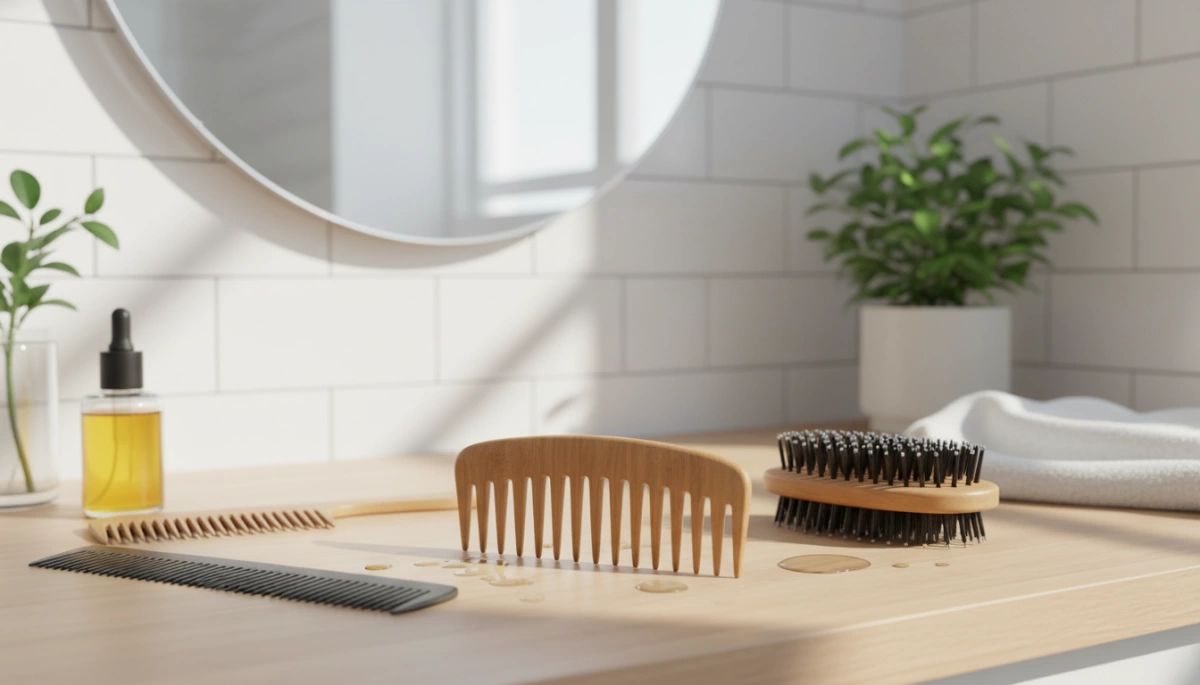
If your hair is fine or thinning, I reach for a lightweight, seamless anti static hair comb to prevent snapping. The best picks:
- Material: polished cellulose acetate hair comb or smooth non static wooden comb
- Teeth: finer teeth at the ends with rounded tips to glide without shredding the cuticle
- Shape: small pocket hair comb or slim handle comb for gentle daily grooming ritual
Look for a seamless teeth hair comb so there are zero sharp mold lines catching fragile strands.
Hair comb for thick or coarse hair that will not bend or snap
For dense, coarse hair, you need a comb that’s strong and won’t flex. I prefer:
- Material: sturdy carbon fiber hair comb or thick wooden hair comb
- Teeth: wide tooth hair comb with extra‑thick, durable teeth
- Grip: full handle hair comb ergonomics for control and leverage
A carbon fiber hair comb is my go‑to when someone wants professional styling and serious durability.
Hair comb for curly and coily hair with wide tooth only rule
For curly and coily hair, I treat the wide tooth only rule as non‑negotiable. It keeps the curl pattern intact and reduces frizz. Choose:
- Wide tooth hair comb benefits: less breakage, better clump definition, easier detangling
- Type: wide tooth shower comb for detangling wet hair with slip, or a rake handle comb for more control
- Material: bamboo hair comb or neem wood hair comb for a smoother, eco friendly hair comb option
Skip fine tooth combs on curls and coils unless you’re just detailing edges.
Hair comb for damaged or bleached hair to protect the cuticle
If your hair is bleached, over‑processed, or heat damaged, I always prioritize hair cuticle protection. The right hair comb matters more than usual:
- Material: soft wooden hair comb vs plastic for less friction and static
- Teeth: wide, rounded, seamless teeth hair comb to prevent chips and splits
- Usage: detangle in small sections, start from the ends, and work up slowly
A smooth neem wood or sandalwood hair comb doubles as a scalp massage comb, helping with gentle scalp stimulation with comb strokes while protecting fragile ends.
Hair comb routine and technique
How to comb hair from ends to roots to avoid knots
I always tell customers: the way you use a hair comb matters more than how often you use it.
- Start with a wide tooth hair comb or wide tooth shower comb.
- Hold a small section of hair and comb from the ends first, working up a few inches at a time.
- Once the ends are smooth, move the hair comb higher toward the mid-lengths, then finally the roots.
- Keep your hand under the section as you comb to prevent tugging and breakage.
This “ends to roots” routine protects the hair cuticle, cuts down on knots, and helps prevent hair breakage with a comb.
How to comb wet hair vs dry hair safely
Wet hair is weaker, so I change my hair comb routine depending on if my hair is wet or dry.
For wet hair (after shower or pool):
- Only use a wide tooth hair comb or seamless teeth hair comb.
- Add a light conditioner or leave-in for slip before detangling.
- Never rip through tangles; gently shake the comb through knots from ends upward.
For dry hair:
- Use a wide tooth comb for curls and coils; avoid fine tooth on textured hair.
- Use a fine tooth hair comb for styling and smoothing straight or relaxed hair.
- Comb less often on very dry or damaged hair to protect the cuticle.
This simple switch between combs and technique is key for detangling wet hair with a comb without damage.
Using a hair comb for scalp stimulation and blood flow
I also use a hair comb as a quick scalp massage comb in my daily grooming ritual.
- On dry hair, use a non static wooden comb or anti static hair comb to avoid flyaways.
- Place the comb flat on your scalp and comb from front hairline to nape in slow, firm strokes.
- Repeat from the sides toward the crown to encourage scalp stimulation with a comb and blood flow.
This routine not only helps with sebum distribution with a comb from roots to ends, it also feels like a mini stress-relief session built into your day.
Hair comb care and maintenance
Hair comb hygiene and why a dirty comb hurts hair health
If your hair comb is dirty, you’re basically brushing old oil, product, and dust back onto clean hair. That buildup can:
- Weigh hair down and kill volume
- Clog the scalp and cause itch or flakes
- Spread oil unevenly, making roots greasy and ends dry
- Increase friction, which leads to more breakage
I treat my hair comb like a daily grooming tool that has to stay clean, just like a makeup brush or towel.
How to clean plastic and cellulose acetate hair combs
For plastic and cellulose acetate hair combs (including polished luxury cellulose acetate combs), I keep a simple routine:
- Soak the comb in warm water with a little gentle shampoo or dish soap for 5–10 minutes
- Use an old toothbrush to scrub between the teeth and along the spine
- Rinse well and pat dry, then let it air-dry completely on a towel
- Disinfect once a week with a quick spray of rubbing alcohol, then dry
This keeps an anti static hair comb or fine tooth styling comb clean without clouding or scratching the surface.
How to clean and protect wooden hair combs from swelling
Wooden, bamboo, neem wood, and sandalwood hair combs need a different routine so they don’t swell or crack:
- Never soak a wooden hair comb in water
- Wipe teeth and handle with a slightly damp cloth plus a drop of mild shampoo
- Immediately wipe dry with a clean towel
- Once a month, rub in a tiny amount of natural oil (like jojoba) to condition the wood and help prevent swelling
This keeps a non static wooden comb smooth, protects the finish, and extends its life.
When to replace an old hair comb with rough teeth
A damaged comb will damage your hair. I replace a hair comb when:
- Teeth feel rough, sharp, or snaggy
- Teeth are bent, cracked, or missing
- The comb creates more tangles or catches in the same spot
- The surface coating is peeling or flaking
If I run my finger along the teeth and feel any scratchy edges, I swap it out. A smooth, seamless teeth hair comb is one of the easiest ways to protect the hair cuticle and prevent breakage.