The Science of Shampoo for Curly Hair
If your curls feel dry, frizzy, and coated no matter what you use, it’s not your imagination—curly hair actually needs a different shampoo than straight hair. The right shampoo for curly hair has to respect your curl pattern, your scalp, and your hair’s porosity, or it will strip moisture and wreck definition.
Why Curly Hair Needs a Different Shampoo
Curly strands are naturally:
- Drier: Scalp oils can’t slide easily down the bends of a curl, so ends dry out fast.
- More fragile: The twists and turns create weak points that break with harsh cleansing.
- Prone to frizz: When the cuticle is rough from strong detergents, hair grabs humidity and puffs out.
That’s why a good sulfate-free shampoo for curly hair is usually:
- Low-foam or soft-foam, not a big squeaky lather
- Packed with hydrating ingredients instead of just “clean” claims
- Made with gentle surfactants that cleanse the scalp without stripping curls
How Curl Shape Affects Frizz, Dryness, and Shampoo Choice
Different curl shapes react differently to shampoo:
- Waves (Type 2): Tend to get oily at the roots and weighed down easily. They need a lightweight shampoo for wavy hair Type 2 that cleans without heavy butters.
- Curls (Type 3): Balance between dryness and frizz. They do best with a curl definition shampoo that boosts moisture and frizz control without leaving residue.
- Coils (Type 4): Very dry and delicate, with tight bends that tangle fast. They need a shampoo for type 4 coily hair with slip, moisture, and zero harsh sulfates.
In simple terms: the tighter the curl, the more moisturizing and gentle your shampoo for curly hair should be.
What Hair Porosity Means for Your Shampoo Routine
Porosity is how easily your hair absorbs and holds water and products. It quietly controls how your shampoo for curly hair will feel and perform:
Low porosity curls
- Cuticle is tight and resistant.
- Hair repels water and product, so buildup happens fast.
- Needs a low porosity curly hair shampoo that is light, clarifying enough to remove residue, and not overloaded with heavy oils.
High porosity curls
- Cuticle is raised or damaged (often from color, heat, or past relaxers).
- Hair soaks up water fast but loses it just as quickly.
- Needs a high porosity curly hair shampoo that is rich, cushioning, and protein-friendly to support strength and moisture retention.
Medium porosity curls
- More balanced, but still easily dried by harsh cleansers.
- Do best with a moisturizing, silicone-free shampoo for curly hair that maintains that balance without buildup.
When you understand your curl pattern and porosity, choosing the right shampoo for curly hair stops being guesswork and starts feeling like a small, consistent act of self-care—on every wash day.
Hair Porosity and Shampoo for Curly Hair
When I build a shampoo for curly hair, I always think about porosity first. Porosity is how easily your curls absorb and hold water. It changes how your shampoo behaves, how much moisture you keep, and how fast your hair dries out.
How to Test Hair Porosity at Home
You don’t need a lab. Try one or two of these at home:
Slip test (best quick check)
- Take a clean, dry strand.
- Slide your fingers from ends to root.
- Feels bumpy or rough = higher porosity.
- Feels smooth = lower porosity.
Spray bottle test
- On clean, product‑free hair, mist a small section with water.
- Water beads up and sits on top = low porosity.
- Hair absorbs water fast and gets soaked quickly = high porosity.
- Takes a bit to soak in = medium porosity.
Drying time check
- After washing, let curls air‑dry with no product.
- Takes a long time to dry = low porosity.
- Dries very fast = high porosity.
- Somewhere in the middle = medium porosity.
Best Shampoo for Low Porosity Curly Hair
Low porosity curls fight to let moisture in, and they get buildup fast. For low porosity curly hair shampoo, I focus on “light and clean”:
- Choose a sulfate-free shampoo for curly hair with:
- Gentle surfactants (like coco‑betaine) for scalp buildup removal for curly hair
- Lightweight hydration (aloe, panthenol) instead of heavy oils
- Go for silicone-free shampoo for curly hair to avoid film on the strand.
- Use a clarifying shampoo for curls once or twice a month to remove product and hard water buildup, then follow with a light conditioner.
Best Shampoo for High Porosity Curly Hair
High porosity curls (often colored, bleached, or heat‑styled) need help with moisture retention and strength:
- Look for a moisturizing, sulfate-free shampoo for curly hair with:
- Natural oils for curly hair shampoo like argan, avocado, or jojoba
- Butters in low to medium amounts (shea, mango) if your curls are very dry
- Protein-rich shampoo for damaged curls (hydrolyzed keratin, wheat protein) to help patch weak spots
- Prioritize paraben-free shampoo for curls and color-safe shampoo for curly hair if your hair is dyed.
- Use a clarifying shampoo for curls less often (every 4–6 weeks) so you don’t strip what little moisture you hold.
Shampoo Tips for Medium Porosity Curls
Medium porosity curls are usually the easiest to manage, but the wrong shampoo can throw them off balance fast:
- Rotate between:
- Moisturizing shampoo for curly hair for weekly wash days
- A gentle surfactant shampoo or co-wash for curly hair on in‑between cleanses if you work out or live in a hot, humid U.S. climate
- Choose a curl definition shampoo that offers:
- Light to medium oils (sunflower, grapeseed)
- A bit of protein if your curls feel soft but floppy
- Clarify once a month if you use stylers with cast, gels, or live in hard‑water areas in the States.
Get your porosity right, and your shampoo for curly hair suddenly starts working with your curls instead of against them.
Key Ingredients in Shampoo for Curly Hair
Harsh Ingredients to Avoid in Shampoo for Curly Hair
When I build a shampoo for curly hair, I keep the formula clean on purpose. For most curls, I recommend avoiding:
- Sulfates (SLS, SLES, ammonium lauryl sulfate)
- Harsh detergents listed as “sulfonates”
- Drying alcohols (like SD alcohol, denatured alcohol)
- Heavy non‑water‑soluble silicones (like dimethicone, amodimethicone)
These strip moisture, kill curl definition, and lead to frizz and breakage, especially in dry U.S. climates or heated indoor air.
Sulfates and Why They Dry Out Curls
Sulfates clean hard, which sounds nice, but on curly hair they’re usually too much. A typical sulfate-based shampoo for curly hair:
- Pulls out your natural oils your curls need for moisture
- Increases frizz and roughness on the hair cuticle
- Makes color-treated curls fade faster
That’s why I push sulfate-free shampoo for curly hair for most people, especially if you’re dealing with dry, frizzy curls or live somewhere with hard water.
Drying Alcohols vs Fatty Alcohols in Curly Hair Products
Not all alcohols are bad. In my formulas, I make a clear split:
- Avoid (drying alcohols): alcohol denat, SD alcohol 40, isopropyl alcohol – these evaporate fast and leave curls feeling crispy.
- Use (fatty alcohols): cetyl alcohol, cetearyl alcohol, stearyl alcohol – these are rich, creamy, and help with slip and moisture.
If your shampoo for curly hair lists fatty alcohols, that’s a win, not a red flag.
Silicones and Product Buildup on Curly Hair
Silicone-heavy formulas can make curls look shiny for a week, then flat and greasy. The issue is buildup:
- Non‑water‑soluble silicones need harsh cleansers to fully remove
- Layers of silicone block moisture from your conditioner and masks
If you don’t want to clarify often, go for a silicone-free shampoo for curly hair or lighter, water‑dispersible silicones paired with a good clarifying shampoo for curls once in a while.
Hydrating Ingredients That Curls Love
For a curl-friendly shampoo, I load up on hydrating shampoo ingredients that give slip and softness without buildup:
- Aloe vera for light hydration and scalp comfort
- Glycerin and other humectants (in balanced amounts) for moisture pull
- Panthenol (pro‑vitamin B5) for shine and smoothness
These support moisture retention for curly hair without making waves or curls feel coated.
Natural Oils and Butters in Shampoo for Curly Hair
Because curls in the U.S. often deal with dry air, AC, and heat styling, I lean on natural oils for curly hair shampoo in controlled doses:
- Coconut, argan, jojoba, or sunflower oil for nourishment
- Shea butter or mango butter for rich moisture, great for type 3–4 curls
Used right, these help turn a basic shampoo for curly hair into a frizz control shampoo that also supports curl definition.
Gentle Surfactants for Sensitive Scalps and Curls
For anyone with a sensitive scalp, kids, or very dry curls, I focus on gentle surfactant shampoo systems instead of harsh detergents. Look for:
- Coco-glucoside, decyl glucoside, sodium cocoyl isethionate
- Sodium cocoyl glutamate or sodium lauroyl methyl isethionate
These cleanse without that squeaky, stripped feel and pair well with co-wash for curly hair or a no-poo cleanser for curls on lighter wash days.
Choosing the Best Shampoo for Your Curl Type
Shampoo for Wavy Hair (Type 2) That Doesn’t Weigh Waves Down
For wavy hair, I keep shampoo light so the wave pattern doesn’t fall flat. When I build a shampoo for wavy hair type 2, I focus on:
- Lightweight, sulfate-free shampoo for curly hair and waves that rinses clean
- Silicone-free formulas to avoid heavy buildup and limp roots
- Gentle surfactants (coco-betaine, glucosides) for a soft, non-stripping cleanse
- Hydrating but light ingredients like aloe, panthenol, and low-level natural oils
- Use it 2–3 times a week, and co-wash or just rinse with water in between if your scalp isn’t oily
Shampoo for Curly Hair (Type 3) for Definition and Frizz Control
Type 3 curls need a shampoo that protects moisture and boosts curl definition. With my curl definition shampoo for type 3 curly hair, I target:
- Sulfate-free, paraben-free shampoo for curls to reduce frizz and dryness
- Hydrating shampoo ingredients like glycerin, aloe, and plant extracts for moisture retention
- Natural oils for curly hair shampoo (like jojoba, argan) in balanced amounts for shine
- A formula that leaves curls clean but still “slippy” so they clump and define easily
- Most type 3 curls do best shampooing 1–3 times per week, depending on scalp oil and product use
Shampoo for Coily and Kinky Hair (Type 4) for Slip and Moisture
Type 4 coils and kinks need serious moisture and slip from the shampoo step. When I design shampoo for type 4 coily hair, my priorities are:
- Ultra-gentle surfactant shampoo or a no-poo cleanser for curls
- Rich natural oils and butters (shea, cocoa butter, castor oil) for cushion and moisture
- Slip-focused formula to help with detangling and reduce breakage
- Often co-wash for curly hair between shampoos to keep moisture levels high
- Most type 4 curls do best with shampooing every 7–10 days, with co-washing or just water rinses in between
How Often to Shampoo Different Curl Types
Here’s a simple guide I use for customers across the U.S.:
- Type 2 (Wavy): Shampoo 2–3x per week; use a lightweight, silicone-free shampoo for wavy hair
- Type 3 (Curly): Shampoo 1–3x per week; reach for a frizz control shampoo that’s sulfate-free
- Type 4 (Coily/Kinky): Shampoo weekly or every 10 days; rely more on co-wash and deep moisture
If you’re in a humid state, work out a lot, or use heavy stylers, you may need a clarifying shampoo for curls once or twice a month to reset, then go back to your regular moisturizing shampoo for curly hair for everyday wash days.
Clarifying vs Moisturizing Shampoo for Curly Hair
What a clarifying shampoo does for curls
A good clarifying shampoo for curly hair cuts through heavy buildup fast.
It targets:
- Silicone buildup from non–silicone-free shampoo for curly hair and stylers
- Scalp buildup from gels, hairspray, dry shampoo, and sweat
- Hard water minerals that make curls feel rough and dull
I use clarifying shampoo as a reset: it gives curls a fresh start so your curl definition shampoo, masks, and leave-ins can actually sink in.
When to use a clarifying shampoo on curly hair
Reach for a clarifying shampoo for curls when:
- Your curls feel waxy, coated, or won’t absorb products
- You see flaky scalp that’s more product than dandruff
- Your usual sulfate-free shampoo for curly hair stops working
- You swim in pools or ocean water often
If your scalp is sensitive, pick a gentle surfactant shampoo labeled “clarifying” but also “moisturizing” or “for curls” so it doesn’t strip everything.
How often to clarify without drying out curls
Most people in the U.S. do best clarifying:
- Every 3–4 weeks for normal product use
- Every 1–2 weeks if you use heavy gels, hairsprays, or live in a hard-water area
- Once a month or less for very dry, high porosity curly hair
Always follow clarifying shampoo for curly hair with:
- A rich conditioner or mask for moisture retention for curly hair
- Optional protein-rich treatment if your curls are damaged or color-treated
Moisturizing shampoo for curly hair (daily/weekly use)
Your main cleanser should usually be a moisturizing, sulfate-free shampoo for curly hair:
- Look for hydrating shampoo ingredients like aloe, glycerin, panthenol
- Choose natural oils for curly hair shampoo (coconut, argan, jojoba) in small amounts
- Go silicone-free shampoo for curly hair if you don’t want frequent clarifying
Use it:
- 1–3 times per week for most curly hair in the U.S.
- Once a week or less for very dry, coily hair (Type 4)
If you wash more often (gym days, outdoor work), keep water lukewarm and use a very gentle, low-lather, no-poo cleanser for curls on the extra days.
When co-washing makes more sense than shampoo
A co-wash for curly hair (cleansing conditioner) can be a game changer if:
- Your curls are very dry, frizzy, or color-treated
- You have type 3–4 curls that lose moisture fast
- You work out often and need scalp refresh without full shampoo
Use co-wash instead of shampoo when:
- You need a midweek cleanse but don’t want to strip oils
- Your curls feel thirsty but not dirty
- You’re transitioning from harsh shampoos to a curl-friendly wash day routine
I still recommend:
- Co-wash most of the time if you’re very dry or coily
- Moisturizing shampoo for curly hair once a week or every other week
- Clarifying shampoo for curls every 3–6 weeks to keep scalp and hair truly clean
This balance keeps curls soft, helps with frizz control shampoo results, protects color, and supports long-term moisture retention for curly hair.
Building a Curl-Friendly Wash Day Routine With Shampoo for Curly Hair
Step-by-step wash day with shampoo for curly hair
Here’s the simple wash day flow I recommend for curls:
- Pre-rinse: Fully soak your hair with lukewarm water for 1–2 minutes so your shampoo for curly hair can spread evenly.
- Scalp focus: Apply your sulfate-free shampoo for curly hair to the scalp first, not the ends.
- Massage, don’t scratch: Use your fingertips or a scalp brush to lift oil, sweat, and buildup, especially if you use gels, creams, or dry shampoo.
- Let suds cleanse your lengths: As you rinse, let the lather run through your curls instead of scrubbing the ends. This keeps moisture in and reduces frizz.
- Follow with conditioner or co-wash: After cleansing, use a rich conditioner or co-wash for curly hair for extra slip and moisture.
How much shampoo to use on curly hair
Most people in the U.S. use way too much shampoo on curls. I keep it tight:
- Short curls: About a nickel-sized amount.
- Shoulder-length curls: About a quarter-sized amount.
- Long or very thick curls: Start with a quarter-sized amount, then add a bit more only at the scalp if needed.
If your shampoo for curly hair doesn’t lather much, don’t keep piling it on. Add more water first, then a tiny bit more product if your scalp still feels greasy.
Water temperature tips for healthy curls
Water temperature makes or breaks moisture retention for curly hair:
- Use lukewarm water to shampoo curly hair. Hot water strips moisture and makes frizz worse.
- Rinse conditioner with cool or slightly cool water to help your cuticle lay flatter and boost shine.
- Skip steaming-hot showers on wash day if your curls already feel dry, brittle, or color-treated.
How to detangle curls while cleansing
Detangling during cleansing should feel gentle, not like a workout:
- Detangle only when hair is wet and coated with conditioner or a slippery co-wash for curly hair.
- Start at the ends and work up in small sections using your fingers or a wide-tooth comb.
- If your shampoo for curly hair offers good slip, lightly finger-detangle while the shampoo is on the scalp and mid-lengths, then finish detangling with conditioner.
- Add more water, not more force. Water helps slip; pulling just causes breakage.
Common wash day mistakes that cause frizz and breakage
I see the same wash day mistakes over and over:
- Using harsh, non–curl-friendly shampoos with strong sulfates every wash. This kills moisture and curl definition.
- Scrubbing curls in a rough circular motion, tangling the hair and lifting the cuticle.
- Rinsing with water that’s way too hot, then wondering why curls feel dry and rough.
- Piling hair on top of your head while shampooing, which creates knots and split ends.
- Rubbing curls with a regular bath towel after washing instead of gently squeezing with a microfiber towel or cotton T-shirt.
Dial in this wash day routine with a good sulfate-free, silicone-free shampoo for curly hair, and you’ll see better frizz control, curl definition, and less breakage over time.
Scalp Care With Shampoo for Curly Hair
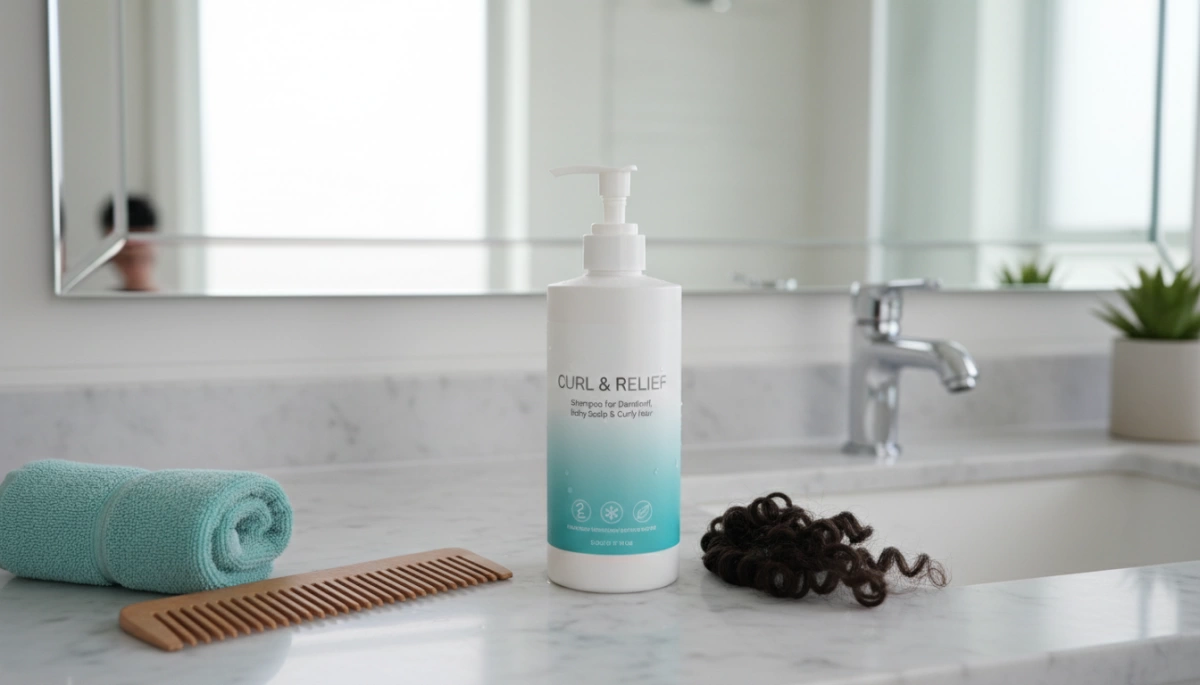
A healthy scalp is the base for healthy curls, so I always treat scalp care and shampoo for curly hair as one system, not two separate things.
Dealing With Dandruff And Itchy Scalp On Curly Hair
If you’re seeing flakes or feeling constant itch, don’t just scrub harder or shampoo every day. Focus on:
- Use a targeted shampoo for dandruff on curly hair: Look for zinc pyrithione, salicylic acid, or tea tree in a gentle, sulfate-free shampoo for curly hair.
- Focus on the scalp, not the ends: Apply shampoo directly to the scalp in sections, then massage with your fingertips (not nails) for 2–3 minutes.
- Avoid super hot water: It dries out both scalp and curls and can make flakes and itch worse.
- Keep styling products light: Heavy waxes and silicones cause scalp buildup, which shows up as flakes and irritation.
Best Shampoos For Flaky Scalp And Sensitive Curls
For flaky but sensitive curls, the formula has to be effective and gentle at the same time:
- Sulfate-free, silicone-free shampoo for curly hair to avoid extra dryness and buildup.
- Gentle surfactant shampoo (look for coco betaine, sodium cocoyl isethionate, or decyl glucoside) instead of harsh detergents.
- Calming ingredients like aloe, oat, chamomile, and panthenol to soothe redness and tightness.
- Lightweight, non-heavy oils like jojoba or argan that hydrate without clogging follicles.
I build my wash formulas around this balance so you can handle scalp buildup removal for curly hair without wrecking your curl pattern.
How To Balance Scalp Health With Moisture For Curly Hair
The goal is a clean scalp with soft, hydrated curls—no stripped roots, no greasy film. Here’s how I keep that balance:
- Shampoo the scalp, condition the lengths: Concentrate shampoo for curly hair on your roots; let the suds lightly pass through the mid-lengths and ends.
- Use moisturizing, sulfate-free shampoo for curly hair most wash days, and rotate in a gentle clarifying shampoo for curls only when you feel buildup.
- Follow with a rich conditioner or co-wash for curly hair on your ends to lock in moisture retention for curly hair.
- Don’t skip the rinse: Make sure shampoo is fully rinsed out; leftover product is a big trigger for itch and flakes.
Shampoo Tips For Oily Scalp But Dry Curly Ends
Oily roots and dry curls are extremely common in the U.S., especially if you work out, live in a humid state, or wear protective styles a lot. I handle it like this:
- Use a lightweight, clarifying shampoo for curls on the scalp only 1–2 times a week to lift oil and sweat.
- Protect your ends by applying a bit of conditioner or oil to mid-lengths and tips before shampooing, so the cleanser doesn’t strip them.
- Try a no-poo cleanser for curls or co-wash on off days to refresh sweat and odor without a full shampoo.
- Blot, don’t scrub, when drying: Use a microfiber towel or cotton T-shirt to squeeze out water and keep frizz and breakage low.
Handled right, shampoo for curly hair can calm an oily, flaky scalp and still leave your curls soft, defined, and ready to style.
Shampoo for Curly Hair and Color-Treated Curls
Color-treated curls are already dry by nature, and hair color pushes that dryness further. When I choose a shampoo for curly hair that’s also colored, I treat it like a moisture and strength decision, not just a “clean hair” step.
How Color Affects Curly Hair Moisture and Strength
- Curly hair has a raised cuticle already; hair color lifts it even more, so moisture escapes faster.
- Bleach and permanent color can weaken the hair’s protein structure, so curls can lose bounce and snap more easily.
- Without the right shampoo for curly hair, color-treated curls turn frizzy, dull, and brittle fast.
What to Look For in Shampoo for Colored Curly Hair
When I build a line or choose a product, I look for:
- Color-safe, sulfate-free shampoo for curly hair (gentle surfactants, low foam, no harsh detergents).
- Hydrating shampoo ingredients like aloe, glycerin, panthenol, and lightweight oils for moisture retention in curly hair.
- Protein support (like silk, wheat, or quinoa proteins) in a protein-rich shampoo for damaged curls, but in balanced amounts.
- Silicone-free shampoo for curly hair if you avoid buildup or follow a low-poo / no-poo cleanser for curls routine.
Protecting Curl Pattern While Preserving Color
To protect both curl definition and color:
- Use lukewarm water instead of hot to reduce color fade and frizz.
- Focus shampoo for curly hair on the scalp first, then let the suds lightly cleanse the lengths.
- Rotate a moisturizing, color-safe shampoo for curly hair with a gentle co-wash for curly hair if your curls run dry.
- Keep wash day routine for curly hair to 1–3 times a week depending on scalp oil and lifestyle.
Ingredients to Avoid on Dyed Curls
On color-treated curls, I’m strict about labels. I avoid:
- Strong sulfates like SLS and SLES that strip color and dehydrate curls.
- Harsh, drying alcohols (like SD alcohol, ethanol, isopropyl alcohol) high on the ingredient list.
- Heavy, non-water-soluble silicones if you don’t regularly use clarifying shampoo for curls (they can cause scalp buildup and dull color).
- Parabens and harsh preservatives if you prefer a cleaner, paraben-free shampoo for curls approach.
Dialing in a color-safe shampoo for curly hair means your shade lasts longer, your curl pattern stays intact, and you don’t have to choose between healthy curls and vibrant color.
Reading Shampoo Labels for Curly Hair
How to read an ingredient list for curly hair products
When I pick a shampoo for curly hair, I always flip straight to the ingredient list. A few simple rules help a lot:
- Ingredients are listed from highest to lowest amount, so what’s at the top matters most.
- For a curl-friendly, sulfate-free shampoo for curly hair, I look for water, gentle surfactants, and hydrating ingredients in the first 5–7 lines.
- I scan for words like “glucoside,” “isethionate,” or “sarcosinate” for a gentle surfactant shampoo that won’t strip my curls.
- If I see a super long list packed with heavy silicones and harsh cleansers before any hydrating oils, I usually put it back.
Red flags on shampoo labels for curls
There are a few instant deal-breakers for my own curly hair line and what I recommend:
- Harsh sulfates like Sodium Lauryl Sulfate (SLS) or Ammonium Lauryl Sulfate in a “shampoo for curly hair” – they’re too stripping for most curls.
- Non–water-soluble silicones (Dimethicone, Amodimethicone) in a silicone-free shampoo for curly hair claim – that’s a no from me unless you clarify often.
- Drying alcohols (SD Alcohol, Alcohol Denat.) high on the list; they can wreck moisture retention for curly hair.
- Vague “fragrance” heavy up top with no note of “fragrance-free” or “for sensitive scalp” if you’re prone to irritation.
Must-have claims for shampoo for curly hair
On my own formulas and what I like to stock for U.S. customers, I look for clear, honest claims:
- “Sulfate-free,” “paraben-free,” and “silicone-free shampoo for curly hair” when you want a low-tox, curl-safe option.
- “Color-safe shampoo for curly hair” if you dye your curls and need gentle cleansing that won’t fade color.
- “Frizz control shampoo,” “curl definition shampoo,” or “moisture for curly hair” when you’re fighting dryness and frizz.
- “Dermatologist-tested” or “shampoo for sensitive scalp and curls” if your scalp gets itchy or flaky easily.
Budget vs premium shampoo options for curly hair
I sell and test both affordable and higher-end shampoos for curls, and here’s how I look at it:
Budget shampoo for curly hair
- Great if you wash often (gym days, hot climates).
- Look for basic sulfate-free, paraben-free formulas with a few natural oils for curly hair shampoo like coconut, argan, or jojoba.
- Ideal for everyday cleansing or as a backup wash day routine for curly hair.
Premium shampoo for curly hair
- Worth it if you have color-treated, high-porosity, or damaged curls and need targeted care.
- Often includes more advanced moisture systems, protein-rich shampoo options, and better-quality natural oils and gentle surfactants.
- I use these as my “main” wash when I want the best curl definition and long-term scalp health.
I always tell my U.S. customers: don’t just trust the front label. Read the ingredients, check the claims, and choose the shampoo for curly hair that matches your curl type, scalp needs, and budget.
Personalizing Your Shampoo for Curly Hair Routine
When I build a shampoo for curly hair routine for U.S. customers, I never treat it as one-size-fits-all. Your climate, lifestyle, and curl pattern decide how often you wash, what kind of sulfate-free shampoo for curly hair you use, and when it’s time to switch things up.
Adjusting Shampoo Frequency by Season and Climate
I always adjust shampoo for curly hair use around the weather instead of sticking to a rigid schedule:
- Humid Southern states (FL, TX, LA, etc.):
- Sweat + humidity = more frizz and scalp buildup.
- Most curls do better with 1–3 washes per week using a gentle surfactant shampoo or co-wash for curly hair between full shampoos.
- Dry climates (CO, AZ, NV):
- Air is dry, so curls lose moisture fast.
- Keep shampoo for curly hair to once a week, focus on a moisturizing, silicone-free shampoo for curly hair and lean on deep conditioners.
- Cold winters (Midwest, Northeast):
- Indoor heating dries curls and scalp.
- Shift to less frequent washing and use a hydrating, paraben-free shampoo for curls to support moisture retention for curly hair.
- Oily scalp, dry ends:
- Try scalp-only washing: apply a gentle sulfate-free shampoo for curly hair at the roots and let the suds lightly rinse through the lengths.
The rule I follow: if your curls look dull, scalp feels itchy, or products stop working, it’s time to tweak your shampoo for curly hair schedule, not just add more styling products.
Shampoo Tips for Gym Days and Sweaty Scalp
For active customers who hit the gym or run outdoors, sweat and scalp buildup removal for curly hair is a real issue—but daily harsh shampoo isn’t the answer.
Here’s what I recommend:
- Rinse-only days:
- After lighter workouts, rinse with lukewarm water and gently massage the scalp.
- Follow with a light conditioner on mid-lengths and ends.
- Co-wash for curly hair:
- On heavy sweat days, use a no-poo cleanser for curls or co-wash instead of a full shampoo session.
- Focus on the scalp, then gently squeeze product through the curls.
- Clarifying shampoo for curls (once or twice a month):
- If you use dry shampoo, heavy gels, or work out daily, a clarifying shampoo for curly hair can reset the scalp.
- Follow with a deep conditioner to avoid dryness.
- Sensitive scalp and curls:
- Choose a gentle surfactant shampoo labeled as shampoo for sensitive scalp and curls when you truly need to shampoo more often.
Travel-Friendly Shampoo for Curly Hair
On the road, I design routines that keep curls consistent and TSA-friendly:
- Solid bars or travel sizes:
- Use a solid sulfate-free shampoo for curly hair or mini bottles of your usual color-safe shampoo for curly hair.
- This avoids hotel shampoos that are often loaded with sulfates and drying alcohols.
- Climate-ready choices:
- Traveling to humid beach destinations: pack a frizz control shampoo or curl definition shampoo.
- Heading somewhere dry or cold: grab a rich, hydrating shampoo for curly hair with natural oils for curly hair shampoo.
- Simple, 2-product base:
- I tell customers to travel with:
- One moisturizing shampoo for curly hair
- One lightweight conditioner or leave-in
- This keeps your wash day routine for curly hair predictable in any state or city.
- I tell customers to travel with:
When and How to Switch Shampoos if Your Curls Stop Responding
If your go-to shampoo for curly hair stops performing, it’s usually a sign your curls or scalp need a different balance, not that your hair is “immune.”
Here’s how I handle it:
- Signs it’s time to switch:
- Curls look limp or flat even right after washing
- Scalp feels tight, itchy, or flaky
- Frizz gets worse even with a curl-friendly routine
- Your shampoo for dry frizzy curls isn’t actually controlling frizz anymore
- Rotate, don’t hoard:
- Keep 2 core shampoos in rotation:
- A moisturizing, silicone-free shampoo for curly hair
- A clarifying or scalp-focused shampoo for scalp buildup removal for curly hair
- Use the clarifying option every 2–4 weeks or after heavy product use.
- Keep 2 core shampoos in rotation:
- Match formula to current hair condition:
- If curls are weak or over-processed: move to a protein-rich shampoo for damaged curls plus moisture.
- If hair feels stiff or brittle from too much protein: switch to a protein-free, hydrating shampoo for curly hair until curls soften.
- Color-treated curls:
- If you’ve dyed your hair recently, transition to a color-safe shampoo for curly hair with gentle surfactants and no harsh sulfates.
I build every shampoo for curly hair routine around real life—workouts, travel, weather, and color—not just curl type. When those variables change, your shampoo strategy should change with them.