
Shower Gel Body vs. Body Wash: What Really Matters
Ever stand in the shower aisle wondering if shower gel body and body wash are actually different—or just marketing? I’ve had the same question, and here’s the simple breakdown I use when choosing formulas for my own line.
Shower Gel Body vs. Body Wash: The Core Difference
Both are liquid body cleansers, but they’re not identical:
Shower gel body
- Usually has a thicker, gel-like texture
- Often feels lighter and more refreshing
- Great for people who like a “clean” rinse with less residue
Body wash
- Usually more creamy or lotion-like
- Designed to feel softer and more conditioning on the skin
- Acts like a hydrating body cleanser, especially in cream-based formulas
From a skin-care angle, I treat shower gel as my clarifying, fresh-feel option and body wash as my comfort, moisture-first option.
Texture & Consistency: How They Feel on Your Skin
If you’re sensitive to texture, this matters more than the label:
Gel textures (shower gel body)
- Bouncy, clear or translucent
- Rinses quickly; ideal if you hate heavy or sticky formulas
- Great for oily or combo body skin, especially on the back and chest
Cream-based body wash
- Milky, opaque, cushiony
- Feels like a light lotion in the shower
- Better as a moisturizing shower gel for dry skin or rough areas like shins and elbows
I always recommend checking the first few ingredients and feel, not just the product name.
Climate & Skin Needs: When to Use Each
Your climate and skin type should decide whether you reach for shower gel or body wash:
Hot, humid climates / sweaty days
- Go for a light shower gel body or sulfate-free shower gel with a fresh, non-greasy finish
- Ideal for shower gel for oily skin and body acne treatment zones
Cold, dry climates / winter skin
- Choose a cream-based body wash or pH-balanced body wash with nourishing oils
- Look for skin barrier protection and hydrating ingredients like glycerin or ceramides
Normal to combination skin / year-round use
- Use shower gel body in the morning for a fresh, energizing cleanse
- Switch to a more moisturizing, dermatologist-tested cleanser at night if your skin feels tight
Bottom line: both can work in a smart daily shower ritual, but I don’t treat them as interchangeable. I pick the formula based on climate, skin type, and how my skin feels that day, not just what the bottle says.
Decoding Your Skin Type: Which Shower Gel Body Formula Fits You?
How Skin Type Impacts Your Shower Gel Body Choice
The right shower gel body formula should match your skin type, not fight it. In the U.S., where weather swings from humid summers to dry winters and water hardness changes by city, I treat body wash vs shower gel just like I treat face care: targeted.
Think in simple terms:
- Dry or flaky? Go for a hydrating body cleanser.
- Oily or acne-prone? Reach for a clarifying shower gel for oily skin.
- Sensitive or reactive? Stick with hypoallergenic, fragrance-free body wash.
Your skin type decides how much cleansing power, lather, and moisture your shower gel body should deliver every day.
Shower Gel Body For Dry And Flaky Skin
If your legs itch after a hot shower or your arms look ashy, your skin barrier needs help, not harsh suds. I build my moisturizing shower gel for dry skin around cream-based textures and barrier-support ingredients.
Look for a cream-based body wash or creamy shower gel body with:
- Glycerin, hyaluronic acid, panthenol (Vitamin B5) – pull in and hold moisture
- Ceramides, squalane, shea butter – support skin barrier protection
- Sulfate-free shower gel labels – avoid harsh SLS/SLES that strip oils
- pH-balanced body wash (around 5.5) – keeps skin closer to its natural state
Quick checklist:
- Feels silky or lotion-like, not watery
- Says “moisturizing,” “nourishing,” or “cream-based” on the front
- Works well with a lukewarm shower and a body lotion layered on within 3 minutes
Shower Gel Body For Oily And Acne-Prone Skin
For body breakouts on the back, chest, or shoulders, I lean on clarifying shower gel body formulas that clean deeply without wrecking your barrier. You want a non-greasy, gel texture that rinses clean and is labeled non-comedogenic body wash.
Key callouts for body acne treatment support:
- Salicylic acid (BHA) – unclogs pores and helps with body acne
- Tea tree or eucalyptus oil (in low, skin-safe levels) – adds a fresh, clarifying feel
- Zinc or niacinamide – help with oil control and redness
- Lightweight, sulfate-free base – strong clean without the tight, squeaky feel
What I avoid in a shower gel for oily skin:
- Heavy butters and oils on the ingredient list
- Strong, heavy fragrance that can irritate already-inflamed skin
- Over-scrubby particles that can make acne angrier
Use these formulas a few times a week on breakout zones, and rotate a gentle, pH-balanced body wash on off days to keep your skin barrier from freaking out.
Shower Gel Body For Sensitive And Reactive Skin
If your skin stings, turns red easily, or reacts to “fun” scented products, you need a hypoallergenic shower gel that keeps it simple. For sensitive skin care routines, I keep formulas stripped down and boring on purpose—because boring works.
For sensitive or eczema-prone skin, look for:
- Fragrance-free body wash (not just “unscented”)
- Hypoallergenic, dermatologist-tested cleanser on the label
- Minimal ingredient list with no dyes or heavy perfumes
- Oat, aloe, or allantoin for a calming feel
Shower gel ingredients to avoid if you’re reactive:
- Strong synthetic fragrance blends and colorants
- Harsh sulfates in high amounts
- High levels of essential oils for shower gel (great for some, too intense for fragile skin)
I design these sensitive formulas to feel low-foam, low-drama, and easy to rinse, so your shower gel body becomes something your skin trusts, not tolerates.
Ingredient Intelligence for Shower Gel Body
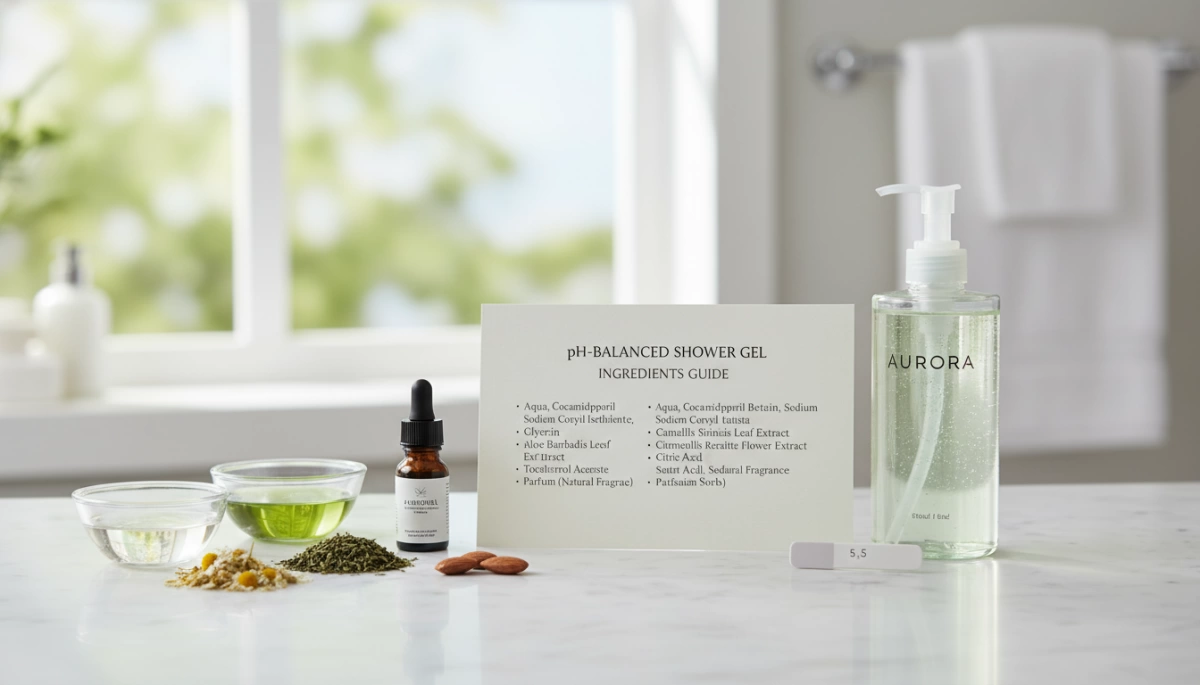
Shower gel body ingredients to avoid
When I build a shower gel body formula, I cut out a few usual suspects that tend to irritate U.S. skin types:
- Harsh sulfates like SLS and SLES – they strip your natural oils; look for sulfate-free shower gel instead.
- Heavy synthetic fragrance and strong dyes – big triggers for redness, itching, and rashes, especially if you have a sensitive skin care routine.
- Drying alcohols (like SD alcohol, denatured alcohol high on the list) – they can make dry patches and body acne worse.
- Comedogenic oils and waxes (like some heavy mineral oils) – can clog pores on your back, chest, and shoulders if you’re prone to body acne treatment.
If you see these high on the ingredient list and your skin often feels tight or itchy after a shower, it’s time to upgrade your hydrating body cleanser.
Why pH-balanced shower gel body protects your skin barrier
Your skin naturally sits around pH 4.5–5.5. A good pH-balanced body wash or shower gel body formula stays close to that range so it doesn’t wreck your barrier.
- At around pH 5.5, your acid mantle stays stable, which means:
- Less dryness and flaking
- Fewer random breakouts and irritation
- Better long-term skin barrier protection
- If your body wash feels squeaky-clean and tight, it’s probably too alkaline. I always push for formulas that clearly say pH-balanced and are dermatologist-tested cleansers.
Natural vs synthetic ingredients in shower gel body
I don’t see “natural” or “synthetic” as good or bad by default. I look at how they perform on real skin.
Natural ingredients that work well:
- Aloe, glycerin, shea butter – top-tier for a moisturizing shower gel for dry skin
- Natural exfoliating ingredients like finely ground oats or fruit enzymes – gentler than harsh scrubs
- Essential oils for shower gel like lavender or eucalyptus – nice in low doses, but I keep them light to avoid irritation
Smart synthetics that I like:
- Gentle surfactants that cleanse without stripping
- Lab-made moisturizers like panthenol and ceramides for stronger barrier support
- Preservatives that keep the formula safe and stable
For most U.S. customers, the sweet spot is a sulfate-free, pH-balanced shower gel body that mixes skin-friendly natural extracts with proven safe synthetics, is hypoallergenic, and leans fragrance-free body wash or lightly scented.
Shower Gel Body Routine And Ritual
How To Use Shower Gel Body Daily
I keep my shower gel body routine simple and consistent so it actually fits a busy U.S. schedule:
- Rinse your body with warm (not hot) water first so skin is damp, not dripping.
- Dispense a small amount of shower gel body into your hand or tool.
- Work it into a light lather before you touch your skin.
- Massage from neck down, focusing on sweat zones (underarms, chest, back, feet).
- Rinse thoroughly until skin feels clean but not squeaky or tight.
A good shower gel body should cleanse like a hydrating body cleanser, not strip your skin barrier.
Best Tools: Loofah vs Washcloth vs Silicone Scrubber
For most people in the U.S., these tools work best with shower gel body:
- Loofah: Great lather and gentle exfoliation, but replace often and let it dry fully to avoid bacteria.
- Washcloth: Classic, budget-friendly, easier to wash often; ideal for sensitive skin care routines.
- Silicone scrubber: Hygienic, quick-drying, long-lasting; nice for daily use with a pH-balanced body wash.
If your skin is dry or sensitive, I lean toward a soft washcloth or silicone scrubber with a moisturizing shower gel for dry skin.
Right Water Temperature To Prevent Dryness
Water temperature matters more than most people think:
- Aim for lukewarm to warm water, not steaming hot.
- Hot water + long showers can break down your skin barrier and undo the benefits of a sulfate-free shower gel.
- Keep showers around 5–10 minutes to avoid extra dryness, especially in cold U.S. climates or during winter.
How Much Shower Gel Body You Really Need
Most of us overuse product. For a standard shower:
- Use about a quarter-sized amount of shower gel body on a washcloth or silicone scrubber.
- If you’re using a loofah, a nickel to quarter-sized amount is usually enough because it foams more.
- Add a bit more only if you have a larger body frame or heavy sweat days (workouts, summer heat).
Using the right amount of shower gel body keeps your skin clean, avoids residue, and makes your bottle last longer—while still delivering that hydrating, dermatologist-tested cleanser feel.
Common Shower Gel Body Mistakes
Over-exfoliating with shower gel body
Using a scrubby shower gel body formula every day is one of the fastest ways to wreck your skin barrier. In the U.S., a lot of us love that “super clean” feeling, but too much scrubbing just leaves you tight, itchy, and more prone to body acne.
A simple rule of thumb:
- Use exfoliating shower gel body (with acids or scrub particles) 1–2 times per week max
- On other days, stick to a hydrating body cleanser or cream-based body wash
- Skip harsh loofahs if your skin is easily red or sensitive; use a soft washcloth or hands instead
If your skin stings when you apply lotion, feels rough, or looks dull, you’re probably overdoing it.
Skipping body lotion after shower gel body (3-minute rule)
A good shower gel body or pH-balanced body wash helps, but it won’t replace your body lotion. In a heated or air-conditioned U.S. home, moisture evaporates fast after a hot shower.
Follow the 3-minute rule:
- Gently pat dry (don’t rub) right after your shower
- Within 3 minutes, apply a moisturizing body lotion, cream, or body oil
- Look for ingredients like ceramides, glycerin, shea butter, and hyaluronic acid if your skin is dry
Locking in moisture right after rinsing your shower gel body is what keeps your skin soft, not just the cleanser itself.
Don’t use shower gel body on your face
Even the nicest shower gel body or moisturizing shower gel for dry skin is still designed for your body, not your face. Facial skin is thinner, more sensitive, and more prone to clogged pores.
Why I avoid using body wash vs shower gel on my face:
- Body formulas can be too fragrant, which can irritate facial skin
- Many aren’t non-comedogenic, which can trigger breakouts
- The pH and surfactants are tuned for the body, not delicate facial skin
What to do instead:
- Use a gentle, dermatologist-tested cleanser made for the face
- If you have breakouts, pick a non-comedogenic, fragrance-free face wash with salicylic acid or other body acne treatment ingredients
- Keep shower gel body strictly from the neck down for healthier skin overall