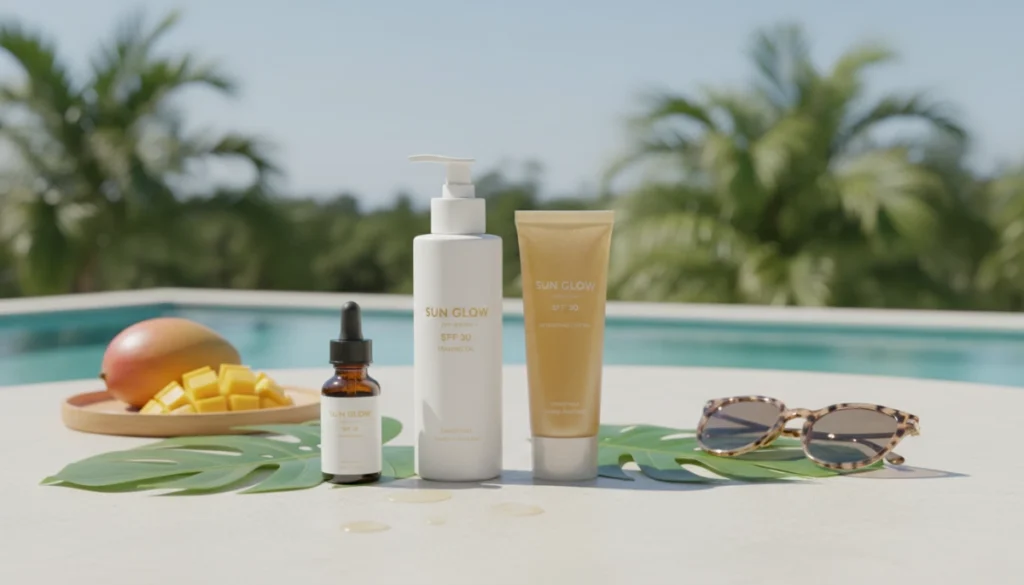
The Glow Paradox: Tanning Sunscreen = Better Tan
Ever worry that if you wear tanning sunscreen you won’t get any color at all? I hear this all the time—and it’s completely wrong. You don’t need to burn to tan. You need controlled, protected sun exposure.
Common Myths About Tanning Sunscreen
Let’s clear up the biggest myths:
Myth 1: “SPF stops you from tanning.”
No. A good broad-spectrum tanning sunscreen slows the burn, not the tan. You still get UVA exposure, which drives melanin production and that golden, sun-kissed look.Myth 2: “No sunscreen = faster, better color.”
You might get darker fast, but it’s mostly inflammation and damage, not a healthy glow. It fades patchy, peels, and ages your skin.Myth 3: “If I don’t burn, I don’t need SPF.”
Even if you “never burn,” UVA rays quietly break down collagen and pigment over time. A smart tanning sunscreen routine protects you from that.
How Tanning Sunscreen Gives You a Longer-Lasting Glow
When I talk about tanning sunscreen for a safe tan, I’m talking about gradual, even color that actually lasts:
- Prevents burning: SPF reduces UVB rays and sunburn, so your skin doesn’t blister, peel, and strip away your tan.
- Supports melanin: With controlled UVA exposure, your skin has time to build melanin steadily, giving you a smooth, bronzed tone instead of red, angry skin.
- Keeps skin barrier healthy: Hydrated, protected skin holds onto pigment longer, so your glow fades slowly, not in patches.
The result: gradual tanning with sunscreen that looks better, feels better, and lasts longer than a “no SPF” sprint tan.
What a “Smart Tan” Really Means
A smart tan isn’t about how fast you get dark—it’s about how healthy and even your skin looks while you do it. For me, a smart tan means:
- Using broad-spectrum tanning sunscreen every time I’m in the sun
- Choosing a non-greasy sunscreen for body tanning that feels light, not sticky
- Aiming for a warm, golden tone, not lobster red
- Protecting my skin so I can keep tanning in the future without wrecking it now
That’s the glow paradox: the more you commit to tanning sunscreen and sun damage prevention, the better and longer your tan actually looks.
Tanning Sunscreen Science: Melanin, UVA, and UVB
How UVA and UVB Affect Your Tan (and Burn)
When I talk about tanning sunscreen for a safe tan, I always start with the rays:
- UVA rays: Go deep into the skin, trigger melanin production, and are mainly responsible for your tan, but also premature aging and long-term damage.
- UVB rays: Hit the surface, cause sunburn, redness, and most of the DNA damage that leads to skin cancer.
- A “natural tan” without protection is basically your skin saying, “I’m damaged, so I’m darkening to protect myself.”
If you’re lying out at a U.S. beach or pool, you’re getting heavy UVA exposure all day and peak UVB around late morning to mid-afternoon. That’s why smart tanning with sunscreen is non-negotiable.
How Tanning Sunscreen and SPF Actually Work
SPF doesn’t stop your tan; it slows the burn so you can build a more even, gradual tanning with sunscreen:
- SPF (Sun Protection Factor): Mostly measures protection against UVB rays and sunburn prevention. SPF 30 blocks about 97% of UVB; SPF 50 blocks about 98%.
- Broad-spectrum tanning sunscreen: Protects against both UVA exposure and melanin production triggers and UVB burn. This is what you want for a healthy skin glow in the sun.
- With the right SPF tanning sunscreen, your skin still gets enough UVA to tan, but with controlled, reduced damage.
This is why I always position our formulas as photoprotection and tanning routines in one—not just “blockers.”
Why Broad-Spectrum Tanning Sunscreen Matters Long-Term
For U.S. customers who spend real time outdoors—beach trips, lake days, sports, yard work—broad-spectrum tanning sunscreen is what protects your future skin:
- Helps prevent wrinkles, dark spots, and rough texture from chronic UVA.
- Cuts down the burn cycles that lead to peeling instead of a lasting tan.
- Reduces long-term sun damage risk while still letting you build color gradually.
If you want a long-lasting, even tan and not just a weekend burn, broad-spectrum tanning sunscreen for a safe tan is the baseline—not an extra.
Best SPF Tanning Sunscreen for a Safe Glow
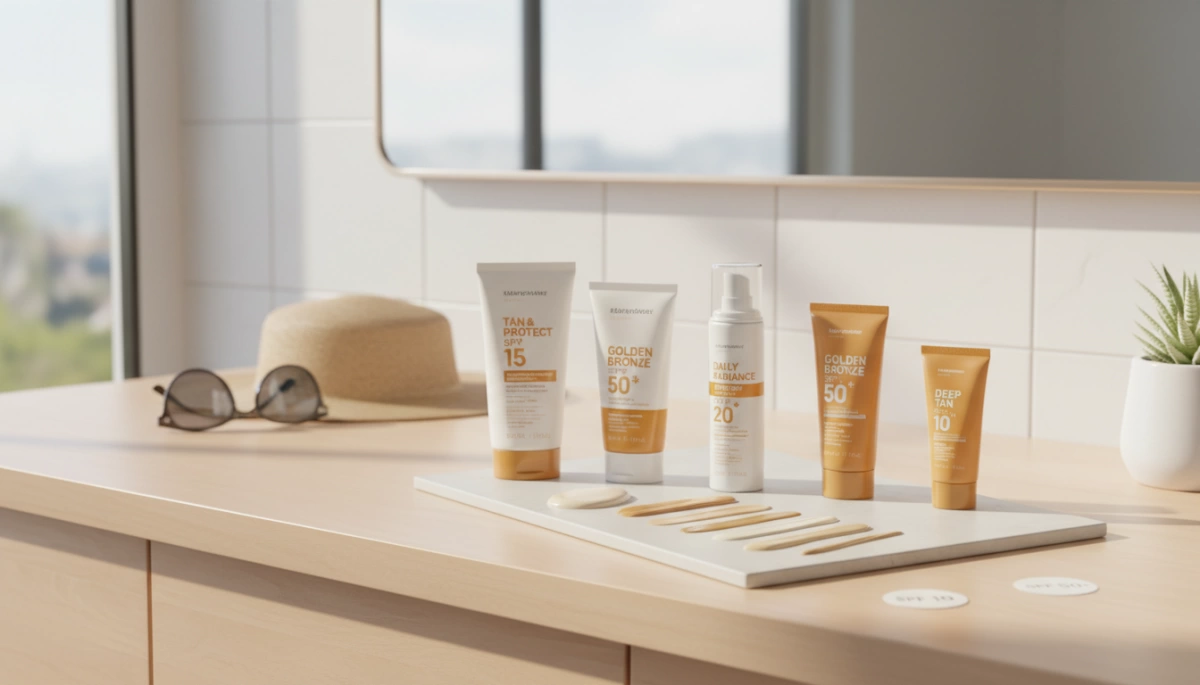
When I talk about a “safe tan,” I always start with SPF. The goal is a healthy skin glow in the sun, not a burn that peels off in three days.
SPF 30 vs SPF 50 for Tanning Without Burning
If you want gradual tanning with sunscreen, SPF 30 or SPF 50 is the sweet spot:
- SPF 30 tanning sunscreen: Great for most skin types in the US. It blocks most burning UVB rays but still lets your melanin slowly kick in, so you tan more evenly with less risk of sunburn.
- SPF 50 tanning sunscreen: Better if you burn fast, have fair or sensitive skin, or you’re at the beach/pool all day. You’ll still tan, just slower and safer, with stronger UVB rays and sunburn prevention.
- I always tell people: if you’re asking “SPF 30 vs SPF 50 for tanning,” choose the one that keeps you from turning red. A protected tan lasts longer than a burned one.
Why SPF 15 Tanning Sunscreen Is Risky
SPF 15 tanning sunscreen sounds tempting if you want fast color, but it’s not built for long sun sessions:
- It doesn’t filter enough UVB for midday U.S. sun, especially at the beach, pool, or on boats.
- You’re more likely to burn before you build a stable, even tan.
- For a safe tan, I only use SPF 15 tanning oil or lotion for short exposure windows and always recommend SPF 30+ for real outdoor time.
Lotions vs Sprays vs Oils With SPF
Different formats of tanning sunscreen hit different needs:
- Lotions: Best for full coverage and moisture. Great for dry or normal skin and everyday body tanning. Look for non-greasy sunscreen for body tanning that still feels hydrating.
- Sprays: Super convenient for quick reapplication and hard-to-reach areas. Ideal for beach tanning and reapplying over sandy or sweaty skin. Just make sure you rub it in.
- Oils with SPF 30: Designed for people who want that glossy beach look plus photoprotection. Good for quick, cosmetic glow but still need solid SPF and broad-spectrum protection.
I like stocking all three in my tanning sunscreen line so people can pick based on where they’re going and how long they’ll be outside.
Are Tanning Oils With SPF Actually Safe and Effective?
A tanning oil with SPF 15–30 can be safe if it’s a true broad-spectrum tanning sunscreen and you use it correctly:
- Look for broad-spectrum tanning sunscreen on the label (UVA + UVB).
- SPF 30 tanning oil is a better bet than SPF 15 for real-world, high-UV U.S. conditions.
- Reapply every 2 hours, more if you’re swimming or sweating, and choose water-resistant sunscreen for beach tanning.
- Never rely on low-SPF tanning oils as your only sun damage prevention while tanning.
In my formulas, I focus on non-greasy textures, solid broad-spectrum filters, and hydrating oils so you get that safe tan, not fried skin.
Step-by-Step Tanning Sunscreen Routine (lifenotesjournal Protocol)
If I’m tanning, I treat my tanning sunscreen routine like a protocol, not a guess. Here’s the exact step-by-step lifenotesjournal routine I follow for a safer, more even glow.
Pre-tan exfoliation for an even glow
A smooth base helps your tan look deeper and last longer.
- Use a gentle scrub or exfoliating mitt in the shower the night before or at least 4–6 hours before sun.
- Focus on rough spots: elbows, knees, ankles, and shoulders.
- Rinse well and pat dry; avoid harsh peels right before a long sun session.
- Finish with a light, non-greasy lotion so your skin isn’t dry or flaky when you apply tanning sunscreen.
When and how to apply tanning sunscreen
Tanning sunscreen only works if it’s actually on your skin in the right amount.
- Apply broad-spectrum tanning sunscreen 15–30 minutes before you go outside.
- Use enough: about a shot glass (1 oz) for your whole body.
- Apply in sections: arms, legs, chest, back, ears, and tops of feet; don’t forget your hands and the back of your neck.
- If you’re using a tanning oil with SPF 30, make sure it says “broad-spectrum” and “water-resistant.”
- Let it fully absorb or set before hitting the beach, pool, or backyard.
Best time of day to tan with sunscreen
To get color while still respecting your skin:
- Aim for before 11 a.m. or after 3 p.m. when UV is less brutal than mid-day.
- In strong summer sun or beach days, keep direct tanning sessions shorter (20–40 minutes at a time) even with SPF 30 or SPF 50.
- Check the UV index app on your phone; anything 8+ means you shorten sessions and tighten up reapplication.
Why moving around matters (tan lines + hot spots)
Staying in one spot is how you end up with stripes and burned patches.
- Rotate every 10–15 minutes: back, front, each side.
- Walk around, adjust your towel or chair angle, and shift your swimsuit straps when appropriate.
- If one area starts feeling extra warm or tight, cover it with clothing or move into the shade—tanning sunscreen is not a permission slip to bake.
How often to reapply tanning sunscreen while tanning
Consistent reapplication is what keeps a “safe tan” actually safe.
- Reapply tanning sunscreen every 2 hours at minimum.
- Reapply immediately after swimming, sweating, or towel-drying, even with water-resistant sunscreen.
- For long beach or pool days, set a timer on your phone so you don’t lose track.
- If you notice any pinkness starting, stop tanning that day—cover up, cool down, and switch to shade instead of trying to “push through” with more SPF.
Boosting Your Tan Naturally While Using Tanning Sunscreen
Foods That Support Melanin And A Healthy Tan
If I’m planning a beach day with tanning sunscreen, I start supporting my skin from the inside:
- Add color to your plate: carrots, sweet potatoes, mango, apricots, and leafy greens (beta-carotene supports a healthy skin glow in the sun).
- Healthy fats for glow: avocado, olive oil, salmon, walnuts help your skin stay soft and less likely to look dry and ashy after tanning.
- Antioxidants for sun-stressed skin: berries, grapes, green tea, and tomatoes (rich in lycopene) help fight sun damage while you work on a gradual tanning with sunscreen.
- Simple rule: the more natural color on your plate, the better your skin handles UVA exposure and melanin production.
Hydration Habits To Keep Your Tan Even And Smooth
Tanning sunscreen only goes so far if your skin is dehydrated:
- Drink consistently, not just at the beach: I keep a refillable bottle and aim to sip water all day, not chug it once I’m already hot.
- Electrolytes on long sun days: if I’m at the pool or beach for hours, I add an electrolyte packet to support hydration and reduce that tight, overdone skin feeling.
- Go easy on alcohol: it dries out your skin fast and makes peeling more likely, even if you used a broad-spectrum tanning sunscreen for a safe tan.
- Hydrating snacks: watermelon, cucumber, oranges help keep skin plump while you tan.
Moisturizing Tanning Sunscreen And After-Sun Products That Help Your Glow
For my own brand routines, I build everything around moisture + protection to protect the tan you worked for:
- Use a moisturizing tanning sunscreen: I reach for a non-greasy sunscreen for body tanning that has hydrating ingredients like glycerin, aloe, or hyaluronic acid, so skin doesn’t feel chalky.
- Water-resistant formulas for real life: for beach tanning, a water-resistant sunscreen for a safe tan keeps coverage intact while you swim or sweat, so your tan builds gradually instead of burning.
- After-sun is non-negotiable: after you shower, apply a cooling after-sun lotion or gel with aloe, panthenol, or ceramides to help calm UV-stressed skin and keep it from flaking.
- Oil as a finisher, not a shield: if you like a glow, layer a light body oil over your lotion at night—not instead of sunscreen—to lock in moisture and extend your tan.
Done right, tanning sunscreen for a safe tan plus smart food, hydration, and moisturizing after-sun care gives you a smoother, longer-lasting glow without trashing your skin barrier.
Tanning Sunscreen Aftercare To Make Your Tan Last
Cooling Down Your Skin After Sun Exposure
Once I’m out of the sun, I treat aftercare like part of my tanning sunscreen routine, not an afterthought.
- Rinse off with cool (not hot) water to calm the skin and stop any ongoing heat damage.
- Skip harsh soaps right away; use a gentle, fragrance‑free body wash so you don’t strip your skin.
- Pat dry with a soft towel instead of rubbing to avoid irritating warm, sensitized skin.
- If I feel extra warm, I use a cool compress or an aloe-based after-sun gel stored in the fridge for fast relief.
This simple cooling step helps your tanning sunscreen for a safe tan actually pay off, instead of ending in redness and peeling.
Locking In Moisture To Avoid Peeling
Hydration is what keeps a glow smooth instead of patchy.
- Within 5–10 minutes of showering, I apply a rich, non-greasy body lotion or after-sun cream all over.
- I look for ceramides, hyaluronic acid, aloe, and glycerin to lock in moisture and support the skin barrier.
- I avoid strong fragrance, scrubs, and retinol on freshly tanned areas to reduce irritation and flaking.
- At night, I’ll layer a thicker cream or body butter on the driest spots (shoulders, shins, chest) to keep them from peeling first.
By keeping moisture levels high, your tan from broad-spectrum tanning sunscreen fades slowly and evenly instead of cracking and peeling.
Using Gradual Self-Tanner To Enhance Tanning Sunscreen Results
To extend a natural tan without extra UV damage, I like to layer in gradual self-tanner once my skin is calm and hydrated.
- I apply a lightweight gradual tanning lotion 1–3 times a week after moisturizing, focusing on areas that fade faster.
- I blend carefully around ankles, knees, elbows, and wrists to avoid lines or dark patches.
- For face and neck, I prefer a face-specific gradual tanner or tanning drops mixed into my regular moisturizer.
- I still use broad-spectrum tanning sunscreen SPF 30 or SPF 50 every day on top; self-tanner color does nothing for sun protection.
This combo—solid after-sun care, deep hydration, and a good gradual tanner—keeps that healthy skin glow in the sun going longer, without pushing your skin into more UV exposure than it can safely handle.
Knowing When to Stop Tanning with Sunscreen
Even with the best tanning sunscreen for a safe tan, there’s a hard limit to how long your skin can actually tan in one session. Sunscreen doesn’t make you invincible—it just slows the damage. I treat that seriously in my own routine and in what I recommend to customers.
How long your skin can tan in one session
For most people in the U.S. with fair to medium skin tones, here’s the realistic window:
- Average safe “tanning” window: about 45–90 minutes of direct sun, with broad‑spectrum tanning sunscreen SPF 30 or SPF 50 applied correctly.
- Fair or sensitive skin: I cap it at 30–45 minutes max, even with SPF 50 for tanning. Your skin burns faster, and UVB rays spike hard during midday.
- Medium to deeper skin tones: You may tan a bit longer—up to 90 minutes—but I still keep it controlled. UVA exposure and melanin production don’t equal “no damage.”
- Peak sun (10 a.m.–4 p.m.): Cut those times down. UVB rays and sunburn risk are highest; I’d rather do shorter, gradual tanning with sunscreen than one long bake.
- Multiple sessions per week: I’d rather see short, spaced-out sessions than all-day marathons. That’s how you get a longer-lasting, healthier skin glow in the sun.
If you notice your color stops changing and your skin just feels hot or tight, your skin is done for the day—even if your tanning sunscreen is still on.
Signs your skin has had enough sun (even with tanning sunscreen)
I tell customers to watch their skin, not the clock. If you see any of this, you stop, get in the shade, and cool down:
- Skin feels hot or throbbing: If your skin feels like it’s “radiating heat” after you step out of the sun, that’s early sun damage, not a better tan.
- Redness instead of a warm bronze: Any pink, blotchy, or tomato‑red patches mean UVB rays already broke through your sun protection factor for tanning. That’s your cue to stop, not push for more color.
- Itchy, tight, or stinging skin: That “tight and itchy” feeling is your barrier getting stressed. Stay out longer and you’re headed straight for peeling instead of a smooth, even tan.
- Uneven hot spots or sharp tan lines: If certain areas (shoulders, chest, nose, tops of feet) feel much hotter than the rest, they’re overexposed. You’re past “healthy glow” and into sun damage territory.
- You feel drained, lightheaded, or headache‑y: That’s your body telling you the combo of heat and UV is too much. No tan is worth flirting with heat exhaustion.
Using a broad‑spectrum tanning sunscreen gives you more room to tan safely, but it doesn’t erase risk. A smart photoprotection and tanning routine in the U.S. climate means:
- Set a time limit before you start
- Listen to your skin, not your ego
- Stop the moment you see redness, feel burning, or feel off
That’s how I think about sun damage prevention while tanning: protect, tan gradually with sunscreen, and know exactly when to call it a day.