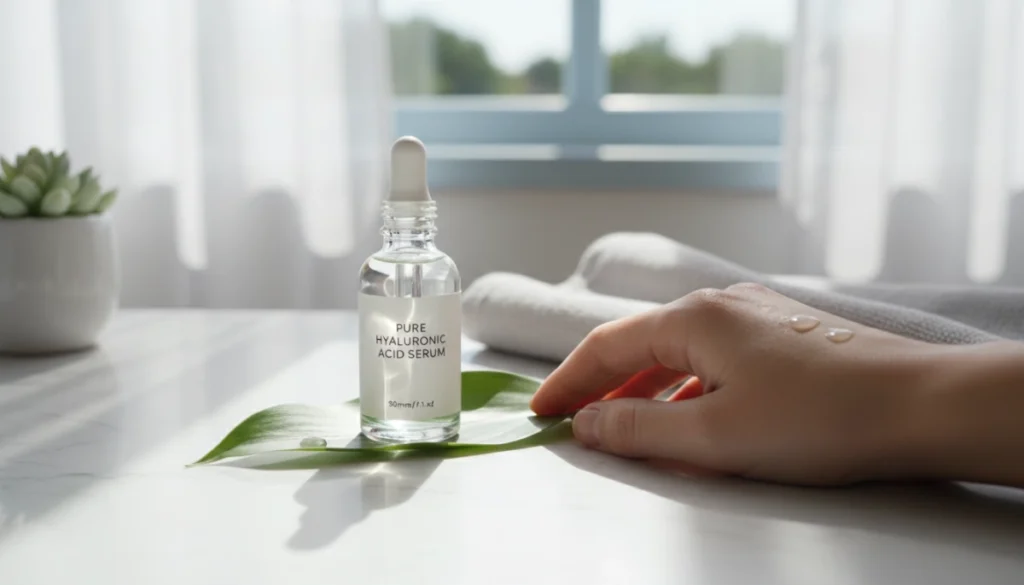
If you’ve ever stood in front of a mirror wondering why your skin still feels tight and dull even though you’re moisturizing, this is for you.
The truth? The best hyaluronic acid serum isn’t just the one with the highest percentage or the prettiest bottle—it’s the one with the right molecular weights, smart supporting ingredients, and a texture that actually works for your skin type.
In this guide, you’ll see exactly how to spot a truly effective humectant moisturizer, the difference between dry vs dehydrated skin, and which dermatologist-recommended serums are worth your money—whether you’re dealing with fine lines and wrinkles, breakouts, or a stubbornly damaged skin barrier.
If you’re ready for real, long-lasting plumping and hydration (without the sticky mess or surprise breakouts), keep reading.
The Hydration Hero: Why Your Routine Needs Hyaluronic Acid
If your skin ever feels tight, dull, or like your moisturizer “does nothing,” you’re the exact person who needs a hyaluronic acid serum in your routine.
Dry vs Dehydrated: Why Skin Feels Thirsty
First, quick reality check:
- Dry skin = lacks oil. It often feels rough, flaky, and tight all day.
- Dehydrated skin = lacks water. Any skin type (even oily) can be dehydrated and look dull, crinkly, or tired.
Because of AC, heating, long showers, and over-cleansing, most of us in the U.S. are walking around with dehydrated skin—which is why a hydration boosting serum with hyaluronic acid is such a game changer.
What Hyaluronic Acid Actually Does
Hyaluronic acid (HA) is a humectant moisturizer, which means it acts like a magnet for water:
- It pulls water into the skin to boost moisture retention
- It helps reduce transepidermal water loss (TEWL) so your skin doesn’t lose hydration as fast
- It makes your other products (like moisturizer) work better by giving them a hydrated, bouncy base
In most modern formulas, you’ll see sodium hyaluronate or hydrolyzed hyaluronic acid, which are forms of HA that absorb more easily and feel lighter on the skin.
How HA Gives You Glass Skin and Plumpness
When you use a well-formulated hydrating face serum with HA consistently, you’ll notice:
- Plumping effect: Fine lines and wrinkles look softer because the skin is filled with water from within
- Glass skin glow: Hydrated skin reflects light better, so you get that smooth, even, “glass skin” finish
- Barrier repair support: When your skin is hydrated, your skin barrier stays stronger and less reactive
- All-skin-type friendly: A good lightweight hydrating serum with HA works for dry, oily, combo, and sensitive skin
That’s why, when I build or recommend routines, a best hyaluronic acid serum isn’t optional—it’s the hydration hero that quietly fixes dullness, tightness, and early fine lines in the background.
The Science of Selection: How to Read a Best Hyaluronic Acid Serum Label
When I’m picking the best hyaluronic acid serum, I always read the label like a checklist, not a guess.
Molecular Weight = Surface vs Deep Hydration
Look for phrases like “multi-molecular weight”, “low molecular weight”, or “HA complex.”
- High molecular weight HA: sits on top, gives instant plump and “glass skin” shine.
- Low molecular weight / ultra-low: goes deeper, helps with fine lines and wrinkles and moisture retention.
- For real results, I go for a multi-molecular weight hyaluronic acid complex, not just one basic form.
Sodium Hyaluronate vs Hyaluronic Acid vs Hydrolyzed HA
On U.S. labels you’ll usually see:
- Sodium Hyaluronate: my go-to; smaller size, better absorption, common in non-comedogenic serum and hydration boosting serum.
- Hyaluronic Acid: the umbrella term; good, but I want it paired with sodium hyaluronate.
- Hydrolyzed Hyaluronic Acid: broken down for deeper layers; great for barrier repairing serum and anti-aging.
The best hyaluronic acid serum for dry skin or sensitive skin usually combines at least two of these.
Best Supporting Ingredients to Look For
A strong hydrating face serum does more than just HA. On the INCI list, I like seeing:
- Vitamin B5 (Panthenol): boosts hydration and calms redness; perfect for sensitive skin safe formulas.
- Ceramides: support skin barrier repair and reduce transepidermal water loss (TEWL).
- Niacinamide: brightening, oil control, barrier support; ideal in a hyaluronic acid serum for acne-prone skin.
- Other humectants like glycerin, beta-glucan, aloe: add extra water-binding power.
This combo gives a lightweight hydrating serum that works for both oily skin and dry skin, depending on the texture.
Red-Flag Ingredients in HA Serums
For a fragrance-free hyaluronic acid serum that works for most U.S. skin types, I avoid:
- High alcohol (Alcohol Denat. near the top of the list): can sting and damage the barrier, especially in dry climates.
- Added fragrance / parfum and essential oils: common irritants, not worth it if you have sensitive or acne-prone skin.
- Harsh actives stuffed into a “hydrating” serum: strong acids or overloaded exfoliants don’t belong in a basic HA hydration step.
If I’m calling something the best hyaluronic acid serum for sensitive skin or a clean beauty hyaluronic acid serum, it’s always fragrance-free, low on irritants, and focused on hydration + barrier repair, not hype.
Top Picks: Best Hyaluronic Acid Serum By Skin Type And Budget
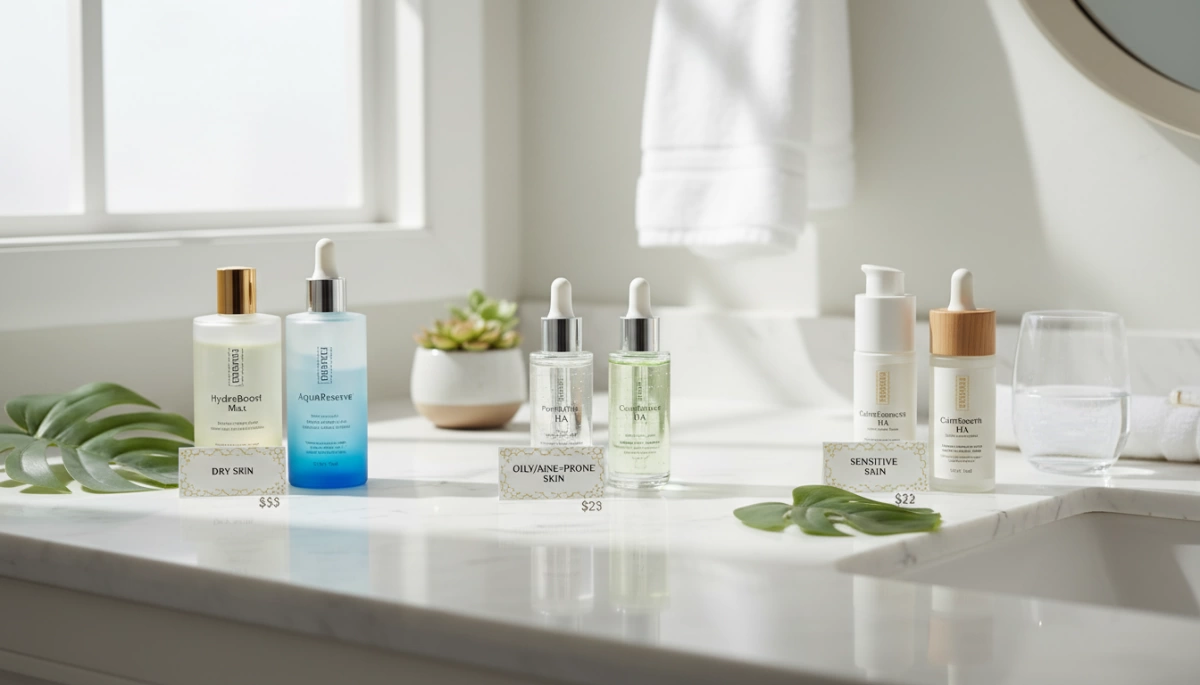
When I test and recommend the best hyaluronic acid serum options for our U.S. customers, I look at three things first: multi-weight hyaluronic acid, supporting barrier-repair ingredients, and how the formula actually feels and wears in a real routine. Here’s how I break it down.
Best Overall Hyaluronic Acid Serum (Dermatologist Recommended)
For most people, the best hyaluronic acid serum is a multi-molecular weight hyaluronic acid complex that’s light, layers well, and plays nice with vitamin C, retinol, and sunscreen.
What I look for in an “overall winner”:
- Sodium hyaluronate + hydrolyzed hyaluronic acid for both surface and deeper hydration
- Vitamin B5 (panthenol) and glycerin for extra humectant moisture and a plumping effect
- Non-comedogenic serum base that works for normal, combo, and slightly oily skin
- Sensitive skin safe: no drying alcohol, harsh fragrance, or strong essential oils
This kind of hydrating face serum gives that “glass skin” look, improves moisture retention, and pairs easily with the average U.S. morning and night routine.
Best Budget And Drugstore Hyaluronic Acid Serum
If you’re shopping at Target, Walmart, or the drugstore and want a solid drugstore hyaluronic acid serum, I focus on formulas that skip the fluff and still support the skin barrier.
Key features I prioritize:
- 2–3 types of hyaluronic acid or sodium hyaluronate
- Simple humectant moisturizer base (glycerin, aloe, panthenol)
- Light gel texture that doesn’t pill under sunscreen or makeup
- Clear, fragrance-free hyaluronic acid serum options for sensitive or reactive skin
These budget picks are ideal if you’re just starting with a hydration boosting serum and don’t want to overspend.
Best Luxury Hyaluronic Acid Serum For Anti-Aging And Glow
For a luxury hyaluronic acid serum, I’m paying for more than just HA. I’m looking for anti-aging and glow-boosting extras built into one step.
What I want to see:
- Multi-weight hyaluronic acid complex for deep, long-lasting hydration
- Added peptides, niacinamide, and antioxidants to smooth fine lines and wrinkles
- Silky, fast-absorbing texture that gives instant radiance (true “glass skin routine” energy)
- Strong barrier repairing serum profile to support transepidermal water loss (TEWL) control
This tier is for you if you want one hero serum to handle hydration, plumping, and visible glow without a 10-step routine.
Best Hyaluronic Acid Serum For Oily Or Acne-Prone Skin
For oily or acne-prone skin, the best hyaluronic acid serum has to be lightweight, non-comedogenic, and non-greasy. Heavy, sticky formulas are a dealbreaker for this group.
What I build into or look for in these formulas:
- Ultra-light water-gel texture that disappears into the skin
- Sodium hyaluronate and other light humectants instead of heavy oils
- Niacinamide to help with pores, oil control, and post-acne marks
- Clearly labeled non-comedogenic serum, safe to use under acne treatments
- Layers easily with benzoyl peroxide, salicylic acid, or retinoids
This style of hyaluronic acid serum for acne-prone skin keeps hydration up without triggering breakouts, which is a big pain point for U.S. customers in humid or hot states.
Best Hyaluronic Acid Serum For Dry And Sensitive Skin
For dry or sensitive skin, I design and recommend barrier-focused formulas that go beyond simple hydration. These are built to comfort, protect, and repair.
Must-have features:
- Multi-molecular weight hyaluronic acid for both immediate and long-term moisture
- Ceramides, cholesterol, and fatty acids to support skin barrier repair
- Panthenol (Vitamin B5) and allantoin to calm irritation and redness
- Richer, cushiony texture that still absorbs well and doesn’t feel suffocating
- Strictly sensitive skin safe: no drying alcohol, harsh fragrance, or strong actives
If you’re dealing with flakiness, tightness, or overuse of exfoliating acids and retinoids, this is the best hyaluronic acid serum for dry skin to rebuild comfort and softness.
Best Clean And Fragrance-Free Hyaluronic Acid Serum
For customers who prioritize clean beauty hyaluronic acid serum options, I keep formulas minimal but effective, while still grounded in science.
What this category includes:
- Clean, short ingredient list focused on hyaluronic acid, glycerin, and gentle humectants
- Fragrance-free hyaluronic acid serum with no essential oil blends that can irritate
- Free from drying alcohols and common irritants, suitable for reactive and redness-prone skin
- Compatible with most routines, including pregnancy and nursing (always confirm with your doctor)
This is the pick I recommend if you want a straightforward, lightweight hydrating serum that respects your skin barrier and your ingredient standards, without sacrificing real performance.
How To Use The Best Hyaluronic Acid Serum The Right Way
The Golden Rule: Damp, Not Dry
If you remember one thing about any hydrating face serum, remember this: never apply hyaluronic acid to completely dry skin.
HA is a humectant moisturizer, so it pulls water from wherever it can get it.
Do this instead:
- Lightly mist your face or leave it slightly damp after cleansing
- Apply your hyaluronic acid serum within 30–60 seconds
- Seal it in with a moisturizer to prevent transepidermal water loss (TEWL)
This helps you get that plumping effect instead of tight, dry skin.
Step-By-Step Hyaluronic Acid Serum Routine
Here’s a simple, US-friendly routine you can plug into your current lineup:
Cleanse
- Use a gentle, non-stripping cleanser
- Pat off excess water but leave skin damp, not dripping
Apply Hydrating Face Serum (HA)
- Use 2–4 drops of your best hyaluronic acid serum
- Spread over damp skin (face + neck) with clean hands
- Let it sit for about 30–60 seconds
Moisturizer
- Lock it in with a moisturizer that has ceramides, glycerin, or Vitamin B5 (panthenol) for barrier repair
- For dry or sensitive skin, go thicker and creamier; for oily or combo, stick to a lightweight hydrating serum plus gel moisturizer
Sunscreen (AM)
- In the US, I don’t skip SPF 30+ during the day—HA boosts moisture, but SPF protects the investment
Layering With Vitamin C, Retinol, And Acids
Your skincare layering guide with HA is pretty straightforward:
Morning (Glow + Glass Skin Routine)
- Cleanser
- Vitamin C serum
- Hyaluronic acid serum (multi-molecular weight if you have one)
- Moisturizer
- Sunscreen
Night (Repair + Anti-Aging)
- Cleanser
- Exfoliating acid (if using, 2–3x/week max)
- Retinol or retinal (if you use it)
- Hyaluronic acid serum for hydration boosting
- Barrier repairing serum or moisturizer (ceramides, panthenol, niacinamide)
Key points:
- HA plays nice with vitamin C, retinol, and exfoliating acids
- If your skin is sensitive, apply HA after retinol to cushion and support skin barrier repair
- Keep your routine non-comedogenic if you’re using hyaluronic acid serum for acne-prone skin
How Often To Use HA Serum (By Skin Type And Climate)
You can use a lightweight hydrating serum with HA daily, but how often you layer it depends on your skin and where you live in the US:
Oily or acne-prone skin
- Use once daily (PM or AM) with a non-comedogenic serum
- In humid states (Florida, Texas in summer), once a day is usually enough
Dry skin / best hyaluronic acid serum for dry skin
- Use twice daily (AM + PM)
- Pair with a thicker cream in cold or dry climates (Midwest winters, mountain states)
Sensitive skin / best hyaluronic acid serum for sensitive skin
- Start once a day, 3–4 times a week
- Make sure it’s a fragrance-free hyaluronic acid serum with soothing ingredients like panthenol and ceramides
Very dry or low-humidity climates (air-conditioned offices, desert states)
- Always follow HA with a solid moisturizer or barrier cream
- If the air is super dry, rely less on just HA and more on occlusive ingredients to lock in moisture
Used the right way, a multi-weight hyaluronic acid complex can fit into almost every routine in the US—oily, dry, or sensitive—without feeling heavy or greasy.
Hyaluronic Acid Myths and Mistakes to Avoid
Why higher percentage isn’t always better
When it comes to the best hyaluronic acid serum, more is not always better.
Very high percentages can feel sticky, pill under makeup, and sit on top of skin instead of sinking in. What matters more is:
- A multi-molecular weight hyaluronic acid complex (different molecule sizes for surface + deeper hydration)
- A good humectant moisturizer mix (like glycerin and Vitamin B5 / panthenol)
- A solid barrier repairing serum formula (ceramides, cholesterol, fatty acids)
I always look for a balanced, lightweight hydrating serum, not the biggest number on the label.
Do you need HA if you have oily or acne-prone skin?
If you’re searching for the best hyaluronic acid serum for oily skin or a hyaluronic acid serum for acne-prone skin, yes, it still makes sense. Oily doesn’t always mean hydrated. A lot of us in the U.S. use strong cleansers or acne treatments that leave skin dehydrated, even if it’s shiny.
The key is to pick a:
- Non-comedogenic serum with a gel or water-light texture
- Fragrance-free hyaluronic acid serum to avoid irritation
- Formula that skips heavy oils but still supports moisture retention and skin barrier repair
How climate and humidity change HA on your skin
Hyaluronic acid pulls water from somewhere. In a humid place (think Florida summer), that’s usually the air. In dry climates or heated/air-conditioned rooms (hello U.S. winters and office AC), there’s not much moisture in the air, so HA can start pulling water from deeper in your skin instead.
To keep it working for you:
- Always apply your hydrating face serum on damp skin
- Seal it in with a moisturizer to reduce transepidermal water loss (TEWL)
- In very dry climates, lean on a richer cream, especially if you have dry or sensitive skin
Common HA mistakes that actually dry you out
These are the big mistakes I see that make even the best hyaluronic acid serum backfire:
- Applying HA on completely dry skin
- Skipping moisturizer after your hydration boosting serum
- Using only a thin HA serum in cold, dry weather with no cream on top
- Over-layering with strong actives (acids, retinoids) without enough barrier support
If you fix these habits and pair HA with smart skincare layering and a good moisturizer, you’ll actually see the plumping effect, smoother fine lines and wrinkles, and that “glass skin” look most people are chasing.