San Cristóbal de las Casas Chiapas Mexico: First Impressions
When travelers message me about Chiapas Mexico, their first questions are usually: Is San Cristóbal safe? What’s the vibe really like? Is it cold? Where should I stay? Let me walk you through what it actually feels like on the ground.
Atmosphere and Vibe in San Cristóbal de las Casas
San Cristóbal de las Casas is a compact, walkable highland town with a relaxed but energetic feel. You’ll notice:
- A mix of backpackers, remote workers, and Mexican families on weekend trips
- Street musicians, mellow bars, and cafés instead of loud resort-style nightlife
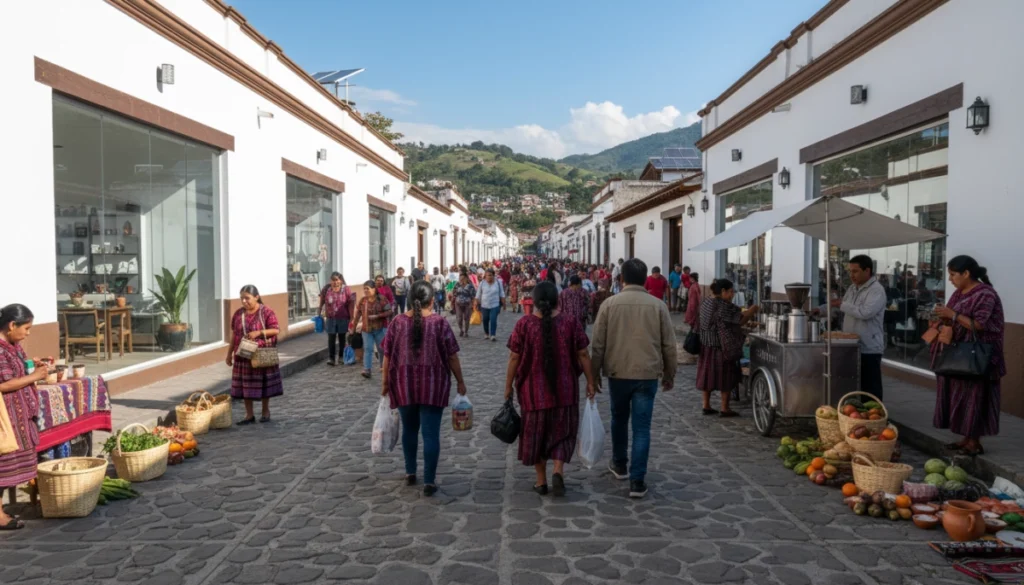
- Indigenous women walking in traditional dress, selling textiles and crafts
- Evenings that feel cozy and social, with people strolling, drinking coffee or wine
It’s a place where you slow down, walk everywhere, and feel grounded in local daily life.
Colonial Architecture and Historic Center
The historic center of San Cristóbal de las Casas is small and beautiful, and you’ll naturally gravitate toward:
- Low, colorful colonial houses with red-tile roofs and wooden balconies
- Narrow cobblestone streets that stay lively but not chaotic
- Landmarks like the Cathedral, Santo Domingo church, and tree-filled plazas
- Hidden courtyards that open into cafés, boutique hotels, and artisan patios
You can cover most of the center on foot in 10–15 minutes, which makes exploring effortless.
Real de Guadalupe Pedestrian Street
Real de Guadalupe is the main pedestrian street and the town’s social backbone. Expect:
- Restaurants, wine bars, mezcalerías, and coffee shops lined up for blocks
- Safe, easy nighttime walking with people out until around 10–11 pm
- Street performers, live music, and vendors selling crafts and snacks
- A mix of budget eateries and higher-end spots with great people-watching
If you want to stay close to “where things happen” in San Cristobal de las Casas, this is it.
Highland Weather: What It Really Feels Like
The weather in Chiapas highlands surprises a lot of visitors. San Cristóbal sits at about 2,200 m (7,200 ft), so:
- Days are usually mild and sunny; you’ll be comfortable in a light shirt or sweater
- Evenings and early mornings get chilly year-round, especially December–February
- Houses can feel colder inside than outside because many aren’t well insulated
- Rainy afternoons are common in the wet season (roughly May–October)
Pack layers: a warm sweater, light jacket, and something waterproof. You will use them.
Local Artisan Markets and Handicrafts
One of the strongest reasons I send travelers to San Cristóbal de las Casas, Chiapas Mexico is the quality of the handicrafts:
- Textiles: handwoven shawls, huipiles, rebozos, table runners, and pillow covers
- Amber and jade jewelry from nearby communities
- Handcrafted leather goods, ceramics, and wooden masks
Key markets to explore:
- Santo Domingo artisan market (behind the church) – dense, colorful, great range
- Smaller courtyard shops run by cooperatives – better if you want to support artisans more directly
Tip: Ask where pieces were made and by which community. It opens real conversations and supports ethical purchasing.
Coffee Culture and Chiapas Coffee Tastings
Chiapas produces some of the best coffee in Mexico, and San Cristobal de las Casas is where you actually get to taste it properly:
- Specialty cafés serving single-origin beans from local fincas
- Tasting flights where you can compare different Chiapas regions and roast profiles
- Baristas who explain processing methods (washed, honey, natural) in simple terms
Look for:
- Shops that roast on-site
- Labels that mention the community or cooperative (e.g., Tzotzil or Tzeltal producers)
- Manual brews (V60, Chemex, AeroPress) if you want to really taste the difference
If you love coffee, plan at least one dedicated coffee-tasting afternoon.
Best Areas and Types of Places to Stay in San Cristóbal
Choosing where to stay in San Cristobal de las Casas, Chiapas Mexico comes down to how close you want to be to the action and how quiet you want your nights:
Best areas:
Historic Center / near the Cathedral
- Short walks to everything
- Good for first-time visitors and short trips
Real de Guadalupe (and side streets)
- Lively, lots of food and nightlife options
- Some noise in the evenings, but great if you want to step out into the action
Residential streets a few blocks uphill from the center
- Quieter, more local feel
- Still walkable, but slightly more hilly and dark at night
Types of stays you’ll find:
- Boutique colonial hotels with inner courtyards, fireplaces, and traditional decor
- Hostels and guesthouses with shared kitchens and social common areas
- Apartments and lofts ideal for longer stays and digital nomads
For most US travelers, I recommend:
- Stay within a 10-minute walk of the Cathedral or Real de Guadalupe
- Choose a place that mentions heating, good hot water, and strong Wi-Fi in the reviews
Those three details will make or break your comfort in the highland climate.
Mayan Ruins in Chiapas Mexico
Overview of Mayan history in Chiapas
Chiapas Mexico sits in the heart of the ancient Maya world. City-states here controlled key trade routes between the Gulf, the highlands, and the lowlands. When you visit the Mayan ruins in Chiapas Mexico, you’re not just seeing temples—you’re walking through old power centers that connected today’s Mexico and Central America.
Palenque ruins deep in the jungle
Palenque is the most famous of the Mayan ruins in Chiapas Mexico and one of the best Mayan ruins in Mexico, period. It’s compact, easy to walk, and feels wild without being hard to reach. Expect:
- Well-preserved pyramids and plazas
- Thick jungle backdrop and heavy humidity
- Good signage and guides for context
Temple of the Inscriptions and main structures
The Temple of the Inscriptions is the star of Palenque. This is where the tomb of Pakal the Great was found. Around it, don’t miss:
- Palace complex with courtyards and tower
- Temple of the Cross Group for views
- On-site museum with original carvings (check opening hours)
Jungle experience and wildlife around Palenque
A Palenque ruins jungle tour feels very different from dry-site ruins elsewhere in Mexico. You’ll likely:
- Hear howler monkeys and see spider monkeys
- Spot toucans, parrots, and big butterflies
- Walk shaded jungle paths behind the main ruins
Bring light clothes, bug spray, and a dry bag for sudden rain.
Yaxchilán ruins by boat on the Usumacinta River
Yaxchilán is for travelers who like adventure. You reach it by boat along the Usumacinta River on the border with Guatemala. Expect:
- Early start from Palenque or Frontera Corozal
- Overgrown temples, jungle sounds, and far fewer people
- Dark, bat-filled passageways and photo-ready plazas
Bonampak murals and what to expect
Bonampak is known for some of the best Mayan murals ever found. You visit it often combined with Yaxchilán. On site:
- Small site, quick visit, but very impressive art
- Vivid paintings showing rituals and warfare
- Local Lacandon Maya communities managing access—follow their rules
Toniná archaeological site and tallest pyramid in Mexico
Toniná is outside Ocosingo and feels under-the-radar. It’s home to what many experts call the tallest pyramid in Mexico when measured from base to top platform. Highlights:
- Steep terraces with strong leg workout
- Wide valley views from the top
- Fewer crowds than Palenque, more “local” vibe
How to choose which Mayan ruins to visit in Chiapas
If you’re coming from the United States and planning limited days in Chiapas Mexico, here’s how I’d pick:
- First-time visitors / families
- Palenque ruins + Temple of the Inscriptions
- Adventure travelers
- Palenque + Yaxchilán ruins by boat + Bonampak murals
- Road trip / driving Chiapas
- Palenque or San Cristóbal base + day trip to Toniná
- Short trips
- One full day at Palenque, maybe add a half-day jungle tour
If you have 3–4 days, you can comfortably combine Palenque, a jungle experience, and at least one more Mayan ruins site in Chiapas Mexico without rushing.
Chiapas Mexico Natural Wonders
Chiapas Mexico is packed with wild landscapes, easy day trips, and legit bucket‑list nature spots. I treat this state as my go‑to base for canyon rides, jungle rivers, and waterfall hikes that stay pretty affordable for U.S. travelers.
Sumidero Canyon Boat Trip From Chiapa de Corzo
If you do one nature tour in Chiapas Mexico, make it a Sumidero Canyon boat trip.
- Boats leave from the river docks in Chiapa de Corzo (about 30–40 minutes from Tuxtla Gutiérrez airport).
- Expect a 2–3 hour ride through 3,000 ft cliffs, caves, and rock formations.
- Bring a light jacket, hat, and sunglasses; the wind and sun hit harder on the water.
- Go in the morning for calmer weather, fewer crowds, and better wildlife sightings.
Wildlife In Sumidero Canyon And Viewpoints
The canyon isn’t just scenery; it’s full-on wildlife watching.
- You can often spot crocodiles, spider monkeys, and tons of birds (herons, vultures, cormorants).
- Ask your boat captain to slow down near rocky banks and tree canopies for photos.
- After the boat, consider a taxi/driver to the Sumidero viewpoints on the rim for epic photos over the Grijalva River.
Waterfalls In Chiapas And How To Visit Them
Chiapas Mexico has some of the best waterfall routes in the country, and you don’t need a car if you don’t want one.
- From San Cristóbal or Tuxtla, you’ll find group tours, private drivers, or colectivos to the main falls.
- Always bring cash for entrance fees, parking, bathrooms, and local food stalls.
- Wear quick‑dry clothes, water shoes, and pack a small dry bag for your phone and passport.
El Chiflón Waterfalls Hike And Viewpoints
The El Chiflón waterfalls hike is a solid half‑day or full‑day outing.
- Located near Comitán, with multiple cascades leading up to the main fall, Velo de Novia.
- Well‑marked trail with several viewpoints; it’s uphill but manageable for most travelers.
- You can usually swim in calmer sections (follow posted signs and local guidance).
- Lockers, life jackets, and small restaurants are available at the entrance area.
Agua Azul Waterfalls Swimming Conditions And Seasonality
Agua Azul waterfalls are famous for their bright blue pools—but timing is everything.
- Best season: dry months (roughly November–April) when the water turns that classic turquoise.
- In rainy season, the river can be brown and too strong for safe swimming.
- Always obey local lifeguards and closures; currents change fast after storms.
- Vendors sell food, snacks, and crafts along the path, so bring cash and keep valuables close.
Lagunas De Montebello Lakes And Viewpoints
Montebello Lakes National Park is all about quiet pine forests and clear lakes on the Guatemala border.
- You can visit several lakes in one route, each with different shades of blue and green.
- Popular activities: short hikes, lookout points, rowboat rentals, and simple lakeside meals.
- It’s cooler here, so bring a light layer and skip swimming if you’re sensitive to cold water.
Day Trip Ideas Combining Nature Spots In Chiapas
If you’re short on time, you can stack a few natural wonders into smart day trips:
- From Tuxtla: Sumidero Canyon boat trip + Chiapa de Corzo town walk.
- From San Cristóbal: El Chiflón waterfalls hike + Lagunas de Montebello lakes.
- On the road to Palenque: Agua Azul waterfalls + Misol-Ha waterfall (often sold as a combo tour).
For U.S. travelers, these Chiapas Mexico natural wonders deliver a lot of adventure for the cost: short drives, low entry fees, and easy ways to support local guides, boat owners, and family‑run food stands along the way.
Indigenous Culture in Chiapas Mexico
Indigenous communities in Chiapas
Chiapas has one of the strongest indigenous cultures in Mexico. Around San Cristóbal de las Casas, you’ll mainly meet Tzotzil and Tzeltal Maya communities, each with their own language, clothing, and traditions. As a traveler from the US, you’re not just “visiting villages” here—you’re stepping into living cultures that set their own rules and pace of life.
Tzotzil and Tzeltal villages near San Cristóbal
The easiest indigenous villages in Chiapas to visit from San Cristóbal are:
- San Juan Chamula (Tzotzil) – famous church rituals, strong autonomy, no “typical tourism.”
- Zinacantán (Tzotzil) – weaving, flowers, and family cooperatives.
- Tzeltal villages (like Tenejapa) – smaller markets, more rural feel, fewer tourists.
I recommend hiring a local Maya guide in San Cristóbal. You get context, respect protocols, and your money goes directly into the community.
How to visit indigenous villages respectfully
If you visit indigenous villages in Chiapas, basic respect matters more than anything:
- Ask before taking photos; in many areas, people absolutely do not want to be photographed.
- Dress modestly: covered shoulders, no loud or “party” outfits.
- Don’t point your camera at religious rituals, altars, or cemeteries.
- Spend money locally: buy textiles, food, and services directly from families.
- Follow your guide’s lead; if they say “no photo” or “we leave now,” listen.
This isn’t a theme park. Think of it as entering someone else’s home.
San Juan Chamula church rituals and rules
The church in San Juan Chamula is one of the most intense cultural experiences in Chiapas Mexico:
- The floor is covered in pine needles; families sit on the ground with candles and Coca-Cola or Pox.
- Healers perform rituals blending pre-Hispanic beliefs with Catholic saints.
- There is a total photography ban inside the church and often even in the plaza during ceremonies.
- You must stay quiet, move slowly, and avoid staring at people mid-ritual.
If you can’t respect these rules, skip Chamula. Local authorities enforce them seriously.
Blending Mayan traditions and Catholicism
In many indigenous villages in Chiapas, Mayan beliefs and Catholicism blend into something unique:
- Catholic saints are often seen as versions of older Maya deities.
- Rituals use candles, incense, eggs, and sometimes chickens for spiritual cleansing.
- Church services don’t look “Catholic” in a standard way; they’re local, oral, and family-led.
From a US perspective, it may feel unfamiliar, but the key is to observe quietly and not judge.
Zinacantán weaving and textile cooperatives
Zinacantán stands out for its textiles:
- Women wear and weave bright purple and floral huipiles and shawls.
- Many families run small weaving cooperatives at home where you can see backstrap loom work in real time.
- Buying direct from the cooperative usually means better pay for the weavers than market middlemen.
If you care about ethical shopping, this is one of the best places in Chiapas Mexico to spend your money.
Flower cultivation and family workshops
Zinacantán is also known for:
- Greenhouses full of flowers, especially roses and marigolds for church festivals.
- Families combining flower growing + textile weaving as their main income.
- Simple in-home tastings where hosts might offer handmade tortillas, salsa, and beans while showing you their work.
Ask your guide to prioritize stops where you can actually sit in someone’s home, not just big tourist shops.
Zapatista movement history and presence
The Zapatista movement is a big part of modern Chiapas:
- It began in 1994 as an indigenous-led uprising demanding land rights, autonomy, and respect.
- Today, there are Zapatista communities and caracoles (centers) that manage their own schools, health systems, and local government.
- In some areas you’ll see murals, red-and-black flags, and slogans supporting indigenous rights.
This isn’t “revolution tourism.” It’s a living political and social project.
How Zapatista influence shapes daily life in Chiapas
Even if you don’t visit a Zapatista caracol, you’ll feel their influence across Chiapas Mexico:
- Strong emphasis on community decision-making and local assemblies.
- Clear rules about land access, photography, and outside projects.
- Many cooperatives, organic coffee projects, and women-led groups came out of Zapatista organizing.
- You may see political murals in San Cristóbal de las Casas supporting indigenous autonomy.
As a US traveler, the best way to engage is simple: respect local rules, ask questions through a guide, and put your money into community-owned tours, textiles, coffee, and crafts.
Food and drink in Chiapas Mexico
Chiapas is one of the best places in Mexico to eat well on a tight budget, and San Cristóbal de las Casas is where I always tell U.S. travelers to start.
Traditional food in Chiapas you should try
You’ll see these dishes on most local menus:
- Tamales Chiapanecos (often with chipilín, a local herb)
- Sopa de Pan (bread soup with tomatoes, veggies, and sometimes chicken)
- Mole Chiapaneco (richer and spicier than many central Mexican moles)
- Chanfaina (pork offal stew, for more adventurous eaters)
Portions are big, prices are low, and most places are very casual—great if you’re used to U.S. fast‑casual and diners.
Regional dishes and street food in San Cristóbal
For easy “San Cristobal de las Casas things to do,” I always add a street food loop:
- Tacos and quesadillas on and around Real de Guadalupe in the evenings
- Esquites and elotes (corn cups and corn on the cob) in the main squares
- Atoles and champurrado (hot corn drinks) on chilly nights
Stick to busy stands with fast turnover, the same rule most of us follow at food trucks back home.
Tamales Chiapanecos and chipilín flavors
Tamales here are lighter than in many parts of Mexico:
- Steamed in banana leaves, often filled with chicken, pork, or veggies
- Chipilín adds a mild, herbal flavor you won’t find easily in the States
- Often served for breakfast or a light dinner with coffee or atole
If you like Southern-style greens or herbaceous flavors, you’ll probably like chipilín.
Sopa de Pan and other local specialties
When people ask me what you can only eat in Chiapas Mexico, I send them to:
- Sopa de Pan – comfort food, especially on cold highland nights
- Tasajo – thin-sliced grilled beef, often served with beans and tortillas
- Pictes de elote – sweet corn dumplings, great as a snack or dessert
Look for small family-run spots where the daily menu is on a whiteboard.
Where to find local markets and fondas
For reliable, low-cost meals:
- Mercado José Castillo Tielemans (San Cristóbal) – fondas with fixed-price menus
- Local “comedores” and “cocinas económicas” around bus stations and markets
- Go at lunchtime (1–4 pm) for the freshest food and best prices
If you’re traveling with kids, these spots are usually fast, filling, and flexible about simple orders.
Pox ceremonial drink and tasting experiences
Pox (pronounced “posh”) is a traditional corn- and sugarcane-based spirit:
- Think of it as a local craft spirit, usually 30–50% ABV
- Served straight, in flavored versions (coffee, cacao, fruit), or in cocktails
- You’ll find Pox bars and tasting rooms in San Cristóbal that explain the cultural and ceremonial side
If you drink, treat it like a mezcal tasting—small pours, slow pace, and walk back to your hotel.
Cacao and chocolate traditions in Chiapas
Chiapas is one of Mexico’s historic cacao regions:
- Try traditional hot chocolate made with water, not milk, plus cinnamon
- Look for stone-ground chocolate bars and nibs from small producers
- Many shops offer short bean-to-bar explanations and tastings
This is an easy, packable gift to bring back to the U.S., and it travels better than most liquids.
Coffee, cafes, and dessert spots in Chiapas towns
If you’re into coffee culture, Chiapas is a major win:
- High-altitude Chiapas coffee is bright, chocolatey, and often organic
- San Cristóbal has third-wave coffee shops with pour-overs, cold brew, and bags of beans to take home
- Pair coffee with local pan dulce, pastries, or simple cakes in neighborhood bakeries
For U.S. travelers who work remotely, these cafés double as comfortable laptop spots—just buy a drink and maybe a snack, and you’re good to go.
Chiapas Mexico Travel Logistics
How to get to Chiapas from within Mexico
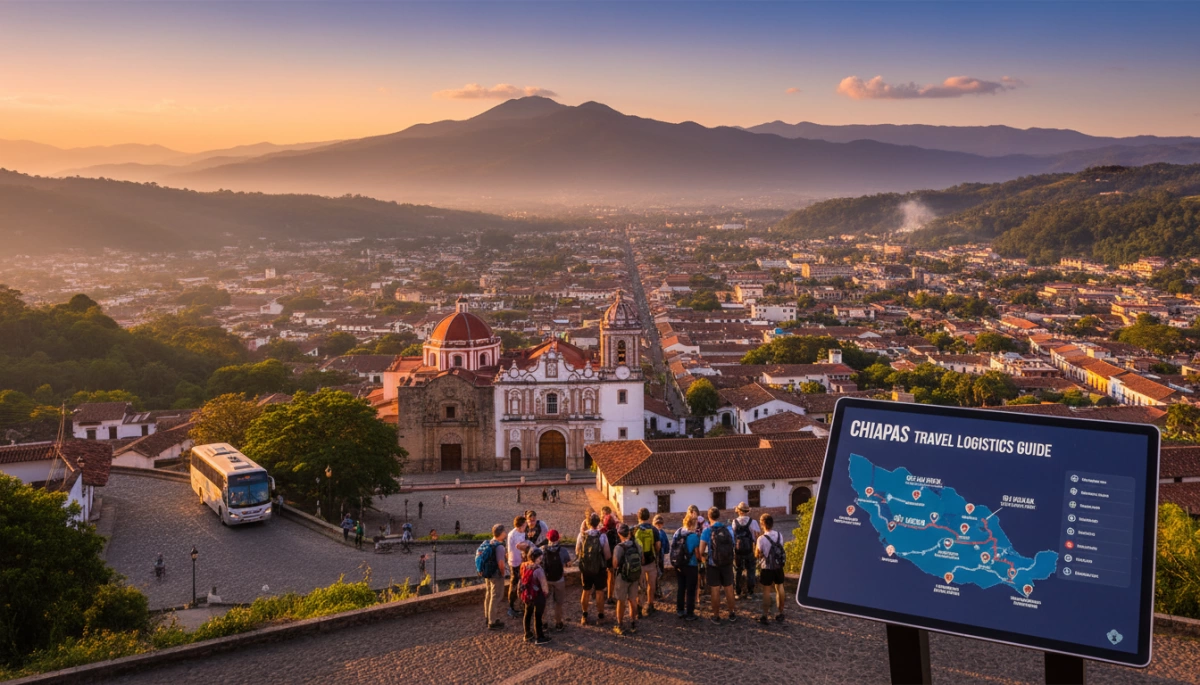
If you’re coming from the U.S., you’ll usually connect through big hubs like Mexico City, Guadalajara, or Cancun, then continue into Chiapas Mexico.
Fast options:
- Domestic flights into Tuxtla Gutiérrez (TGZ) from Mexico City, Guadalajara, Monterrey, Cancun.
- Long‑distance buses (ADO and OCC) from Oaxaca, Campeche, Mérida, and Mexico City if you’re on a budget or doing a slow road trip.
If you value time over money, fly. If you want to save cash and don’t mind overnight rides, bus routes are solid.
Flying into Tuxtla Gutiérrez vs bus routes
For most U.S. travelers, Tuxtla Gutiérrez airport is the cleanest entry into Chiapas Mexico:
- Pros of flying TGZ: Saves 8–14 hours vs bus, better if you have limited vacation days, easy to connect to San Cristóbal de las Casas.
- Cons: You’ll pay more and still need ground transport into the mountains.
Bus route notes:
- ADO/OCC buses are comfortable, air‑conditioned, and safe.
- Overnight buses are common, but roads are curvy, so sleep isn’t always great.
- Book online ahead of time for high season and weekends.
Tuxtla Gutiérrez airport to San Cristóbal de las Casas
From Tuxtla Gutiérrez airport to San Cristóbal, you have a few options:
- Shared shuttle vans: The most practical for most visitors.
- Counter right at the airport.
- Around 1–1.5 hours, drops you near or at your hotel.
- Private transfer:
- Best if you’re a group, have kids, or lots of luggage.
- Door‑to‑door, fixed price you agree on in advance.
- Taxi:
- Usually more expensive than shuttle per person.
- Good backup if you land late and shuttles stop running.
If you’re traveling with family or gear (camera, laptop, etc.), I usually recommend a pre‑booked private driver for peace of mind.
Getting around Chiapas without a tour
You don’t need a packaged tour to move around Chiapas Mexico:
- Colectivos (shared vans) for short routes and villages.
- ADO/OCC buses for longer routes like Tuxtla–San Cristóbal–Palenque.
- Private drivers if you want flexibility, sunrise/sunset visits, or have limited time.
I normally mix all three: buses between main hubs, colectivos for local trips, and a private driver on long, winding routes when I want to avoid stress.
Colectivos in Chiapas and how they work
Colectivos are the local backbone of public transport in Chiapas:
- They’re shared passenger vans running set routes (San Cristóbal–Chamula, Zinacantán, etc.).
- You usually board at local terminals or signed corners.
- You pay in cash, per person, when you get in or out.
- Vans leave when full, not on strict schedules.
For U.S. travelers: think of them as hyper‑local rideshares. They’re not luxurious, but they’re cheap, safe in the day, and very efficient.
ADO buses and private drivers in Chiapas
For longer stretches in Chiapas Mexico:
- ADO / OCC buses:
- Best for routes like San Cristóbal – Tuxtla – Palenque – Comitán.
- Reserve online or at the station.
- Choose earlier departures if you prefer to travel in daylight.
- Private drivers:
- Worth it for multi‑stop days (e.g., waterfalls + ruins) or if you hate dealing with transfers.
- Ideal for families, older travelers, or if you’re carrying lots of camera gear or laptops.
When I’m planning a tight itinerary, I usually budget 1–2 days of private transport to hit several spots without rushing.
Road conditions between San Cristóbal and Palenque
The San Cristóbal de las Casas–Palenque road is beautiful but demanding:
- It’s mountainous, narrow, and full of curves.
- You’ll encounter topes (speed bumps), small villages, and occasional slow trucks.
- Travel time is usually 7–9 hours depending on the route and stops.
If you’re prone to motion sickness:
- Sit near the front.
- Avoid reading.
- Bring meds like Dramamine.
Many visitors now prefer the longer but smoother Tuxtla–Villahermosa–Palenque route by bus or private transfer.
Dealing with topes and winding roads in Chiapas
In Chiapas Mexico, topes (speed bumps) are everywhere:
- They’re placed at town entrances, schools, and markets.
- Drivers slow down hard; unsecured luggage can shift.
- Plan more travel time than what maps suggest.
On winding roads:
- Avoid driving yourself at night unless you’re very confident.
- Keep snacks and water handy; there aren’t always big rest stops.
- Ask your driver to take it slower if you feel sick—locals are used to that request.
Chiapas road trip itinerary ideas and tips
If you’re considering a Chiapas road trip itinerary, I’d structure it simply:
Sample 7–9 day loop:
- Day 1–3: San Cristóbal de las Casas (base for nearby villages and Sumidero Canyon).
- Day 4–5: Waterfalls + Palenque ruins jungle tour.
- Day 6–7: Return via Villahermosa route or fly out.
- Optional: Add Comitán and Montebello Lakes National Park for extra nature days.
Road trip tips for U.S. travelers:
- Rent in Tuxtla, not San Cristóbal, for better car options.
- Keep gas above half a tank in rural areas.
- Drive only in daylight, especially between San Cristóbal and Palenque.
- Always carry cash, copies of your ID, and offline maps.
Handled right, logistics in Chiapas Mexico are straightforward—you just need to respect the distances, curves, and slower pace of the roads.
Safety and Responsible Travel in Chiapas Mexico
Current safety in Chiapas for tourists
Chiapas Mexico is generally safe in the main tourist zones like San Cristóbal de las Casas, Palenque, and Chiapa de Corzo, but it’s not a place to “wing it.”
- I avoid walking alone late at night, especially on quiet roads or outskirts.
- I stick to registered taxis, apps, or trusted drivers recommended by my hotel.
- I keep cash split in different spots and only carry what I need for the day.
- I watch local news and ask my hotel about any current issues or no-go areas.
Common scams and how to avoid issues
Most issues in Chiapas Mexico are small-time scams, not violent crime.
- At ATMs: I use machines inside banks or supermarkets, not street ATMs.
- Tours: I book Sumidero Canyon boat trips, Palenque ruins tours, and colectivos through verified agencies or my hotel.
- Street sellers: I confirm the price before buying, in pesos, and pay exact or close to exact.
- If something feels off, I walk away. There’s always another tour, driver, or vendor.
Roadblocks, protests, and what to do
Roadblocks and protests (bloqueos) happen in Chiapas, especially on routes between San Cristóbal, Ocosingo, and Palenque.
- I travel early in the morning when roads are calmer.
- If I hit a bloqueo, I stay in the car, stay calm, and let my driver handle it.
- I avoid arguing, filming people, or posting live on social media in tense moments.
- I always keep snacks, water, and a power bank in case I’m stuck for a while.
Respecting local customs and photography rules
Indigenous villages in Chiapas, like San Juan Chamula and Zinacantán, have strict rules. Respect is non-negotiable.
- I never take photos inside the San Juan Chamula church. That’s a hard rule and locals enforce it.
- I always ask before taking photos of people, especially women and children.
- I dress modestly in villages: covered shoulders, no flashy outfits.
- I avoid drones unless I have clear, written permission.
How to support local communities when you travel
Traveling in Chiapas Mexico can directly support local families if you’re intentional.
- I book locally owned hotels, guesthouses, and cabins instead of big chains when possible.
- I buy textiles, coffee, chocolate, and crafts directly from cooperatives and artisan markets.
- I hire local guides for Mayan ruins in Mexico and indigenous villages.
- I tip fairly at restaurants, markets, and on Sumidero Canyon boat trips.
When to visit Chiapas for weather and crowds
Timing your trip matters for both comfort and safety.
- Peak season: December–April (dry season, more crowds, higher prices).
- Shoulder months like November and May balance good weather and fewer people.
- For fewer crowds at Mayan ruins like Palenque, I arrive right when they open.
Rainy season vs dry season in Chiapas
Weather in Chiapas shifts a lot between highlands and jungle.
- Dry season (Nov–Apr): Better for road trips, hiking, and Sumidero Canyon boat trips; waterfalls like Agua Azul may have clearer water.
- Rainy season (May–Oct): More intense green landscapes, but heavier rain and muddy trails; some rivers turn brown and fast, affecting swimming.
- In the rainy season, I plan buffer time in case landslides or delays hit mountain roads.
Weather in Chiapas highlands and jungle
Expect two very different climates in one trip.
- San Cristóbal de las Casas (highlands): Cool days, chilly nights; it can feel like fall in the US year-round. I always bring a jacket.
- Palenque, Yaxchilán, and Bonampak (jungle): Hot, humid, and sticky. I wear light, breathable fabrics and drink water constantly.
What to pack for a trip to Chiapas Mexico
I pack for both “mountain town” and “tropical jungle” in one carry-on.
- For safety and comfort:
- Copy of passport, backup cards, and a money belt or hidden pouch
- Small first-aid kit, any meds, and a basic flashlight
- For weather and terrain:
- Light rain jacket, warm layer (hoodie or fleece), and a beanie for cold nights
- Quick-dry shirts, long sleeves for sun and mosquitoes, and breathable pants
- Sturdy walking shoes plus sandals with grip for waterfalls like El Chiflón and Agua Azul
- Extras that help in Chiapas Mexico:
- Reusable water bottle, power bank, and dry bag for boat rides
- Insect repellent and reef-safe sunscreen
Traveling Chiapas Mexico with this mindset—safety first, respect always, and money going to local hands—keeps the experience smooth and genuinely meaningful.