
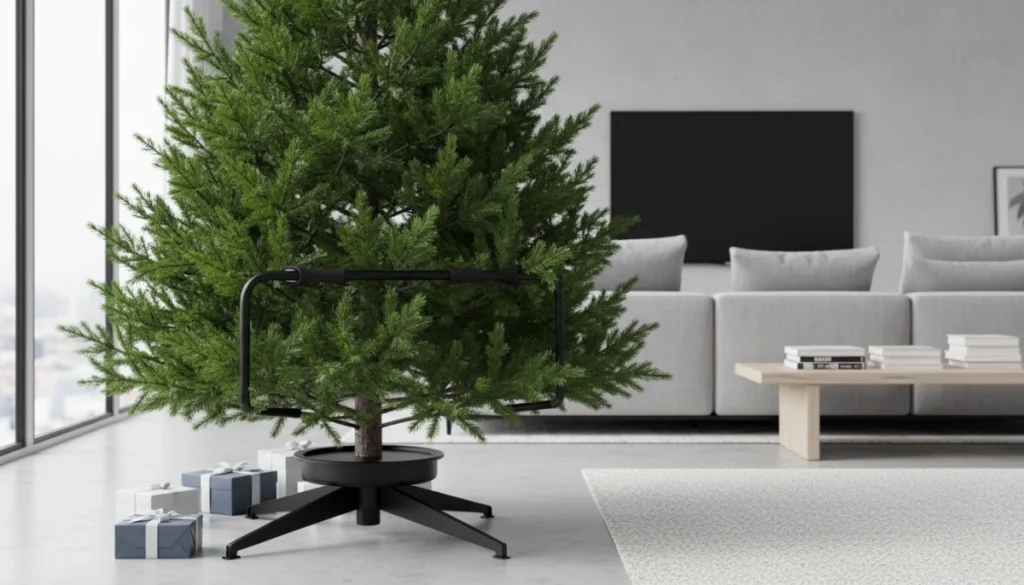
Match Your Christmas Tree Stand To Your Tree
If you remember only one thing, let it be this: your Christmas tree stand must match your tree’s type, size, and weight. The wrong stand is how you end up with tipping trees, leaks, and nonstop frustration.
Real vs. Artificial Christmas Tree Stand Needs
Real and artificial trees need very different support:
Real trees
- Need a christmas tree stand with a water reservoir capacity big enough to keep a fresh cut tree hydrated
- Require strong heavy-duty tree support to handle live weight and shifting branches
- Work best with a self-centering system or deep well that grips the natural tree trunk
Artificial trees
- Don’t need water, but they do need a stable artificial tree base that locks firmly into the pole
- Usually pair well with lighter stands or rotating tree stand options designed for pre-lit trees
- Often use a specific post size, so the stand must match the brand and pole diameter
Christmas Tree Stand Size: Trunk Diameter, Height, and Weight
Before you buy, measure your tree and match the numbers to the stand specs:
- Tree trunk diameter – Check the maximum trunk size your christmas tree stand can handle; a live tree with a 4–6 inch trunk needs a wide, deep clamp or screw system.
- Tree height – Taller than 7–8 feet? Choose a heavy-duty tree support or anti-tip stand with a broad base and higher weight rating.
- Tree weight – Wet live trees and dense artificial trees are heavy; always pick a stand rated for more weight than you think you need.
When I design or choose a stand, I never compromise on sizing. A properly matched christmas tree stand gives you the stability, safety, and peace of mind you want all season.
Best Christmas Tree Stand Features for Live Trees
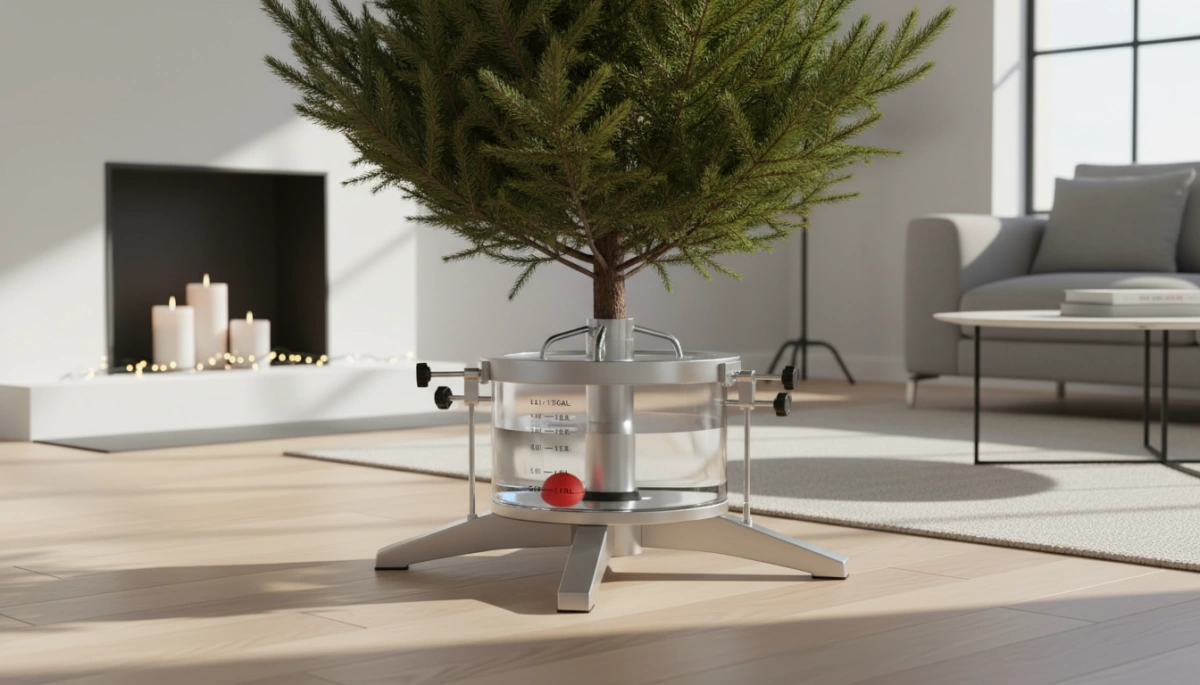
Christmas tree stand water capacity and hydration
For a live Christmas tree, water is everything. I always push customers toward a Christmas tree stand with a deep water reservoir capacity, not just a wide bowl.
- Aim for at least 1–1.5 gallons of water capacity for standard trees, more for heavy-duty tree support.
- A good stand makes it easy to see and refill water daily to keep fresh cut tree hydration strong.
- Look for wide, stable bases so the stand doesn’t tip when you top off the water.
Christmas tree stand securing mechanisms
Your tree should feel rock-solid, not “good enough.” The best Christmas tree stand designs use secure, simple hardware:
- Screw bolt stands: Great for most homes; they let you dial in tightness around the tree trunk diameter.
- Claw mechanism stands: A self-centering system that grabs the trunk evenly; faster setup and better tree stability.
- Foot pedal stands: Hands-free tightening, ideal if you’re alone and need to keep the tree straight and secure.
I focus on anti-tip stand designs that lock the trunk in place without cracking the bark.
Christmas tree stand material and durability
Live trees are heavy and wet, so the stand has to handle real-world abuse year after year. For my own line, I lean on:
- Powder-coated steel or heavy-duty resin for strength and rust resistance.
- Galvanized steel hardware for long-term durability, even with constant water contact.
- Wide, low-profile bases that spread weight and support large tree anchor loads.
When you’re shopping, think like this: solid materials, high water capacity, and a strong securing mechanism. Get those three right, and your Christmas tree stand will actually make the holidays easier, not harder.
Specialized Christmas tree stands and upgrades
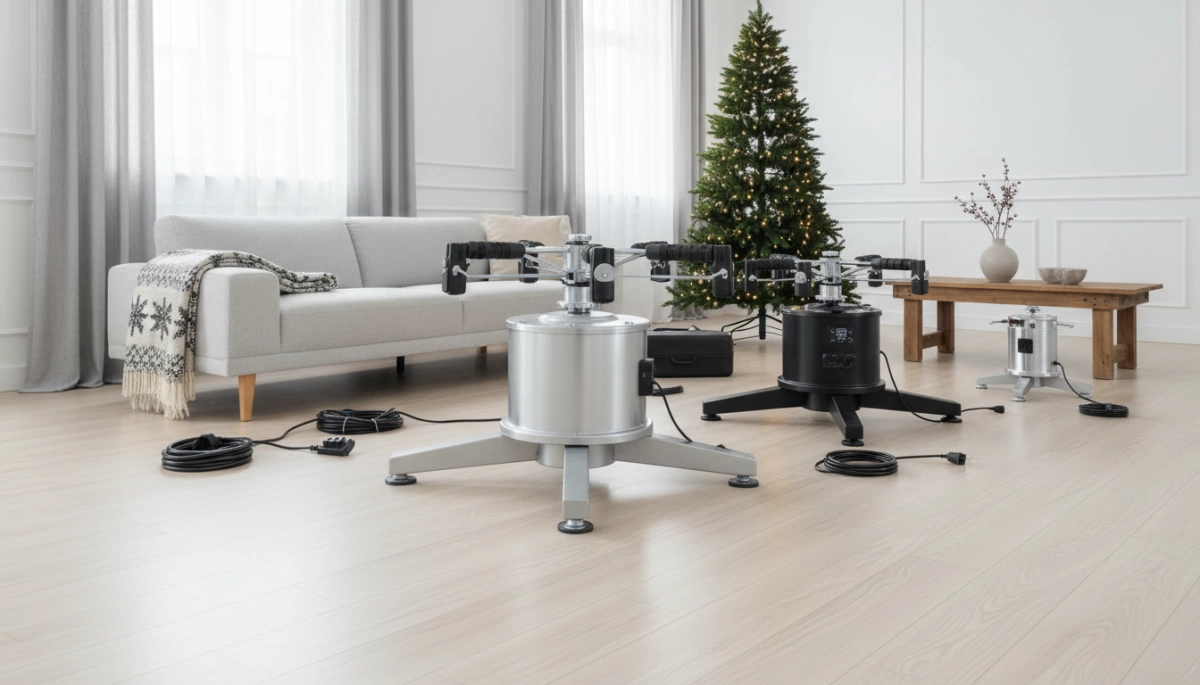
Rotating Christmas tree stand options
A rotating Christmas tree stand is perfect if you love showing off every angle of your tree. When I pick a rotating tree stand, I look for:
- Smooth, quiet rotation so ornaments don’t shake or rattle.
- Built-in cord management so the lights spin with the tree without wrapping or tangling.
- Weight and height rating that matches your tree, not just “up to 7 ft” but the actual pounds it can handle.
- On/off switch or remote so I can stop the rotation when I want photos.
This type of rotating tree stand works best with artificial Christmas trees that have a stable artificial tree base and lighter weight.
Heavy-duty Christmas tree stand for large trees
If you go big, you need a heavy-duty Christmas tree stand that’s built like an anchor. For large live trees in U.S. homes, I focus on:
- High weight capacity and wide footprint for real tree stability and anti-tip support.
- Large tree trunk diameter range (often up to 6–7 inches).
- Galvanized steel hardware or thick metal construction for long-term durability.
- Self-centering system or deep well to keep the trunk straight and locked in.
A heavy-duty tree support stand is worth the money if you’re putting a tall tree in a high-traffic living room or around kids and pets.
Christmas tree stand aesthetics, collars, and skirts
Function comes first, but I still want the Christmas tree stand to look good in the room. To clean up the base, I use:
- Christmas tree collars (metal, wood, woven) to hide the stand and wiring while matching my home style.
- Tree skirts for a softer, traditional look that covers the stand and catches needles.
- Floor protection mat under everything to shield hardwood, tile, or carpet from water and sap.
The right combination of a strong Christmas tree stand, a fitted collar, and a simple skirt keeps the tree safe, stable, and polished in any U.S. home.
How To Set Up A Christmas Tree Stand Step By Step
Christmas tree stand prep and trunk cutting
Before you bring the tree into the living room, I always prep the Christmas tree stand and trunk first:
- Measure the tree trunk diameter to make sure it fits your Christmas tree stand opening with a bit of wiggle room.
- Move the stand to its final spot before you bring the tree in; it’s safer and easier.
- For a live Christmas tree, make a fresh cut straight across the trunk, about ½–1 inch from the bottom, to boost fresh cut tree hydration and water uptake.
- Strip off any low branches that will sit below the rim of the stand so the trunk seats flat and the water reservoir isn’t blocked.
Positioning the tree straight in the stand
Getting the tree straight in the Christmas tree stand is all about slow, small adjustments:
- Have one person hold the tree upright in the stand while another tightens the screws, claws, or self-centering system.
- Start by lightly tightening opposite screws or clamps in a crisscross pattern so the tree stays centered.
- Step back 8–10 feet, check it from at least two angles, then tweak one side at a time until the tree stability looks right.
- Once you’re happy with it, fully tighten the screws or heavy-duty tree support mechanism so the tree won’t tip if a kid or pet bumps it.
Floor protection under a Christmas tree stand
I don’t set a Christmas tree stand on bare flooring—ever. Protecting the floor is non‑negotiable:
- Lay down a floor protection mat, plastic sheet, or waterproof pad that extends past the stand on all sides.
- Add your Christmas tree skirt or Christmas tree collar on top for looks, but don’t rely on it alone to stop spills.
- On hardwood or laminate, use a non-slip pad under the stand to reduce sliding and help with anti-tip stand safety.
- Check that the surface is level; if it’s not, use thin shims under the stand base so the tree sits stable and secure.
Christmas tree stand maintenance and troubleshooting
A solid Christmas tree stand is only as good as how you take care of it. I treat my stands like equipment, not décor, because tree stability and safety come first.
Checking Christmas tree stand water level
For live Christmas trees, water is non‑negotiable:
- Check the water reservoir capacity at least twice a day for the first week, then daily.
- Keep the water level above the fresh cut on the trunk so fresh cut tree hydration never stops.
- Use a flashlight or wooden spoon handle to gauge depth in darker stands.
- Top off with plain, cool water; skip sugar, soda, or “hacks” that gunk up the Christmas tree stand.
Fixing a wobbly Christmas tree in the stand
If your Christmas tree is leaning or feels loose, fix it immediately:
- Confirm the Christmas tree stand is on a flat, stable surface (use a floor protection mat that doesn’t flex).
- Tighten screws, claws, or the self-centering system evenly around the tree trunk diameter—never crank one side all the way first.
- If the tree is still wobbly, loosen slightly, straighten the trunk by eye, then re-tighten in small, equal turns.
- For large trees, upgrade to a heavy-duty tree support or anti-tip stand with a wider base and galvanized steel hardware.
Cleaning and storing your Christmas tree stand after the holidays
A clean Christmas tree stand lasts longer and stays safer for next year:
- Empty the water reservoir completely and remove any needles or sap.
- Wash the stand with mild soap and warm water; avoid harsh chemicals that can corrode metal or plastic.
- Dry it fully to prevent rust, especially on galvanized steel hardware and moving parts.
- Store the Christmas tree stand, collars, and accessories together in a labeled bin, in a dry indoor space—garage or basement is fine as long as it’s not damp.