

Why I Considered a Daikin Mini Split
I started looking at a Daikin mini split system when I realized my existing central AC and old furnace were wasting energy and still leaving parts of my home uncomfortable. I wanted better comfort, lower bills, and more control room by room without tearing up walls to run new ducts.
Real Problems a Daikin Mini Split Can Fix
In my own home, a Daikin ductless mini split heat pump can solve issues that a regular system never handled well:
- Hot upstairs, cold downstairs even when the thermostat says the right number
- Bonus rooms, garages, and additions that are always too hot in summer or too cold in winter
- Older home with limited ductwork, where adding ducts is messy and expensive
- Cold spots near windows and exterior walls that never feel cozy
- High energy bills from running a big system just to fix one uncomfortable room
A single‑zone Daikin mini split works perfectly for one stubborn room (like a garage mini split heater setup), while a multi‑zone mini split system can cover several problem areas at once.
What Makes a Daikin Mini Split Different
A Daikin mini split isn’t just a smaller AC. It’s a ductless heat pump that can both cool and heat using high‑efficiency inverter technology:
- No ducts: A wall‑mounted air handler unit or other indoor head connects to an outdoor unit with small refrigerant lines, not big ducts that leak energy.
- Inverter compressor: Instead of blasting on/off, the Daikin system modulates output, which improves comfort and can cut energy use.
- Zoned comfort: Each room or zone gets its own temperature setting, instead of one thermostat trying to control the whole house.
- Heating and cooling in one: Especially with models like the Daikin Aurora series mini split, you get serious heating capacity at low ambient temperatures, so it can replace or back up a furnace in many climates.
Compared to a traditional AC and furnace, a Daikin mini split system is more precise, more flexible, and typically more energy efficient.
How a Daikin Mini Split Fits Comfort, Budget, and Lifestyle
For me, a Daikin mini split lines up with my comfort and budget goals in a few clear ways:
- Comfort: Quiet, targeted cooling and heating where I actually spend time – bedrooms, home office, living room – without over‑conditioning empty rooms.
- Budget: High Daikin mini split SEER2 rating and solid HSPF efficiency for heating mean I can treat it as an HVAC energy efficiency upgrade that pays back over time through lower utility bills.
- Lifestyle: I get app‑level control (depending on the model), less noise, and cleaner air compared to window units or space heaters. It’s a way to make my home feel newer and more comfortable without a full remodel.
That combination of zoned comfort, energy savings, and flexible installation is exactly why I started seriously considering a Daikin mini split instead of just replacing my old AC and furnace with another basic system.
Why I Choose a Daikin Mini Split
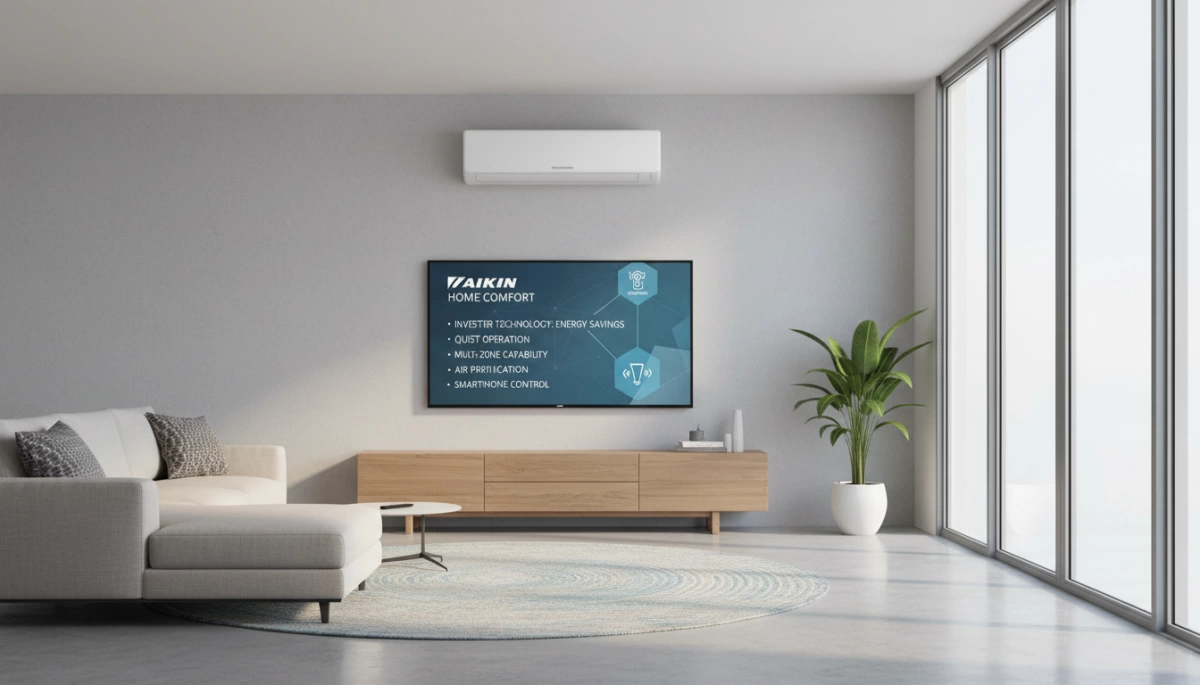
Daikin mini split brand reputation and reliability
When I recommend a Daikin mini split system, I’m betting on a brand with a long track record in the U.S. market.
- Daikin is one of the largest HVAC manufacturers in the world, and that shows in parts availability and support.
- Their ductless mini split heat pumps are known for running steady and lasting 10–15+ years when installed right.
- I see fewer nuisance service calls on Daikin mini splits compared to many budget ductless brands.
Quick view:
| Point | What it means for me at home |
|---|---|
| Big global brand | Easier to find parts and service |
| Proven reliability | Less downtime, fewer surprise repairs |
| Strong U.S. presence | Local support and trained installers |
Daikin mini split inverter technology and energy savings
The real win with a Daikin ductless mini split system is the inverter compressor.
- It ramps up and down instead of turning on/off, so it sips power instead of chugging it.
- High SEER2 ratings make it a real HVAC energy efficiency upgrade vs. older central air or window units.
- In my projects, power bills usually drop, especially in homes replacing electric baseboard or resistance heat.
Why inverter tech matters:
| Feature | Benefit at home |
|---|---|
| Inverter compressor | Smooth temps, fewer spikes |
| High Daikin mini split SEER2 rating | Lower cooling costs in summer |
| Better part-load efficiency | Real savings in spring and fall shoulder seasons |
Daikin mini split warranty and long‑term protection
I like that Daikin puts a strong warranty behind their mini split systems.
- Many Daikin mini splits come with up to a 12‑year parts warranty when installed by a Daikin Comfort Pro installer and registered properly.
- That long coverage helps protect me from major repair costs on compressors and electronics.
- It also tells me the manufacturer expects these systems to last.
Warranty snapshot:
| Item | Typical Daikin coverage* |
|---|---|
| Parts | Up to 12 years (with Comfort Pro) |
| Compressor | Long-term protection included |
| Labor | Varies by installer / local company |
*Always check the exact model and local dealer terms.
Daikin mini split noise levels and everyday comfort
A big reason I lean toward Daikin for bedrooms and living rooms is how quiet their ductless air handlers run.
- Indoor wall‑mounted air handler units are whisper‑quiet on low fan; they’re ideal for home offices and kids’ rooms.
- Outdoor units are much quieter than old-school condensers, which helps in tight suburban lots.
- Because the system modulates, I don’t get that blast of cold or hot air; comfort feels more “even” throughout the day.
Everyday comfort benefits:
- Quiet ductless AC for bedrooms – sleep with the fan on low and still hear almost nothing.
- Stable room temperature – fewer hot/cold swings when the inverter runs at partial speed.
- Better zoning – each room or zone can be set to the exact temp I want.
Daikin Mini Split Models Explained
Daikin mini split systems aren’t one-size-fits-all. I look at four main options for most homes in the U.S.: the Daikin 17 Series, 19 Series, Aurora Series, and ATMOSPHERA with R‑32. Each hits a different comfort and budget target.
Daikin 17 Series Mini Split For Budget Installs
When I need a solid, ductless mini split heat pump on a tighter budget, I start with the Daikin 17 Series mini split.
- Best for: bonus rooms, small apartments, home offices, garages with light use
- Key perks: reliable cooling and heating, good Daikin mini split SEER2 rating for the price
- Why I like it: it covers the basics without overcomplicating the install or blowing up the project cost
If a homeowner just wants to get out of window units and into a clean, energy efficient home cooling option, the 17 Series usually fits.
Daikin 19 Series Mini Split For Living Spaces And Bedrooms
For main living areas, I lean toward the Daikin 19 Series mini split because comfort and noise matter more.
- Best for: living rooms, open-concept spaces, bedrooms, nurseries
- Key perks: higher efficiency SEER2 and HSPF, very quiet ductless AC for bedrooms
- Why I like it: better temperature control, smoother inverter performance, and less cycling
If you spend a lot of time in the room, the 19 Series is often worth the extra money over a 17 Series mini split.
Daikin Aurora Series Mini Split For Cold Climates
For colder U.S. regions, I treat the Daikin Aurora Series mini split as the go-to cold climate ductless heat pump.
- Best for: Midwest, Northeast, mountain areas, or any place with real winters
- Key perks: strong heating capacity at low ambient temperatures, reliable winter performance
- Why I like it: it keeps putting out usable heat when basic ductless units start to fall off
If the mini split is your main heat source, the Daikin Aurora series mini split is usually the safer long-term pick.
Daikin ATMOSPHERA Mini Split With R‑32 Refrigerant
The Daikin ATMOSPHERA mini split with R‑32 refrigerant is what I look at when someone wants the latest tech and better sustainability.
- Uses R‑32 instead of traditional R‑410A vs R‑32 refrigerant setups, which helps reduce environmental impact
- High-efficiency inverter system aimed at serious energy savings
- Good fit for homeowners planning a long-term HVAC energy efficiency upgrade
If you’re already thinking about heat pumps, tax credits, and long-term operating costs, ATMOSPHERA deserves a spot on the shortlist.
How I Match Daikin Mini Split Models To Room Type And Climate
When I match a Daikin mini split system to a space, I keep it simple:
- Warm states, low use rooms → Daikin 17 Series mini split
- Everyday living spaces, bedrooms → Daikin 19 Series mini split
- Cold climate main heat, tough winters → Daikin Aurora series mini split
- Eco-focused, future-proof installs → Daikin ATMOSPHERA R‑32
From there, I dial in the mini split BTU sizing with a mini split BTU sizing calculator and local load calculations, then choose the right wall-mounted air handler unit or other style based on how the room is used.
Single‑Zone vs Multi‑Zone Daikin Mini Split
When a single‑zone Daikin mini split makes more sense
For a lot of homes here in the U.S., a single‑zone Daikin mini split system is the cleanest play. I lean single‑zone when:
- I’m conditioning one key space: a primary bedroom, home office, bonus room, or finished basement.
- I want a quiet ductless mini split heat pump just for a garage mini split heater or workshop.
- I need max comfort in one problem room without touching the rest of the house.
- I want the lowest mini split installation cost and a simple layout with one outdoor unit + one wall‑mounted air handler unit.
Single‑zone Daikin mini splits are easier to size with a mini split BTU sizing calculator, usually cheaper up front, and simpler to maintain.
How a Daikin multi‑zone mini split works in a whole home
A Daikin multi‑zone mini split system uses one outdoor unit to run multiple indoor heads. Each zone gets its own thermostat and comfort level. This setup fits when:
- I’m updating an older home with limited ductwork.
- I want room‑by‑room control instead of one big thermostat.
- I’m planning a whole‑home HVAC energy efficiency upgrade without tearing up walls for ducts.
A Daikin MXS multi‑zone outdoor unit can feed several indoor units, so living rooms, bedrooms, and offices each get their own ductless air conditioning and heating control.
Mixing Daikin wall‑mounted, floor‑mounted, and concealed heads
One advantage with a Daikin mini split system is mixing different indoor unit styles on the same multi‑zone setup:
- Wall‑mounted air handler unit: Best for most rooms; fastest, most affordable option.
- Floor‑mounted unit: Good under windows, in older homes, or where wall space is tight.
- Concealed ducted unit: Hides in a ceiling or closet to keep the look clean in main living spaces.
By blending wall‑mounted, floor‑mounted, and concealed heads, I can tune comfort and aesthetics room by room without losing efficiency.
Picking the right Daikin mini split layout for my house
When I design a Daikin mini split layout, I focus on:
- Zones: Which rooms actually need their own temperature control.
- Usage: Bedrooms (quiet at night), offices (steady temps), bonus rooms (fast heat/cool).
- Future changes: Planned renovations, finished basements, or garage conversions.
- Outdoor space: Where the outdoor unit can sit without bothering patios or walkways.
In general, I use a single‑zone Daikin mini split for one high‑priority space, and step up to a Daikin multi‑zone mini split system when I’m targeting most of the home. This way I keep costs in check while still hitting my comfort and efficiency goals.
Daikin Mini Split Sizing and Performance
How I Choose Daikin Mini Split BTU Capacity
When I size a Daikin mini split system, I don’t guess. I match BTU capacity to the room and climate:
- For most U.S. homes, I start around 18–25 BTU per sq. ft. as a rough idea, then fine‑tune.
- I look at insulation, window size, sun exposure, ceiling height, and how many people use the space.
- A mini split BTU sizing calculator is a good starting point, but I always confirm with a local Daikin Comfort Pro installer who knows our weather and building codes.
The goal is simple: right‑sized ductless mini split heat pump that runs longer, quieter cycles and keeps temps steady.
Daikin Mini Split SEER2 and HSPF Basics
For performance, I watch two numbers on a Daikin mini split system:
- SEER2 rating – this tells me how efficient the ductless air conditioning is in cooling season. Higher SEER2 usually means lower summer electric bills.
- HSPF (or HSPF2) efficiency – this shows how efficient the Daikin mini split is in heating mode. Higher HSPF = cheaper heat in winter.
I use these to compare Daikin vs Mitsubishi mini split and other brands, not just by price, but by long‑term energy savings.
Heating Capacity at Low Ambient Temperatures
If I’m in a colder U.S. climate, heating capacity at low ambient temperatures becomes non‑negotiable:
- Cold climate models like the Daikin Aurora series mini split hold strong heating output even when it dips well below freezing.
- I always check the spec sheet for heating capacity at 5°F and 17°F, not just the “nominal” rating.
This tells me if the ductless mini split heat pump can carry the load without relying on backup heat.
Common Daikin Mini Split Sizing Mistakes I Avoid
A Daikin mini split can perform great or poorly depending on sizing. I avoid these problems:
- Oversizing – too many BTUs means short cycling, uneven temps, and less dehumidification. It feels clammy, not comfortable.
- Undersizing – the system runs nonstop on the hottest or coldest days and still can’t keep up. That kills comfort and efficiency.
- Ignoring room type – a garage mini split heater, a sunny bonus room, or a quiet ductless AC for bedrooms often need different capacities and layouts.
- Skipping a load calculation – I always push for a Manual J–style load calculation from a pro instead of “it looks about right.”
When the Daikin mini split BTU capacity, SEER2, HSPF, and low‑ambient heating are all matched to the home, the system feels smooth, quiet, and cheap to run for years.
Daikin Mini Split Cost Breakdown
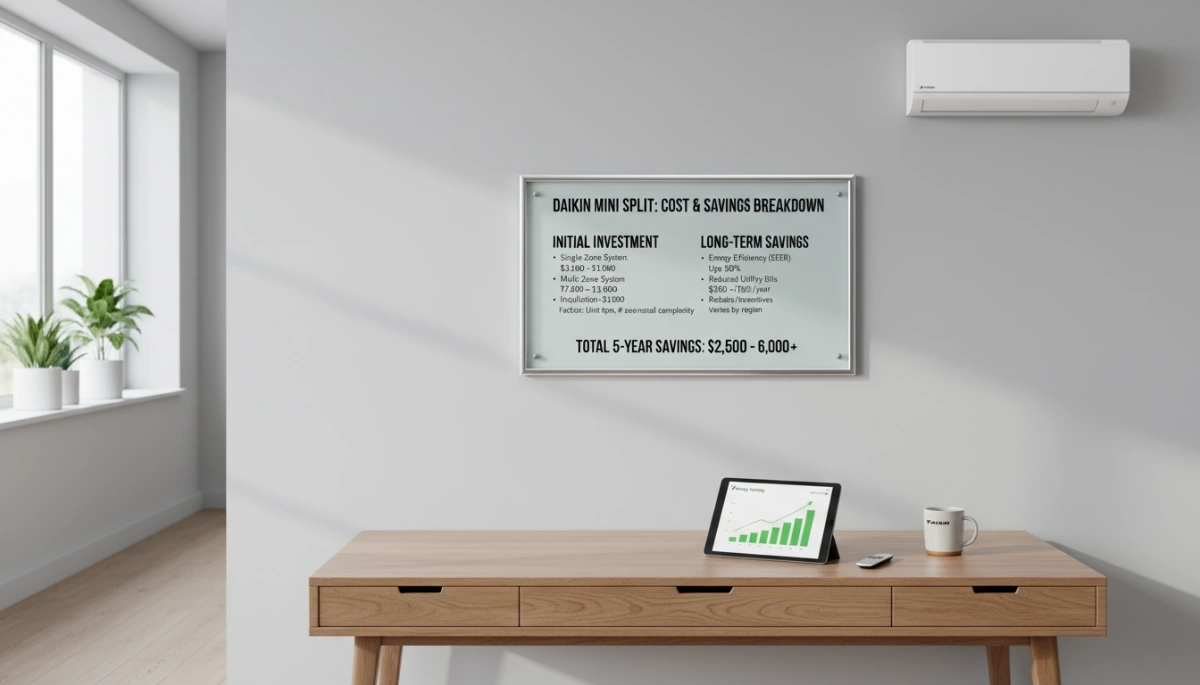
Daikin mini split equipment price ranges
For most homes in the U.S., a Daikin mini split system lands in a pretty predictable range:
- Single‑zone Daikin mini split (one outdoor + one indoor head): usually around $1,500–$3,500 for equipment depending on BTU size and series (Daikin 17 Series mini split on the lower end, Daikin 19 Series or Daikin Aurora series mini split on the higher end).
- Multi‑zone mini split system (one outdoor + 2–4 indoor heads): usually $3,500–$7,500 for equipment depending on capacity, number of zones, and whether you mix wall‑mounted air handler units, floor units, or concealed ducted heads.
Higher SEER2 and HSPF efficiency Daikin mini split models, cold‑climate units, and the Daikin ATMOSPHERA R‑32 systems typically cost more upfront but save more on bills.
Daikin mini split installation cost and what I am really paying for
Mini split installation cost is where the real spread shows up. In most U.S. markets, I see:
- Basic single‑zone install: about $2,500–$5,000 installed (equipment + labor).
- Multi‑zone Daikin MXS multi‑zone setup: about $6,000–$15,000+ depending on zones, line set runs, electrical work, and wall/ceiling patching.
What I’m really paying for isn’t just “hooking up a box”:
- Proper mini split BTU sizing calculator work and load calculation
- Daikin Comfort Pro installer labor, training, and tools
- Refrigerant handling, vacuum, charging, and leak testing
- Electrical upgrades, disconnects, and permits
- Clean wall penetrations, condensate routing, and final commissioning
Cut corners here, and you risk poor performance, higher energy use, and warranty issues.
Total Daikin mini split project estimates by home type
In real life, full project costs for a Daikin mini split system usually fall into these ranges:
- Single room / garage mini split heater or office: $3,000–$6,000 total
- Smaller home or main‑floor only multi‑zone: $7,000–$12,000 total
- Larger two‑story home with several zones: $12,000–$20,000+ total
Older homes, long line sets, attic work, and panel upgrades all push costs up. Simpler layouts with easy wall‑mounted air handler unit placement keep costs down.
How Daikin mini split rebates and incentives lower the final cost
For an HVAC energy efficiency upgrade, rebates matter a lot in the U.S. Right now, I typically look at:
- Utility rebates for high SEER2 Daikin mini split systems (often $300–$2,000+ depending on efficiency and if it’s a cold climate ductless heat pump).
- Federal tax credits for qualifying ductless mini split heat pump installs (subject to current IRS rules and caps).
- Some states and cities offer extra incentives for replacing electric baseboard, oil, or propane systems with high‑efficiency Daikin mini splits.
Stacking rebates can easily shave 20–40% off the final project cost, which is why I always factor incentives into my Daikin mini split cost breakdown before deciding on the exact model and layout.
Daikin Mini Split vs Mitsubishi and Other Brands
Daikin mini split vs Mitsubishi Electric on efficiency and SEER2
When I compare a Daikin mini split system to Mitsubishi Electric, both are high-end ductless mini split heat pumps with strong SEER2 ratings and HSPF efficiency. Mitsubishi often edges ahead on the highest possible SEER2 numbers, but Daikin is usually right there with them in real-world performance. For most homes in the U.S., the difference on paper is small, and install quality matters more than chasing a couple of SEER2 points. If I want a proven, energy efficient home cooling and heating upgrade without overpaying just for a spec sheet, Daikin is usually my go‑to.
Daikin mini split vs Mitsubishi on price and value
On price, Daikin mini split systems typically come in a bit lower than Mitsubishi for similar comfort and features. Mitsubishi is great, but you often pay a premium for the name. With Daikin, I feel like I get strong performance, solid SEER2 ratings, and a 12-year parts warranty (when installed by a Daikin Comfort Pro installer) at a better overall value. For most of my customers, that price-to-performance ratio is what wins.
Daikin vs other ductless brands on reliability and parts
When I stack a Daikin ductless mini split heat pump against cheaper brands, the gap in reliability and parts support is clear. Daikin has a huge U.S. presence, solid distributor networks, and parts that are actually available when something fails. Many budget mini split brands look good on paper but become a headache when you need warranty support or a control board in a hurry. With Daikin mini splits, I trust the long-term reliability, and I know my customers won’t be stuck waiting weeks for basic parts.
When I pick Daikin mini split over Mitsubishi or another brand
Here’s when I personally choose a Daikin mini split over Mitsubishi or others:
- I need strong efficiency without paying top dollar just for a brand name.
- The homeowner wants a multi-zone mini split system with flexible wall-mounted air handler units and doesn’t care about chasing the highest SEER2 rating on the market.
- I want dependable parts access and a straightforward 12-year parts warranty Daikin stands behind.
- The project is an older home, garage mini split heater, or standard bedroom/living room setup where real-world comfort, quiet operation, and value matter more than niche features.
In short, Mitsubishi is excellent, but for most everyday U.S. installs, Daikin mini split systems hit the sweet spot of efficiency, reliability, and cost.
Real‑World Daikin Mini Split Experience
What Daikin mini split ownership feels like day to day
Owning a Daikin mini split system feels different from a regular AC or furnace. The comfort is more even, the air doesn’t feel dry or stuffy, and the temperature doesn’t swing up and down all day. I set my ductless mini split heat pump where I want it and mostly forget about it. The wall‑mounted air handler unit ramps up and down instead of blasting on and off, so the house feels steady and comfortable whether I’m working from home, cooking, or sleeping.
Comfort, noise, and air quality with a Daikin mini split
The first thing I notice with a Daikin mini split is the comfort and how quiet it runs:
- Comfort: Fewer hot and cold spots, especially in rooms that were always “problem areas” with ductwork.
- Noise: Indoor units are whisper‑quiet, which is a big win for bedrooms and home offices. A quiet ductless AC for bedrooms matters if you’re a light sleeper.
- Air quality: The filters grab dust and pet hair, and constant low‑speed operation keeps air moving so it doesn’t feel stale. When I keep up with mini split maintenance and cleaning, the air feels cleaner than it ever did with my old system.
Bills before and after installing a Daikin mini split
On the bill side, a Daikin mini split system is designed as an HVAC energy efficiency upgrade, so the numbers usually move in the right direction:
- In cooling season, the high Daikin mini split SEER2 rating helps cut kWh use compared to old central AC or window units.
- In heating season, especially with a cold climate ductless heat pump like the Daikin Aurora Series mini split, the electric bill may go up, but gas or oil costs usually drop a lot.
- For garages, bonus rooms, or older homes with no ducts, a garage mini split heater or single‑zone Daikin mini split often costs less to run than space heaters or baseboard.
Actual savings depend on your rates, insulation, and how you set the thermostat, but in most real installs I see, total annual energy spend trends down after switching to a modern ductless air conditioning system.
Common Daikin mini split complaints and how big they really are
I do hear a few repeat complaints about Daikin mini splits, and here’s how they usually stack up in real life:
- “The indoor unit is ugly on the wall.” True, a wall‑mounted air handler unit is visible. Most folks stop noticing it after a few weeks, but if looks matter a lot, I steer them toward floor‑mounted or concealed units.
- “I feel a draft when the fan blows on me.” This is usually a placement or airflow setting issue, not a Daikin‑specific problem. A good Daikin Comfort Pro installer can angle the louvers and place the head so it’s not blowing right on your couch or bed.
- “There’s a light hum at night.” The system is very quiet, but not silent. In most cases, it’s still much quieter than window units, box fans, or older central systems.
- “It didn’t heat well in extreme cold.” For areas with real winters, I push people toward a cold climate unit like the Daikin Aurora series mini split and correct mini split BTU sizing. If the wrong model or size is installed, performance will suffer.
When the system is sized correctly, installed by a Daikin Comfort Pro installer, and maintained, most of these complaints stay minor compared to the comfort and bill savings a Daikin mini split delivers day to day.
Daikin Mini Split Installation Basics
Why I use a Daikin Comfort Pro installer
When I install a Daikin mini split system, I stick with a certified Daikin Comfort Pro installer. That gives me:
- Proper mini split BTU sizing and layout so I don’t end up with hot or cold spots.
- Clean refrigerant charging with the right tools, which is critical for a ductless mini split heat pump.
- Full access to Daikin’s 12-year parts warranty, which often requires licensed installation.
- A pro who actually knows Daikin 17 Series, 19 Series, Aurora Series, and ATMOSPHERA R‑32 systems, not just “generic” ductless.
What happens on Daikin mini split installation day
A typical Daikin mini split installation day is pretty structured:
- We walk the home and confirm where each wall‑mounted air handler unit or floor unit will go.
- The crew mounts the indoor units, drills a small hole for the line set, and sets the outdoor heat pump on a pad or wall brackets.
- They run refrigerant lines, condensate drain, and communication wiring, then pull the electrical from the panel.
- Everything gets vacuumed down, pressure‑tested, powered up, and then we test every zone, including heat and cool modes.
Electrical, line set, and placement decisions
For a Daikin mini split system to run quietly and efficiently, the details matter:
- Electrical: Dedicated breaker sized to the equipment, correct wire gauge, and a disconnect within sight of the outdoor unit.
- Line set: Short, clean runs with minimal bends; UV‑resistant line set cover outside to protect and keep it neat.
- Placement: Indoor heads high on the wall away from direct sun and doors; outdoor unit placed where snow, leaves, and noise are non‑issues, especially for cold climate Daikin Aurora series mini splits.
DIY vs pro install and warranty risks
I treat Daikin mini split installation as pro work, not a weekend DIY project:
- DIY installs can void the Daikin warranty or at least limit coverage if something fails.
- Handling refrigerant, flaring, and vacuuming requires tools and training most homeowners don’t have.
- A bad DIY job can cause leaks, poor heating capacity at low ambient temperatures, noisy operation, and higher energy bills.
If I’m investing in a Daikin mini split heat pump for long‑term comfort and lower energy costs, using a Daikin Comfort Pro installer is worth it for performance, safety, and warranty protection.
Daikin Mini Split Maintenance and Care
Keeping a Daikin mini split system in good shape isn’t hard, but it does take a little routine attention. I treat it like any other long‑term home upgrade: a few simple tasks I do myself, plus scheduled professional service to protect comfort, efficiency, and the Daikin warranty.
Simple Daikin Mini Split Tasks I Can Do Myself
Here’s what I handle on my own for my Daikin mini split system:
- Check the indoor wall‑mounted air handler unit monthly for dust buildup and blocked airflow
- Keep furniture, curtains, and shelves at least a few feet away from each indoor head
- Inspect the outdoor unit for leaves, grass, snow, or debris and keep 2–3 feet of clear space around it
- Watch for error codes, odd noises, or new smells and call a Daikin Comfort Pro installer if something feels off
- Use consistent setpoints instead of constantly changing the temperature, which helps the inverter mini split run smoother and more efficiently
Daikin Mini Split Filter Cleaning and Schedule
Dirty filters kill efficiency on any ductless mini split heat pump, and Daikin is no different. I follow a simple schedule:
- Every 4 weeks in peak season (summer/winter):
- Open the front panel on the indoor unit
- Slide out the washable air filters
- Rinse with lukewarm water, let them dry completely, then reinstall
- Every 2–3 months in mild seasons: repeat the same cleaning
- If I have pets, smoke, or live in a dusty area: I check filters every 2 weeks instead
- I never run the Daikin mini split system with filters removed; that can clog the coil and reduce SEER2 performance over time
Annual Daikin Mini Split Servicing and Coil Cleaning
Once a year, I bring in a professional—ideally a Daikin Comfort Pro installer—to handle what I shouldn’t DIY:
- Deep cleaning of indoor and outdoor coils for better airflow and HSPF efficiency
- Check refrigerant levels, electrical connections, and drain lines to prevent leaks and nuisance shutdowns
- Verify heating capacity at low ambient temperatures if I rely on the cold climate ductless heat pump features (like Aurora series units)
- Confirm fan operation and sensor accuracy so the system maintains steady comfort in bedrooms, living spaces, and garages
This annual service is cheap insurance compared to a major repair or losing coverage on a 12‑year parts warranty Daikin offers on many models when installed by a pro.
How to Keep a Daikin Mini Split Efficient for 10+ Years
To keep a Daikin mini split efficient well past the 10‑year mark, I stick to a few rules:
- Stay on top of filter cleaning and never let dust choke the indoor unit
- Book yearly pro maintenance and keep records of service for warranty and resale value
- Protect the outdoor unit: keep it off the ground on a pad or wall bracket, and keep snow, vines, and shrubs away
- Use the right modes and fan settings instead of constantly turning the system on and off; inverter systems like to run steady
- Fix issues early—if performance drops, heating struggles in cold weather, or power bills spike, I call an HVAC pro instead of ignoring it
With basic care, a Daikin mini split system can stay quiet, efficient, and reliable for well over a decade, which is exactly what I want from a major HVAC energy efficiency upgrade.
Daikin Mini Split Pros and Cons
Key Daikin Mini Split Benefits That Matter In Real Life
When I recommend a Daikin mini split system to a U.S. homeowner, it usually comes down to a few real‑world wins:
- Serious comfort upgrade – A ductless mini split heat pump gives room‑by‑room temperature control, so bedrooms, home offices, and bonus rooms finally stay at the temperature you actually set.
- Lower bills over time – With inverter technology and strong Daikin mini split SEER2 ratings, these systems ramp up and down instead of constantly cycling, which cuts wasted energy compared to older central AC or window units.
- Heating and cooling in one – A Daikin mini split system is both a quiet ductless AC for bedrooms and a cold climate ductless heat pump for many parts of the U.S., especially with Daikin Aurora series mini split models.
- Great fit for older homes and add‑ons – If you’ve got no ductwork, a finished attic, sunroom, or garage mini split heater project, a Daikin single‑zone mini split is usually cleaner and cheaper than running new ducts.
- Backed by a strong warranty – When installed by a Daikin Comfort Pro installer, you can qualify for up to a 12‑year parts warranty from Daikin, which gives real long‑term protection.
Aesthetic And Usability Drawbacks Of Daikin Mini Splits
Daikin mini split pros and cons are pretty balanced, and it’s fair to call out the downsides:
- Wall units are visible – A wall‑mounted air handler unit is always in sight. If you’re picky about interior design, you might not love the look, even though the units are compact.
- Remote controls and app learning curve – Features like modes, timers, and fan speeds can feel a bit “techy” for some homeowners at first. Most people adjust in a week or two, but it’s not as simple as a basic thermostat.
- Multiple heads to dust and clean – With a multi‑zone mini split system, you’ve got more indoor units to wipe down and filters to clean, so mini split maintenance and cleaning is a bit more “hands‑on” than a single central system.
- Outdoor unit placement matters – If the condenser is placed near a patio or bedroom window, you may notice it at night, even though Daikin runs quiet compared to many outdoor units.
Who A Daikin Mini Split Is Perfect For
A Daikin mini split system is usually a strong fit if you:
- Live in a typical U.S. home and want zoned comfort in key rooms (primary bedroom, nursery, office, bonus room).
- Are doing an HVAC energy efficiency upgrade and want to cut the use of electric baseboard, window ACs, or old oil heat.
- Have older homes or additions where ducts aren’t practical and you want a clean solution without tearing up walls.
- Want a reliable, low‑noise setup with a long 12‑year parts warranty from Daikin when installed by a Daikin Comfort Pro installer.
Who Might Want A Different Mini Split Setup
In some situations, a Daikin mini split system may not be the best match, or you may want to compare brands:
- If your top priority is maximum efficiency at any cost, you may also want to compare Daikin vs Mitsubishi mini split models with the very highest SEER2 ratings.
- If you hate the look of wall‑mounted air handlers, a system with more concealed ducted heads or different styling might line up better with your interior plans.
- If you only need basic cooling a few weeks a year in a mild climate, a low‑cost window unit might make more financial sense than a full ductless mini split heat pump.
- If you’re set on a DIY vs professional mini split install, Daikin typically expects a pro install to protect the warranty, so a “DIY‑friendly” brand might fit that goal better.
How I Decide If a Daikin Mini Split Is Worth It
Questions I Ask Before Buying a Daikin Mini Split
Before I pull the trigger on a Daikin mini split system, I run through a quick checklist:
- What rooms actually need help? I look at hot upstairs bedrooms, a cold basement, or a garage I want to use year‑round and decide if a single‑zone Daikin mini split or a multi‑zone mini split system makes more sense.
- How much am I paying now? I compare my current electric, gas, or oil bills to what an HVAC energy efficiency upgrade with a ductless mini split heat pump could save over 5–10 years.
- Is my electrical panel ready? I check if I’ve got enough panel capacity and the right breaker space for the new ductless mini split.
- Do I care more about comfort or payback? If I’m mainly chasing comfort (quiet ductless AC for bedrooms), my decision is different than if I want the fastest payback.
- Do I have a trusted installer? I look for a Daikin Comfort Pro installer so I know the equipment, mini split BTU sizing calculator, and warranty are all handled correctly.
Red Flags That Tell Me a Daikin Mini Split Might Not Fit
There are a few signs that tell me a Daikin mini split system might not be the right move, or at least not right now:
- No good place for the outdoor unit. If I don’t have clear space outside (away from bedrooms, property lines, and snow piles), I rethink the plan.
- Super leaky or uninsulated home. If the house leaks air everywhere, even a high‑efficiency Daikin ductless mini split heat pump will struggle and run a lot.
- I hate seeing wall units. If wall‑mounted air handler units on the interior walls are a deal‑breaker and I don’t want floor‑mounted or concealed units either, ductless might annoy me every day.
- Budget doesn’t match expectations. If my mini split installation cost estimate feels high and I’m not planning to stay in the home at least 5–7 years, the numbers may not pencil out.
- I want full DIY with no risk. If I insist on DIY vs professional mini split install but still want full Daikin mini split warranty coverage, that’s a problem—Daikin wants pro installation.
How a Daikin Mini Split Fits My Long‑Term Home Comfort Plan
When I look long‑term, I treat a Daikin mini split as part of a bigger comfort and energy strategy:
- Step‑by‑step upgrades. I can start with a single‑zone Daikin mini split in my worst room, then add a Daikin MXS multi‑zone outdoor unit later if I want whole‑home ductless air conditioning.
- Fuel and utility flexibility. A cold climate ductless heat pump like the Daikin Aurora series mini split lets me lean less on gas or oil over time, especially in shoulder seasons.
- Future‑proof refrigerant and codes. With options like Daikin ATMOSPHERA R‑32 (R‑410A vs R‑32 matters for future regulations), I’m not locking myself into outdated tech.
- Resale and comfort value. Buyers in the U.S. increasingly look for energy efficient home cooling and heating upgrades; a well‑installed Daikin mini split system helps my home stand out.
- 10+ year plan. With the 12‑year parts warranty Daikin offers (when installed by a Daikin Comfort Pro installer and registered), plus regular mini split maintenance and cleaning, I plan on reliable, quiet comfort for at least a decade.