You’ve probably seen the Sans air purifier all over your feed lately…
sleek design, medical-grade HEPA 13 filter, and promises of whisper-quiet operation while it scrubs away pet dander, allergens, VOCs, and odors.
But here’s the real question:
Is Sans actually a medical-grade powerhouse, or just a very pretty box with a fan inside?
In this review, we’ll break down how its 3-stage filtration + UV-C light sterilization performs in real life, how smart the SmartPure technology and AQI monitor actually are, what it’s like to live with it day and night (including sleep mode noise levels), and whether the replacement filter cost is worth it over the long run.
If you’re trying to decide between Sans vs. Dyson, debating coverage for a 1560 sq. ft. space, or you just want clean air without an ugly machine in the corner, keep reading.
First Impressions: Sans Air Purifier Design and Build
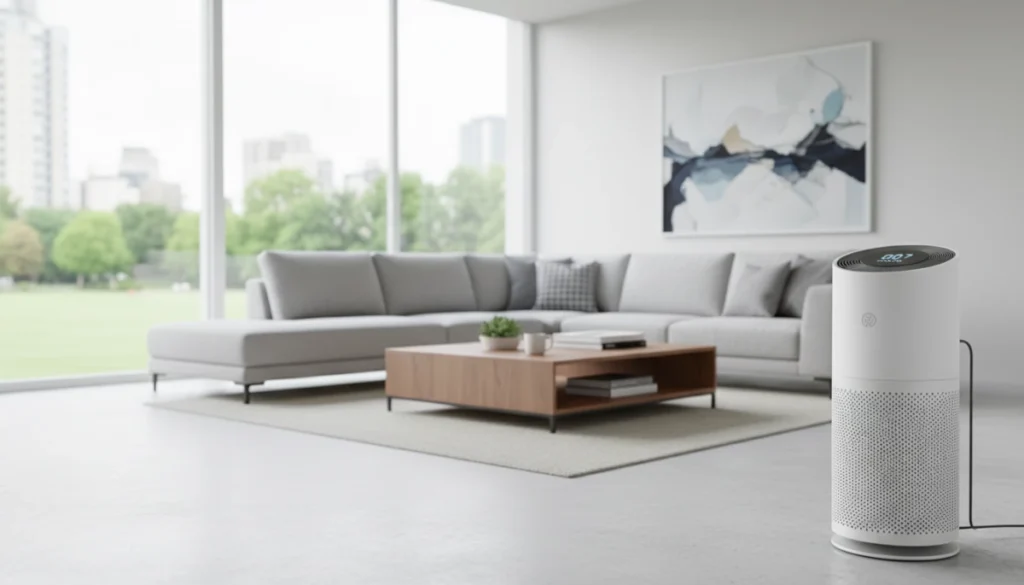
The first thing I noticed about the Sans air purifier is how clean and minimalist it looks. It’s clearly designed for modern homes, with smooth lines, neutral colors, and no weird sci‑fi styling that sticks out in your living room. It feels more like a design-forward appliance than a piece of medical equipment, which is exactly what I want sitting out all day.
For small spaces and apartments, the compact footprint is a big win. The Sans air purifier tucks neatly next to a sofa, desk, or nightstand without eating up floor space, and it’s light enough to move around if you need cleaner air in a different room. If you’re in a studio or a smaller city apartment, it doesn’t make the space feel cluttered.
On top, the display and touch controls are simple and intuitive. You get a clear air quality index monitor (AQI) that shifts color as your air quality changes, so you can see at a glance if your air is clean or not. The touch controls respond quickly, the layout is straightforward, and there’s no learning curve—just tap to change fan speeds, toggle modes, or dim the screen. Overall, the Sans air purifier design nails that balance of minimalist style and everyday usability.
Sans Air Purifier Filtration System Explained
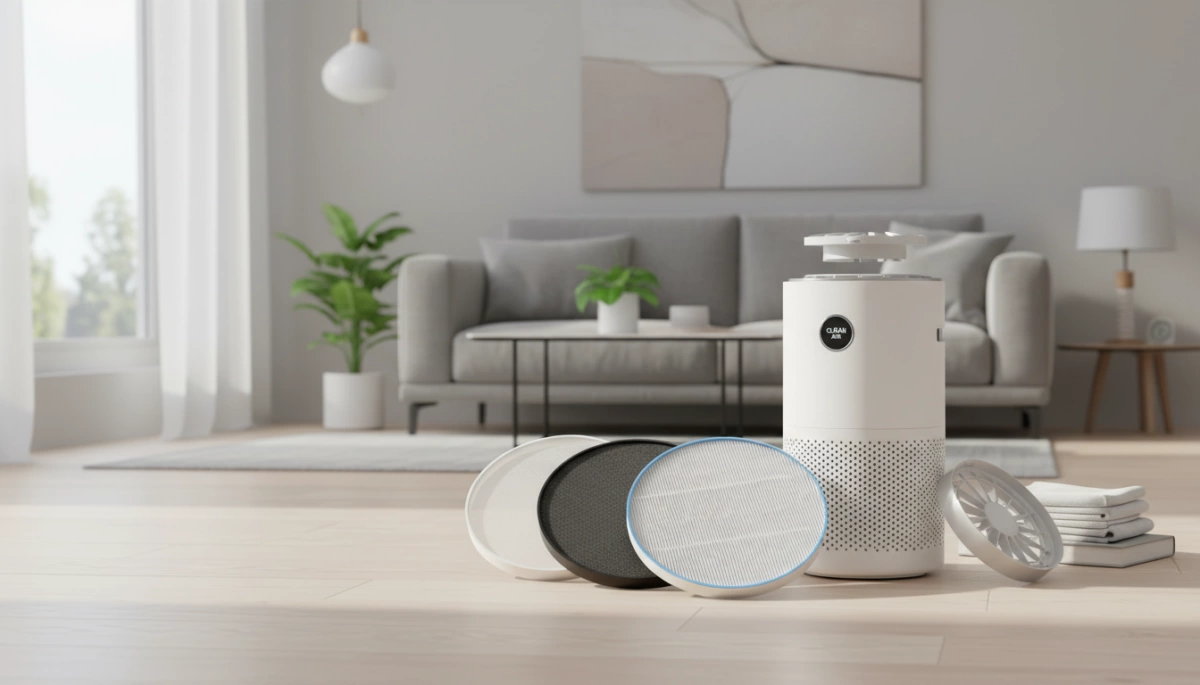
The Sans air purifier filtration system is built as a 3-stage filter plus UV-C light sterilization, and it works in a very straightforward way.
Sans 3-stage filter + UV-C light
Here’s how the Sans air purifier cleans the air step by step:
Pre-filter for dust and pet hair
The first layer is a washable pre-filter that catches big stuff:- dust bunnies
- pet hair and dander
- lint and larger particles
This keeps the main filter from clogging too fast and is a big deal if you have dogs, cats, or a dusty home.
Medical-grade HEPA 13 filter
The core of the Sans air purifier is a medical-grade HEPA 13 filter. It’s designed to capture:- allergens like pollen, dust mites, mold spores
- wildfire smoke and fine particles (PM2.5)
- airborne germs and some bacteria-sized particles
This is what makes Sans a strong option for allergies, sinus issues, and city pollution in U.S. homes.
Activated carbon filter for odors and VOCs
Behind the HEPA, Sans uses an activated carbon filter for odors and volatile organic compounds (VOCs). It helps reduce:- cooking smells, trash, and musty odors
- pet odors from litter boxes or wet dogs
- VOCs from paint, cleaning products, and new furniture
If you live in an apartment or smaller home, this layer is what keeps the air from smelling “stale.”
UV-C light sterilization
After particles are trapped in the filter, Sans adds UV-C light sterilization to help neutralize certain trapped pathogens on the filter surface. This doesn’t replace the HEPA filter; it’s there to add another layer of protection for families who are serious about clean air.
In plain terms: the Sans air purifier grabs the big dust first, then fine allergens and smoke, then odors and VOCs, and finally uses UV-C to treat what’s stuck to the filter.
SmartPure Technology and Auto Mode on Sans Air Purifier
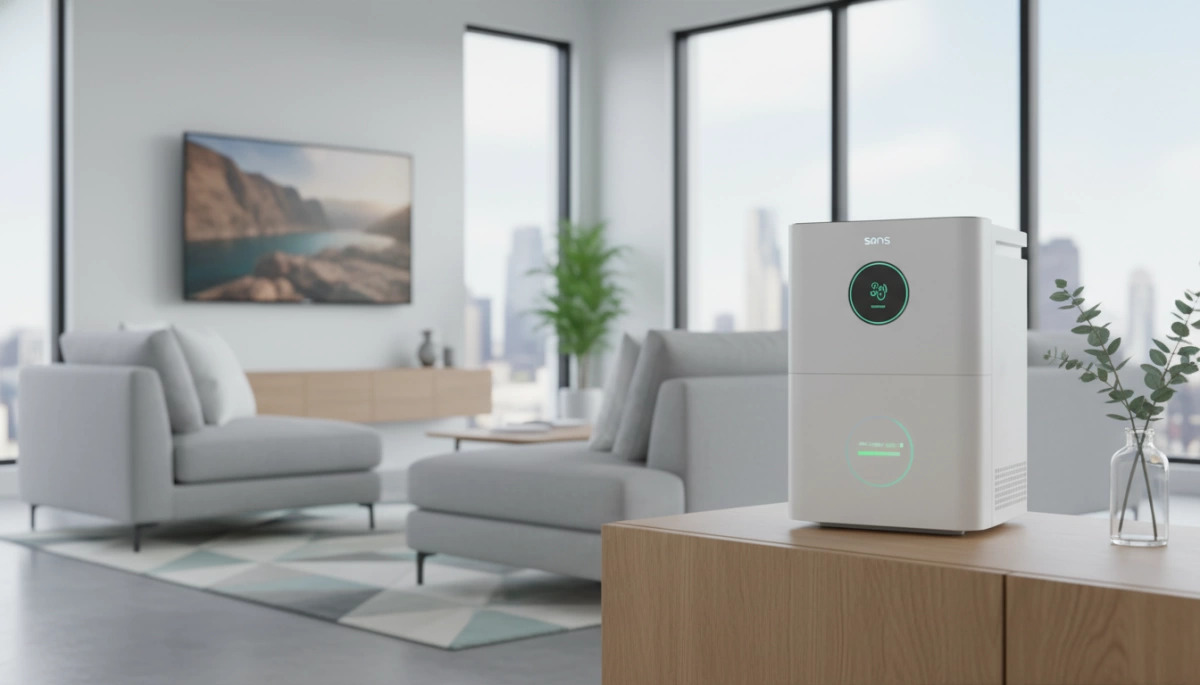
SmartPure technology is the main reason I trust the Sans air purifier to run on its own. The built‑in sensors constantly track real‑time air quality, then auto-adjust fan speed so you’re not guessing when to turn it up or down.
How Sans Air Purifier Sensors React In Real Life
In daily use, the Sans air purifier reacts fast when something in the room changes:
- Cooking, aerosol sprays, or vacuuming? The sensors detect the spike in pollutants and bump the fan speed up within minutes.
- Pets running around or opening windows in a city apartment? You’ll see the air quality index monitor respond as dust and particles increase.
- Once the air is clean again, SmartPure slowly drops the fan speed back down to keep noise and power use low.
You don’t have to babysit it — it behaves like a “set it and forget it” smart air purifier.
Air Quality Indicator Colors And What They Mean
The air quality index monitor on the Sans air purifier uses simple color cues so anyone can read it at a glance:
- Green – Good air quality, low particle levels, ideal for bedrooms and nurseries.
- Yellow/Orange – Moderate pollution from cooking, pets, or traffic; Sans increases fan speed.
- Red – Poor air quality, like wildfire smoke days or heavy indoor activity; Sans runs hard to clean fast.
This makes it easy for families, renters, and pet owners to understand what’s happening in the air without digging into numbers.
Auto Mode, SmartPure Adjustments, And Energy Efficiency
Auto mode on the Sans air purifier is the best way to run it in most U.S. homes:
- The SmartPure technology automatically chooses the lowest fan speed needed to maintain a safe air quality level.
- You get full power only when it’s actually needed (wildfire smoke, heavy cooking, cleaning days), which helps with energy efficiency and electricity bills.
- For apartments and open living areas, leaving Sans in auto mode 24/7 keeps the air stable without you constantly tweaking settings.
If you want a smart, energy-efficient, and low-maintenance setup, auto mode with SmartPure is the way to run the Sans air purifier long-term.
Sans Air Purifier Noise Levels and Sleep Mode
When it comes to noise, the Sans air purifier is built for real bedroom use. On low and in Sans air purifier sleep mode, the fan is genuinely whisper-quiet — the kind of sound that fades into the background even in a small apartment. I can run it all night without it drowning out a TV at low volume or a fan app on my phone.
On higher fan speeds, when the SmartPure technology auto mode kicks in to clear smoke, cooking smells, or pet dander fast, you will hear it. It’s not jet-engine loud, but it’s an active “whoosh” of air that you’d expect from a unit that actually moves enough air to matter. I use the higher speeds for short bursts when I’m cooking, cleaning, or dealing with wildfire smoke, then let it drop back to low.
For bedroom use, the Sans air purifier noise levels are helped a lot by the display controls. You can dim the air quality index monitor and panel or turn the lights off completely, so there’s no bright glow in a dark room. Combined with the quiet low and sleep modes, it works well as a silent bedroom air purifier for light sleepers in U.S. homes and apartments.
Sans Air Purifier Coverage and Performance
The Sans air purifier is rated to cover up to 1560 sq ft, but in real life I treat that as open-concept or smaller whole‑apartment coverage with a solid ACH (air changes per hour) in the main living area. In a typical U.S. home, I recommend:
- Up to ~700–800 sq ft: strong whole‑area coverage
- 1000–1200 sq ft: best as a main-floor or open-living purifier
- Larger homes: use Sans in key zones (living room + bedroom) for consistent clean air
Sans Air Purifier for Allergies and Sinus Issues
For U.S. buyers dealing with seasonal allergies, dust, and sinus pressure, Sans performs like a dedicated best air purifier for allergies:
- The medical-grade HEPA 13 filter grabs pollen, dust, mold spores, and fine particles that trigger sinus flare-ups.
- Running Sans on Auto Mode during the day and low or sleep mode at night keeps baseline allergen levels down, not just reacting when you’re already miserable.
- Place it in the bedroom or main living area to cut down overnight congestion and morning sinus headaches.
Sans Air Purifier for Pets, Dander, and Odors
If you have dogs, cats, or multiple pets, Sans is tuned for pet dander and allergens removal plus odor control:
- HEPA 13 handles pet dander and hair fragments that float around and stick to fabric.
- The activated carbon filter for odors helps with litter box smell, wet dog odor, and general “pet house” air.
- For homes with carpets or cloth sofas, I run Sans at a higher speed after vacuuming to catch what gets kicked up.
Sans Air Purifier for City Pollution, Dust, and Wildfire Smoke
For U.S. cities with traffic pollution, construction dust, or wildfire smoke, Sans holds up well as a premium air purifier worth it in real use:
- The HEPA 13 filter captures fine smoke particles and PM2.5, which standard cheap filters often struggle with.
- The activated carbon layer helps reduce smoke smell and some volatile organic compounds (VOCs) from exhaust and urban air.
- During wildfire events or heavy smog days, I run Sans on high or Auto Mode in the main living area and keep windows closed to maintain a cleaner indoor zone.
Sans Air Purifier Maintenance and Filter Costs
Keeping the Sans air purifier in top shape is pretty simple, and that’s one of the reasons I like recommending it to busy US households.
How Often to Change Sans Filters
For most homes in the US, the main Sans 3-stage filter plus UV-C light setup follows a predictable schedule:
- Full filter change: about every 9–12 months with normal use (running on Auto most of the day).
- Heavy use: pets, allergies, or wildfire season can cut that closer to 6–9 months.
- I always tell people: when the air quality index monitor is working harder than usual and the fan stays loud on Auto, it’s usually time to check the filter.
Sans Air Purifier Replacement Filter Cost Over Time
Replacement filters for the Sans air purifier aren’t the cheapest, but the cost makes sense if you look at the yearly spend:
- Expect roughly one filter per year for an average US apartment or home.
- When you break it down monthly, the Sans air purifier replacement filter cost is similar to a streaming subscription, especially if you use their discounts or bundles.
- Compared with big names like Dyson or Molekule, Sans usually lands in the mid-range for long‑term filter cost, not bargain-basement but not luxury pricing either.
Filter Subscription Options and Convenience
If you’re forgetful or just don’t want to think about it, the subscription option is the easiest way to go:
- Automatic deliveries on a schedule that matches how often you run the purifier.
- Usually comes with small savings versus buying one-off.
- You avoid the classic problem of running your Sans on a clogged HEPA 13 filter, which kills performance and energy efficiency.
Daily and Weekly Pre-Filter Maintenance Tips
To keep the medical-grade HEPA 13 filter and activated carbon layer working longer, you need to baby the pre-filter a bit:
- Weekly (pets / dusty homes):
- Wipe or gently vacuum the pre-filter to remove visible dust, pet hair, and larger particles.
- Every 2–3 weeks (lighter use):
- Quick vacuum is enough for most smaller US apartments.
- Always:
- Turn the unit off and unplug before cleaning.
- Never wash the HEPA or carbon section with water; just focus on the pre-filter maintenance.
Handled this way, the Sans air purifier stays efficient, runs quieter, and you stretch out your filter dollars over the long term.
Sans vs Dyson, Coway, and Molekule
Sans vs Dyson Air Purifiers
When I compare the Sans air purifier vs Dyson, I see a clear trade-off:
- Price: Sans is usually more affordable for the same coverage. With Dyson, you pay extra for the fan, app, and design brand name.
- Noise: Sans air purifier noise levels on low and sleep are quieter than most Dyson models I’ve used. Dyson gets louder and higher-pitched on boost.
- Features: Dyson wins on app controls, fan + cooling, and fancy displays. Sans focuses on core air cleaning: medical-grade HEPA 13 filter, activated carbon filter for odors and VOCs, UV-C light sterilization, and SmartPure technology auto mode.
If you want a design-forward fan + purifier combo and like app control, Dyson makes sense. If you just want a strong, whisper-quiet air purifier with a clear air quality index monitor and solid CADR rating, Sans is the better value.
Sans vs Coway Air Purifier
Coway is the classic “value” pick, but Sans competes well:
- Value: Coway often has a lower upfront price, but Sans air purifier replacement filter cost over time is competitive, especially with subscription filters for air purifiers.
- Design: Sans looks more minimalist and clean in modern homes and apartments; Coway leans more “appliance.”
- Performance: both handle pet dander and allergens removal well. Sans adds UV-C light sterilization and a more streamlined SmartPure auto mode, which I prefer for a set‑and‑forget setup.
If budget is tight and looks don’t matter, Coway is fine. If you care about design, simple controls, and medical-grade HEPA 13 with UV-C, Sans is the upgrade.
Sans vs Molekule (HEPA 13 vs PECO)
Molekule sells hard on PECO tech, but here’s how I look at it:
- Filtration tech: Sans uses a medical-grade HEPA 13 filter plus activated carbon for odors and volatile organic compounds (VOCs). Molekule leans on PECO and marketing more than classic HEPA specs.
- Transparency: Sans clearly lists coverage, CADR, filter type, and what it captures (smoke, allergens, pet dander). Molekule’s PECO claims have been questioned in the past, and many buyers still prefer proven HEPA.
- Real-life use: For wildfire smoke, allergies, and pet odor control, I trust a high-quality HEPA 13 + carbon system like Sans over paying a premium for unproven tech.
If you like experimental tech and design, Molekule might appeal to you. If you want a best air purifier for allergies, smoke, and everyday US home use, Sans is the safer and more practical pick.
Who Should Pick Sans
From how US customers actually live, I recommend the Sans air purifier if:
- You want strong performance for allergies, pets, and city pollution without overpaying for flashy extras.
- You care about a minimalist air purifier for modern homes that fits in apartments, bedrooms, and home offices.
- You prefer quiet operation, simple SmartPure auto mode, and a clear air quality index monitor instead of app overload.
If you’re all about brand prestige, fan features, or experimental tech, Dyson or Molekule might fit your style. If you just want clean air, low noise, and honest specs, Sans is the one I’d choose.
Is the Sans Air Purifier Worth It?
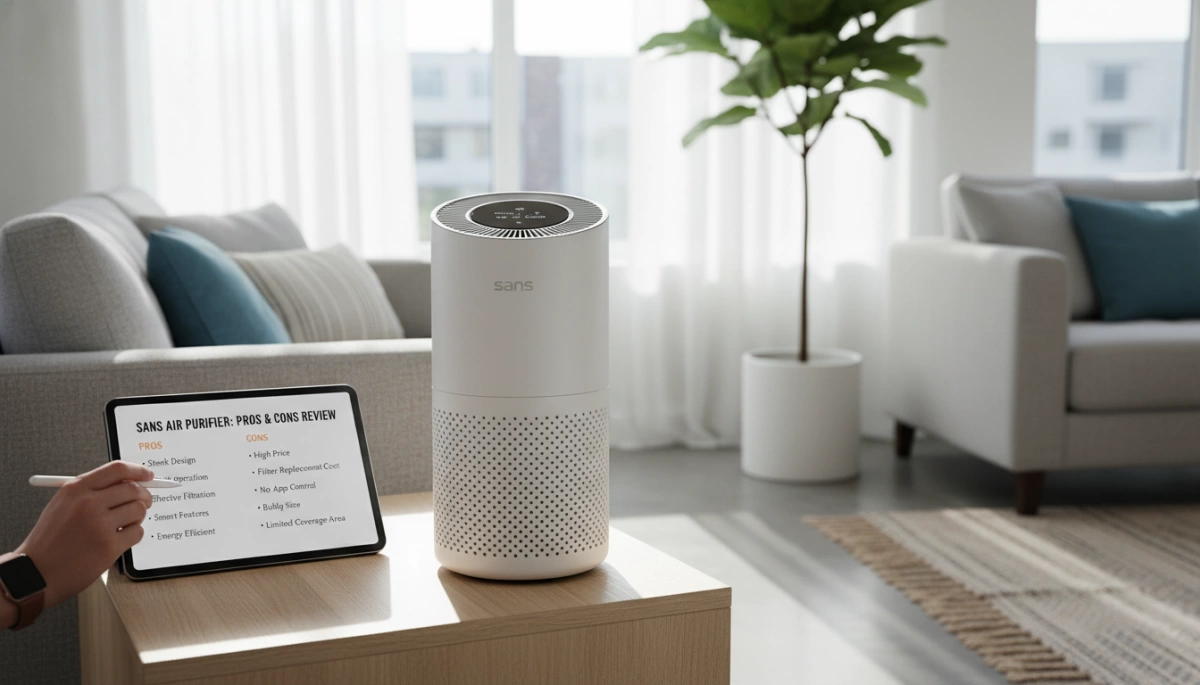
If you want cleaner air at home without a lot of fuss, the Sans air purifier is usually worth it, but it’s not for everyone.
Key Sans Air Purifier Pros
Strong filtration for real-life use
The medical-grade HEPA 13 filter plus activated carbon and UV-C light sterilization makes Sans a solid pick for allergies, pet dander, dust, and city pollution. It’s built for U.S. homes dealing with wildfire smoke, traffic pollution, and indoor VOCs.Set-it-and-forget-it SmartPure auto mode
SmartPure technology and the air quality index monitor let Sans adjust fan speed based on what’s actually in the air. For most people, that means better air quality with less energy use and less micromanaging.Good coverage for whole apartments
The Sans air purifier coverage area up to 1560 sq ft (at lower air changes per hour) works well for open-concept apartments, smaller homes, or main living areas. You can often run one unit instead of juggling multiple small purifiers.Quiet enough for bedrooms
On low and Sans air purifier sleep mode, noise levels are whisper-quiet, which is ideal if you’re sensitive to sound at night and want a silent bedroom air purifier that still runs 24/7.
Key Cons and Dealbreakers
Filter cost over time
Sans air purifier replacement filter cost is not cheap, especially if you run it hard for allergies, pets, or smoke. If you’re very price-sensitive, long-term filter spend may be a dealbreaker.Not packed with “smart home” extras
If you want app control, voice assistants, and deep smart-home integration like some Dyson air purifiers, Sans feels more “focused tool” than “gadget.”Size and look may not fit every room
It’s minimalist, but still a visible appliance. If you want something ultra-compact for very tight spaces, a smaller unit might fit better.
Who Should Pick Sans vs Who Should Skip It
Sans is best for you if:
- You have allergies, sinus issues, or asthma and want a best air purifier for allergies with medical-grade HEPA 13.
- You live with pets and need real help with pet dander and allergens removal plus odors.
- You’re in a city or wildfire area and care about smoke, dust, and volatile organic compounds (VOCs).
- You want strong performance, quiet operation, and simple SmartPure auto mode more than flashy smart features.
You should probably skip Sans if:
- You’re on a tight budget and want the lowest possible filter costs.
- You mainly care about design-forward branding or advanced app control (Dyson or Molekule might appeal more).
- You’re only cleaning a very small room and don’t need a larger coverage air purifier for apartments and open spaces.
For most U.S. households that actually struggle with allergies, pets, or pollution, Sans lands in a sweet spot: a premium air purifier that focuses on air quality first, without overcomplicating the experience.
Sans Air Purifier FAQ
Does the Sans Air Purifier Produce Ozone?
No. The Sans air purifier is designed to be ozone-free.
- The medical-grade HEPA 13 filter and activated carbon filter do the heavy lifting.
- The UV-C light sterilization is fully contained inside the unit, so it doesn’t release ozone into your room.
If you’re sensitive to air quality or have asthma, this is a key safety point in any Sans air purifier review.
How Long Do Sans Air Filters Typically Last?
On average, the Sans air purifier filter set lasts about 6–8 months with normal home use.
- Heavy use (pets, smoke, city pollution) can bring that closer to 4–6 months.
- Light use (small apartment, clean area) may stretch closer to 9–12 months.
The air quality index monitor and SmartPure technology help the unit run efficiently, which can extend filter life a bit.
Is Sans Better Than a Standard HEPA Air Purifier?
In my view, yes for most U.S. households that want more than a basic box fan with a filter.
Here’s why Sans often beats a standard HEPA air purifier:
- Medical-grade HEPA 13 filter: Captures fine allergens, wildfire smoke, and pet dander more effectively than many entry-level HEPA units.
- UV-C light sterilization: Adds an extra layer for germs trapped in the filter, something standard HEPA-only models skip.
- SmartPure auto mode: Adjusts fan speed using real-time sensors and the air quality index monitor, which most budget HEPA units don’t offer.
If you just need the cheapest possible purifier, a basic HEPA can work. If you want stronger performance, better energy efficiency, and smarter features, Sans is the better fit.
Best Place to Put a Sans Air Purifier in Your Home
To get the best performance and coverage from the Sans air purifier (up to 1,560 sq ft):
- Center it in the active area: Living room, open-plan space, or bedroom where you spend the most time.
- Give it breathing room: At least 12–18 inches away from walls or furniture so air can flow freely.
- Avoid corners and behind couches: That blocks airflow and lowers the effective CADR (clean air delivery rate).
- For bedrooms: Place it a few feet from the bed on sleep mode for whisper-quiet use without blowing directly in your face.
Good placement plus SmartPure auto mode is what makes the Sans air purifier feel like a set-it-and-forget-it solution for most homes.