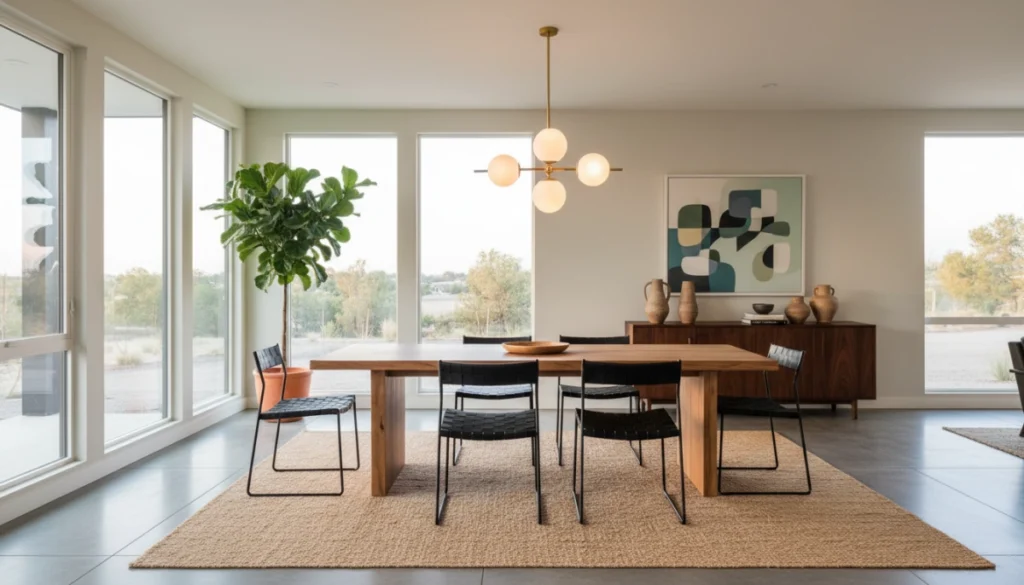
Struggling to choose the right dining table for your dining room?
You’re not alone.
The wrong dining table can make a beautiful room feel cramped, awkward, or totally impractical for everyday life. The right one transforms your dining room into a space where dinners linger longer, homework actually gets done, and hosting feels effortless.
In this guide, you’ll quickly learn how to:
- Match dining table size to your room dimensions (without guessing)
- Choose the best table shape for your floor plan and seating needs
- Pick materials that fit your lifestyle—whether it’s kid-friendly chaos or refined, formal dining
If you’re ready to turn your dining room into a true centerpiece of your home—not just a room with a table—keep reading.
Assessing Your Dining Room Space for Dining Tables
When people ask me, “Will this dining table actually fit my dining room?”, I always start with one thing: clear measurements. The right dining tables make a dining room feel comfortable, not crowded.
Dining Room Measurements and Clearance
Before shopping, grab a tape measure and note:
- Measure the full length and width of your dining room or open concept dining area.
- Subtract 72–90 inches total (36–45 inches on each side) to allow comfortable walkway space around the dining table.
- Aim for at least 36 inches of clearance between the table edge and walls, consoles, or other furniture so chairs can slide back easily.
- In tight dining rooms, 30 inches minimum can work, but it will feel snug and limit traffic flow.
These dining room clearance dimensions give you a realistic footprint for your dining room layout with a table.
How Dining Tables Affect Layout and Traffic Flow
The wrong dining table can block doors, windows, and walkways. I design every layout around natural traffic patterns:
- Keep pathways from the kitchen to the dining room at least 36 inches wide.
- Avoid placing the table where chairs back into door swings or main walkways.
- In open concept dining rooms, align the dining table to “anchor” the zone without blocking the path between living and kitchen areas.
- If your space is narrow, consider a rectangular or oval dining table that follows the length of the room for smoother flow.
Balancing Table Size With Room Proportions
A dining table that’s too small feels awkward; too large feels cramped. To keep proportions right:
- Choose a table that’s roughly half to two-thirds the length of the room.
- For long dining rooms, a rectangular dining table balances the volume better than a tiny round option.
- For more square rooms, a round or square dining table keeps the room feeling centered and balanced.
- Match visual weight: heavy, solid wood dining tables look best in larger rooms; lighter, slim profiles suit smaller dining rooms.
Small Dining Rooms and Open Concept Spaces
If you’re working with a small dining room or an open concept layout, your dining table has to work harder:
- In a small space, consider a round vs rectangular dining table to soften corners and free up walking space.
- Use a pedestal dining table to gain more legroom and easier seating in compact rooms.
- For open concept dining areas, align the table with a rug and overhead light to define the “dining zone” without walls.
- Look for extendable dining table mechanisms that keep the footprint small for daily use but expand for guests.
By measuring carefully and respecting your dining room’s traffic flow and proportions, you’ll quickly narrow down the best dining table for your dining room—no guessing, no buyer’s remorse.
Dining Table Size and Seating Capacity
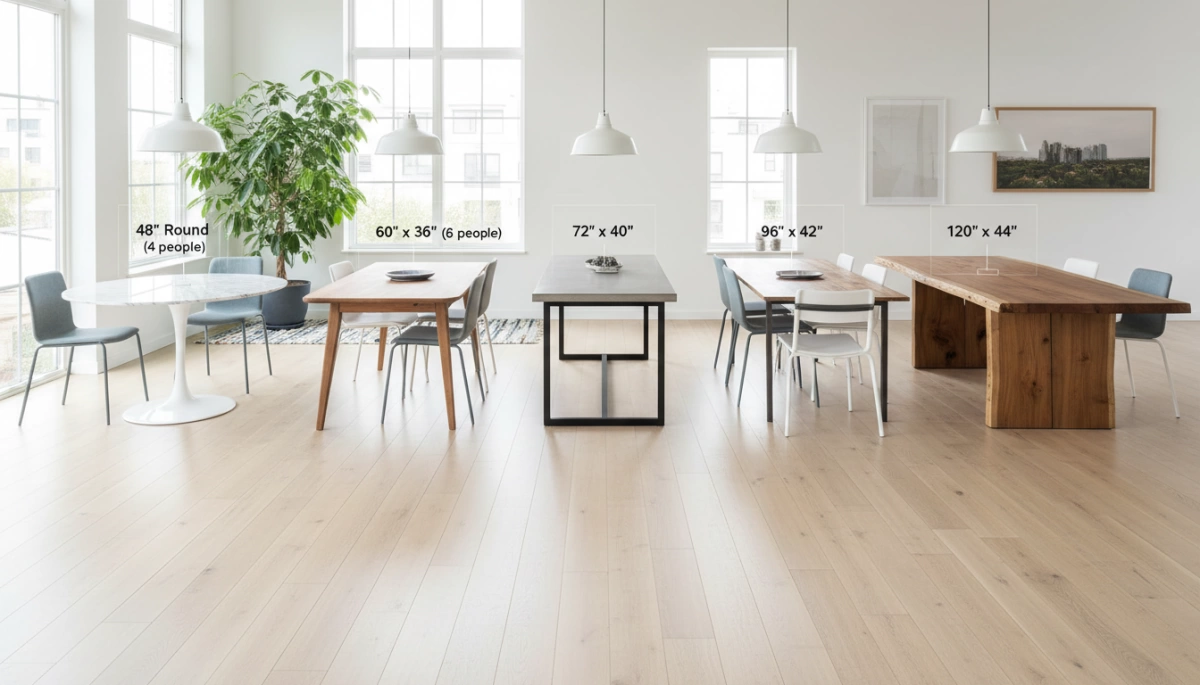
When I help customers choose dining tables for their dining room, I always start with size and seating. The right dimensions keep everyone comfortable and your dining room layout clean.
Standard Dining Table Dimensions for Dining Rooms
Here are the most common standard dining table sizes and the average seating capacity:
| Dining Table Size (L x W) | Shape | Standard Dining Table Height | Seats (Comfortable) |
|---|---|---|---|
| 36\”–48\” x 30\”–36\” | Square | 28\”–30\” | 2–4 |
| 48\”–60\” diameter | Round | 28\”–30\” | 4 |
| 60\”–72\” diameter | Round | 28\”–30\” | 6 |
| 60\” x 36\” | Rectangular | 28\”–30\” | 4–6 |
| 72\” x 36\” | Rectangular | 28\”–30\” | 6 |
| 84\” x 40\” | Rectangular | 28\”–30\” | 6–8 |
| 96\” x 40\” | Rectangular | 28\”–30\” | 8–10 |
I stick close to these standards when designing a dining room layout with a table, because they work well with typical U.S. dining room sizes.
Seating Capacity Guide for Dining Table Sizes
As a quick seating capacity guide for dining tables, plan on:
- 24\” of width per person along the side of the table
- 12\”–15\” of depth per person so plates and glasses fit comfortably
- At least 36\”–42\” of clearance from the table edge to the wall or furniture for walkways
This gives you a realistic headcount without squeezing guests.
How Many Chairs Fit Around Common Dining Tables
Here’s how many chairs typically fit around popular dining room table ideas in real homes:
- 36\”–48\” square table: 4 chairs
- 48\” round table: 4 chairs
- 54\”–60\” round table: 4–6 chairs
- 60\” x 36\” rectangular table: 4–6 chairs (2 on each side, 1 at each end if needed)
- 72\” x 36\” rectangular table: 6 chairs (2 on each side, 1 at each end)
- 84\”+ rectangular table: 8+ chairs for bigger families or frequent entertainers
If you use armchairs or larger upholstered chairs, expect to fit fewer seats than the max.
Best Dining Table Size for Families, Couples, and Entertainers
I always match dining table size to lifestyle:
Couples / small apartments
- Best dining table for small dining room: 36\”–48\” round or 30\” x 48\”–60\” rectangular
- Seats 2–4 comfortably and works well in open concept dining areas with a table.
Average family of four
- Ideal: 48\”–60\” round or 60\” x 36\” rectangular
- This gives enough elbow room for everyday use and homework at the table.
Family of six
- Recommended dining table size for a family of six:
- 60\” round or
- 72\” x 36\” rectangular
- With kids, I suggest a durable solid wood dining table so it can handle daily wear.
- Recommended dining table size for a family of six:
Entertainers / holiday hosting
- Go for 84\”–96\” x 40\” rectangular or an extendable dining table with leaves.
- Extendable dining table mechanisms let you stay compact for daily life and expand when guests arrive.
For U.S. homes, I treat these as starting points, then adjust for your dining room size, chair style, and how often you host.
Choosing Dining Table Shape For Your Dining Room
Rectangular Dining Tables For Long Or Open Dining Rooms
Rectangular dining tables are the workhorse in most U.S. dining rooms and open concept spaces. They line up naturally with walls, windows, and area rugs, which makes planning a dining room layout with a table a lot easier. I like rectangular tables for:
- Long or narrow dining rooms that need clear walkways on each side
- Open concept dining areas where you want to visually “zone” the space
- Families that need maximum seating on school nights and holidays
They’re also the easiest shape if you’re comparing an extendable dining table with leaf mechanisms, because most extension options are rectangular.
Round Dining Tables For Small Dining Rooms And Conversation
Round dining tables are usually the best dining table for a small dining room. They cut the corners, which buys you extra inches in tight spaces and helps with dining room clearance dimensions. A round vs rectangular dining table really shines when you:
- Want better conversation, since everyone faces each other
- Have kids and prefer no sharp corners
- Need a pedestal dining table that lets you squeeze in extra chairs
I recommend a round pedestal base in apartments or breakfast nooks where traffic flow is tight.
Square Dining Tables For Square Dining Rooms And Cozy Layouts
Square dining tables work when your dining room is close to a perfect square or you’re creating a cozy “game night” feel. A square dining table for a small space:
- Keeps every seat equal distance from the center, so it feels casual and social
- Fits nicely on a square dining room rug size, visually balanced on all sides
- Works well for couples and small families that don’t need a ton of chairs daily
If you often push two small tables together for parties, a pair of square tables can double as a larger rectangular setup when you need it.
Oval Dining Tables For Narrow Dining Rooms And Smooth Flow
An oval dining table is my go-to for a narrow room that still needs softer lines. An oval dining table for a narrow room behaves like a rectangular one for seating, but the rounded ends help with:
- Smoother traffic flow around the table
- Softer, more traditional or modern farmhouse dining table vibes
- Making a tight room feel less “boxy”
Oval tables also sit nicely under a linear chandelier or a pair of pendants, so aligning the dining table with lighting, windows, and walkways feels natural.
Dining Table Materials for Real-Life Dining Rooms
Solid wood dining tables for durability and warmth
When I pick dining tables for a dining room, I usually start with a solid wood dining table. It feels warm, looks timeless, and holds up to everyday life in a US home.
- Great for: busy families, kids, pets, daily use
- Best woods: oak, walnut, maple, acacia for strength and fewer dents
- Finishes: matte or satin finishes hide scratches better than glossy
- Style tip: a solid wood dining table works with everything from modern farmhouse to mid-century modern dining room table designs
Stone and marble dining tables for a luxe dining room look
If you want your dining room table to feel high-end, stone or marble dining tables instantly level up the room.
- Great for: formal dining rooms, entertainers, design-focused homes
- Pros: luxe look, heavy and stable, heat-resistant surface
- Cons: can stain, needs sealing and coasters, heavy to move
- Style tip: pair a marble dining table with upholstered dining chairs and a low chandelier for a polished dining room layout with table as the star
Glass dining tables for airy, small dining rooms
For a small dining room or an open concept dining area with table, a glass top dining table keeps the space feeling open.
- Great for: apartments, condos, narrow or small spaces
- Pros: visually light, makes rooms feel larger, shows off cool bases or pedestal dining table designs
- Cons: shows fingerprints and smudges, needs regular glass top dining table maintenance
- Style tip: in a tight dining room layout, pair a round glass dining table with slim chairs so traffic can move easily around the table
Metal and mixed material dining tables for modern dining rooms
Metal and mixed material dining tables work well when you want a modern, low-maintenance dining room.
- Great for: modern, industrial, or urban homes; rentals; busy lifestyles
- Mixes: metal bases with wood tops, metal with glass, or metal with stone for a bold look
- Pros: durable, easier to clean, often more affordable than full stone or hardwood
- Style tip: a trestle dining table design with a metal base and wood top gives you both warmth and a modern edge, perfect for US homes that blend casual and contemporary styles.
Dining Tables for Different Lifestyles
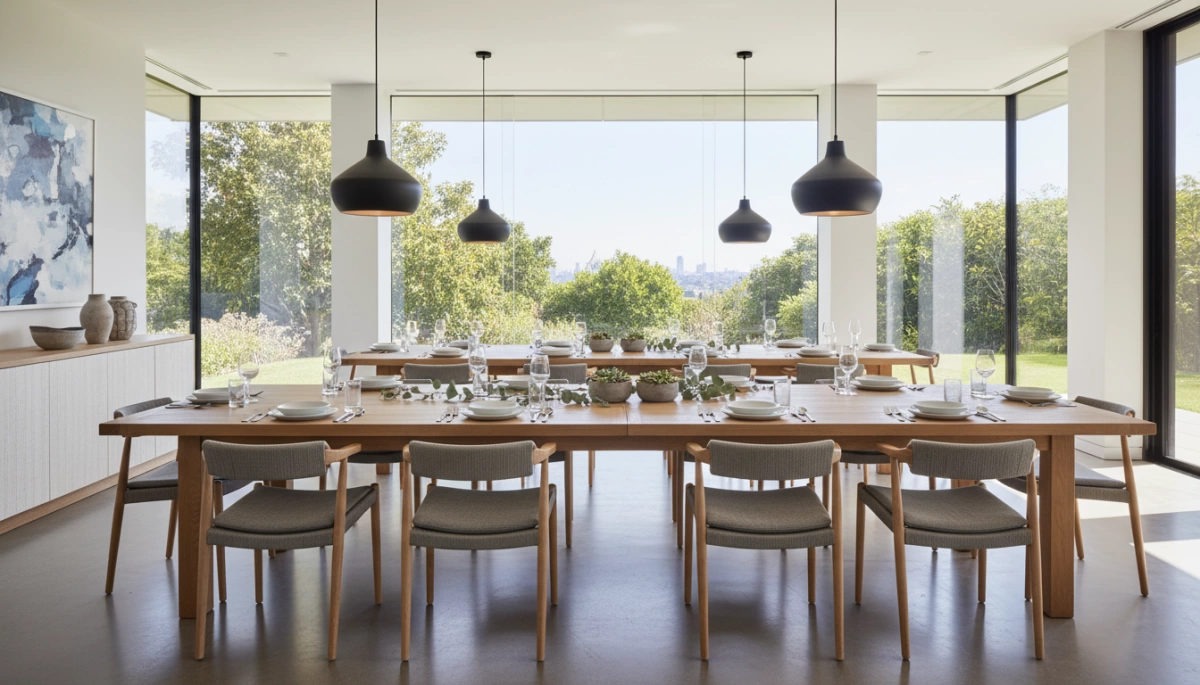
Dining tables for families with kids and pets
For busy U.S. families, I always treat the dining room as a high‑traffic zone, not a showroom.
- Best picks: solid wood dining table with a tough finish (oak, maple) or a high‑pressure laminate top
- Avoid: easily scratched soft woods, fragile glass top dining tables, sharp corners
- Must-haves: rounded edges, wipeable surfaces, sturdy frames that don’t wobble
| Need | Good Choice | Why It Works |
|---|---|---|
| Kids, crafts, homework | Solid wood dining table | Durable, can handle dings and daily use |
| Pets brushing past chairs | Trestle dining table design | Fewer legs to bump, more stable base |
| Easy cleanup | Sealed finish / laminate top | Fast wipe-down after meals and snacks |
Dining tables for frequent entertainers and holidays
If you host game nights, Sunday dinners, or big holiday spreads, your dining room table ideas need to flex.
- Go for a rectangular or oval dining table to seat more people in a relatively narrow dining room
- Prioritize standard dining table height (about 30\”) for comfortable, mixed seating
- Choose finishes that hide marks: mid-tone wood, matte surfaces, not super glossy
| Hosting Style | Table Type | Seating Capacity Guide* |
|---|---|---|
| Casual dinners, potlucks | Rectangular 72\”–84\” | 6–8 people |
| Big holiday hosting | Rectangular 96\”+ or extendable | 8–10+ people |
| Conversation-focused game nights | Large round vs rectangular dining table | Round 54\”–60\” seats 6–8 |
*Actual seating depends on chair size and armchairs vs side chairs.
Extendable dining tables and leaf mechanisms
In a typical American home, an extendable dining table is often the best dining table for a small dining room or open concept dining area.
- Butterfly leaf: leaf folds and stores inside the table; fast and convenient
- Drop-in leaf: separate leaf stores in a closet; gives you a longer table when needed
- Slide and store: premium mechanisms glide smoothly and lock securely
| Room Size / Layout | Extendable Style | Benefit |
|---|---|---|
| Small dining room | Butterfly leaf table | No extra storage needed |
| Open concept dining area with table | Drop-in leaf rectangular | Flexes from everyday to party |
| Condo / apartment | Compact round extendable | Saves floor space day to day |
Best leg styles for busy dining rooms
The base of the dining room table makes a huge difference in comfort and traffic flow.
- Pedestal dining table benefits: more legroom, easier to slide in chairs, great for round and oval tables
- Trestle dining table design: strong and stable, good for long rectangular dining rooms
- Four straight legs: classic, but can crowd chairs in tighter dining room layouts with table and bench seating
| Lifestyle / Traffic Level | Leg Style | Why I Recommend It |
|---|---|---|
| Kids, pets, constant movement | Trestle base | Stable, fewer corner legs to trip on |
| Small space, flexible seating | Single pedestal | Easy to squeeze in extra chairs |
| Large, formal dining room | Double pedestal / trestle | Strong support for long tables |
Choose the dining table style that fits how you actually live: daily family chaos, hosting every weekend, or a mix of both.
Styling Dining Tables Dining Room
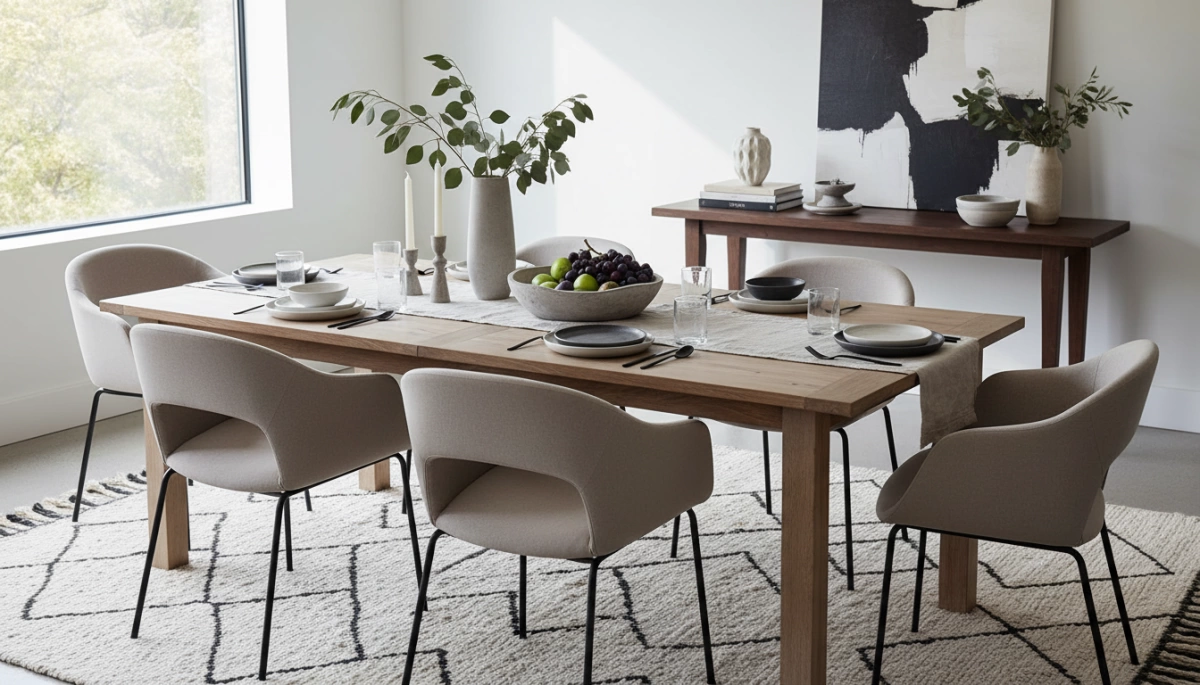
Mix-and-match dining tables and chairs in a dining room
I mix dining tables and chairs to make the dining room feel collected, not staged.
- Pair a solid wood dining table with upholstered end chairs and simple side chairs.
- In a small dining room, use a pedestal dining table and light, open-frame chairs to keep it airy.
- Keep at least one element consistent—wood tone, metal finish, or fabric color—so the dining room layout with table still feels intentional.
Choosing rugs, lighting, and decor around dining tables
Rugs, lighting, and decor need to work with how you actually use the space.
- Follow a basic dining room rug size guide: the rug should extend 24\” past the table so chairs stay on the rug when pulled out.
- Hang pendants or chandeliers so the bottom sits about 30\”–34\” above the tabletop for standard dining table height.
- In an open concept dining area with table, use the rug and lighting to visually “zone” the dining room from the living area.
Centerpiece ideas for dining tables when not in use
When the dining table isn’t full of plates and homework, I still keep it styled.
- Use a long tray with candles and a low vase so you can see across the table.
- For round vs rectangular dining table shapes, match the centerpiece: a single bowl or vase for round, a row of items for rectangular.
- In busy family homes, choose durable, wipeable decor—ceramic bowls, wood boards, and faux stems.
Coordinating dining tables with sideboards and storage
I treat the dining table, sideboard, and storage as one story.
- Match or complement the dining table finish with the sideboard; a modern farmhouse dining table pairs well with a simple shaker or cane-door sideboard.
- Use the sideboard to store everyday dishes, kids’ placemats, and entertaining pieces so the dining room stays clutter-free.
- Anchor the whole dining tables dining room look with repeat materials—black metal hardware, warm oak, or brass lighting—across the table, chairs, and storage.
Dining Tables Dining Room Layout Tips
Dining room clearance dimensions around dining tables
For a functional dining room layout with a table, I always start with clearances:
- Aim for 36\” of space from the edge of the dining table to the wall or furniture for comfortable pull-back and walking.
- If you have a tight dining room or small open concept space, 30\” is the bare minimum, and I only recommend that for low-traffic sides.
- For high-traffic paths (to the kitchen, patio, or hallway), protect the flow with 42–48\” so people can pass behind seated guests without bumping chairs.
These simple dining room clearance dimensions keep the room from feeling cramped and protect your walls, chairs, and knees.
Positioning dining tables under chandeliers and pendants
In most U.S. homes, lighting is the anchor of the dining room:
- Center the dining table under the chandelier or pendant, not the room itself, especially in open concept dining areas.
- Hang the light 30–36\” above the tabletop for standard ceiling heights; go slightly higher (up to 40\”) if you have tall ceilings.
- The fixture should be about ½ to ⅔ the table width so it looks proportional and doesn’t blind guests sitting at the ends.
This setup keeps the dining room table ideas looking intentional and gives you balanced, usable light.
Aligning dining tables with windows, doors, and walkways
I design dining rooms so the table works with the architecture, not against it:
- Align rectangular or oval dining tables with the longest wall or window to stretch the room visually.
- Keep a clear line from doorways to main walkways; don’t let the table sit right in the swing path of a door.
- In open concept dining areas, line the table up with a kitchen island edge or main window so the whole space feels cohesive.
This makes the dining room layout with a table feel natural, not like you squeezed it in.
Avoiding common layout mistakes with dining tables
Here are the layout mistakes I see most in U.S. dining rooms and how I avoid them:
- Table too big: If you can’t keep at least 30–36\” clearance, size down or choose a round or oval dining table to soften corners.
- Rug too small: For a dining room rug size guide rule, make sure the rug extends 24\” beyond the table on all sides so chairs stay on the rug when pulled out.
- Chandelier off-center: If the electrical box is fixed, I use a hook and swag chain to visually center the fixture over the table.
- Blocking traffic: Never place the table so guests have to squeeze sideways to reach a seat; adjust the table, swap to a bench, or rotate the layout.
Dialing in these dining tables dining room layout basics gives you a space that looks good, feels comfortable, and actually works every day.
Buying Guide for Dining Tables Dining Room
Key Questions Before You Buy a Dining Table
Before you pick a dining table for your dining room, I always walk customers through a few quick questions:
- How many people sit here most nights? This decides your dining table size and seating capacity.
- How often do you entertain? If you host holidays, look at extendable dining tables or a leaf system.
- How big is your dining room or open concept space? Measure the room and leave at least 36–42 inches of clearance around the table for walkways.
- What’s your lifestyle? Kids, pets, or heavy use usually call for a durable solid wood dining table or a tough metal/mixed material top.
- What style do you actually like? Modern farmhouse, mid-century modern dining room table, or clean, modern lines? Your table should match your home, not fight it.
Comparing Materials, Shapes, and Sizes Side by Side
When I’m helping someone pick a dining table dining room setup, we usually compare the basics like this:
| Option | Best For | Pros | Watch Out For |
|---|---|---|---|
| Solid wood dining table | Families, everyday use | Warm, durable, easy to refinish | Can show scratches over time |
| Stone / marble | Luxe dining room look | High-end feel, heavy and stable | Can etch, needs coasters |
| Glass top dining table | Small dining rooms | Feels airy, visually opens space | Shows fingerprints, needs frequent cleaning |
| Metal / mixed material | Modern dining rooms | Very durable, bold look | Can feel cool/industrial |
Shapes for a dining room layout with table:
- Rectangular table: Best for long rooms and open concept dining areas.
- Round vs rectangular dining table: Round is great for conversation and tight spaces.
- Square dining table for small space: Works in compact, square dining rooms.
- Oval dining table for narrow room: Softer corners, smoother traffic flow.
Sizes:
- Standard dining table height: Around 30 inches.
- Choose table length based on how many chairs you need, and follow a seating capacity guide for dining tables to avoid crowding.
Dining Table Budget Ranges and Value
For U.S. buyers, here’s how I usually frame dining table budgets:
- Entry level: Good for apartments, first homes, light use. Focus on basic durability and neutral style.
- Mid-range: Where most families land. You can get a solid wood dining table, better finishes, and sturdier bases.
- Premium: Heirloom-level quality, custom sizes, and high-end materials like thick oak, walnut, or stone.
To get the best value:
- Put your budget into frame and top quality first, style second.
- If you have kids, spend a bit more for a durable dining table for kids rather than replacing a cheap one in a few years.
- Consider extendable dining table mechanisms so one piece can cover everyday meals and big gatherings.
Checklist: Right Dining Table for Your Dining Room
Use this quick checklist before you buy:
- [ ] I measured my dining room and checked dining room clearance dimensions.
- [ ] I chose the best dining table for small dining room or large room based on my space.
- [ ] The table shape (round, rectangular, square, or oval) fits my dining room layout and traffic flow.
- [ ] The material (wood, stone, glass, metal) matches my lifestyle and maintenance level.
- [ ] The size matches my everyday seating plus occasional guests.
- [ ] The style fits my home (modern farmhouse dining table, mid-century, or modern).
- [ ] The budget fits my plan, and the table feels like a long-term value.
If you can check all of these, you’re choosing a dining tables dining room setup that actually works for how you live, not just how it looks in a photo.