Golden Rules of Table and Lamps Proportion
You’re not imagining it—most “off” corners come down to bad proportion between the table and lamps. Use these simple rules so every side table, nightstand, and console feels balanced and intentional.
Table and Lamps Height Rules
- Side tables & living room end tables: aim for a total height (table + lamp) of 58–64 in so the light hits at a comfortable level when you’re seated.
- Bedside tables: your table lamp should be about the same height as your nightstand or up to 2–4 in taller.
- Console tables: go taller with buffet-style lamps so the lamp height visually balances wall art or a mirror.
Eye-level shade rule: when you’re seated, the middle of the lamp shade should be close to eye level so you get a warm glow, not harsh glare from the bulb.
Ideal Table-to-Lamp Ratio
As a quick table lamp sizing guide:
- Lamp height should be roughly 1.25–1.5× the table height.
- Avoid tiny lamps on tall side tables and oversized lamps on low, small end tables. They instantly throw off visual balance with table and lamps.
Bedside vs living room:
- Bedside table and lamps: go a bit taller and narrower to clear stacked pillows and headboard.
- Living room end tables: choose shorter, slightly wider lamps that sit comfortably next to the sofa arm.
Width, Footprint, and Visual Weight
Think about how much “visual weight” your table and lamps carry together:
- The lamp base footprint should cover roughly 1/3 of the usable tabletop, leaving room for books, a phone, or a drink.
- Lamp shade width rule: the shade should be no wider than the table top and usually sits at 60–80% of the table width so it never spills past the edge.
Matching Lamp Base to Table Style
For clean visual balance with table and lamps:
- Slim table = slim base. Pair light, airy, or metal tables with slender lamp bases so everything feels cohesive.
- Chunky table = sturdy base. Heavier wood or stone tables can handle thicker ceramic or substantial metal bases.
You can also play with contrast:
- Heavy wood or stone tables look great with lighter glass, acrylic, or slender metal lamps to keep the corner from feeling too dense.
- Match visual weight when you want calm, simple symmetry; use contrast when you want the lamp to act as a subtle focal point without overwhelming the table.
Styling Table and Lamps With Materials and Eras
Mix textures with confidence
When I style table and lamps together, I want contrast in texture so the setup feels layered, not flat. A simple rule that works in most U.S. homes:
- Pair smooth with rough: ceramic table lamps on reclaimed wood tables, metal lamps on rustic side tables, glass lamps on matte-painted consoles.
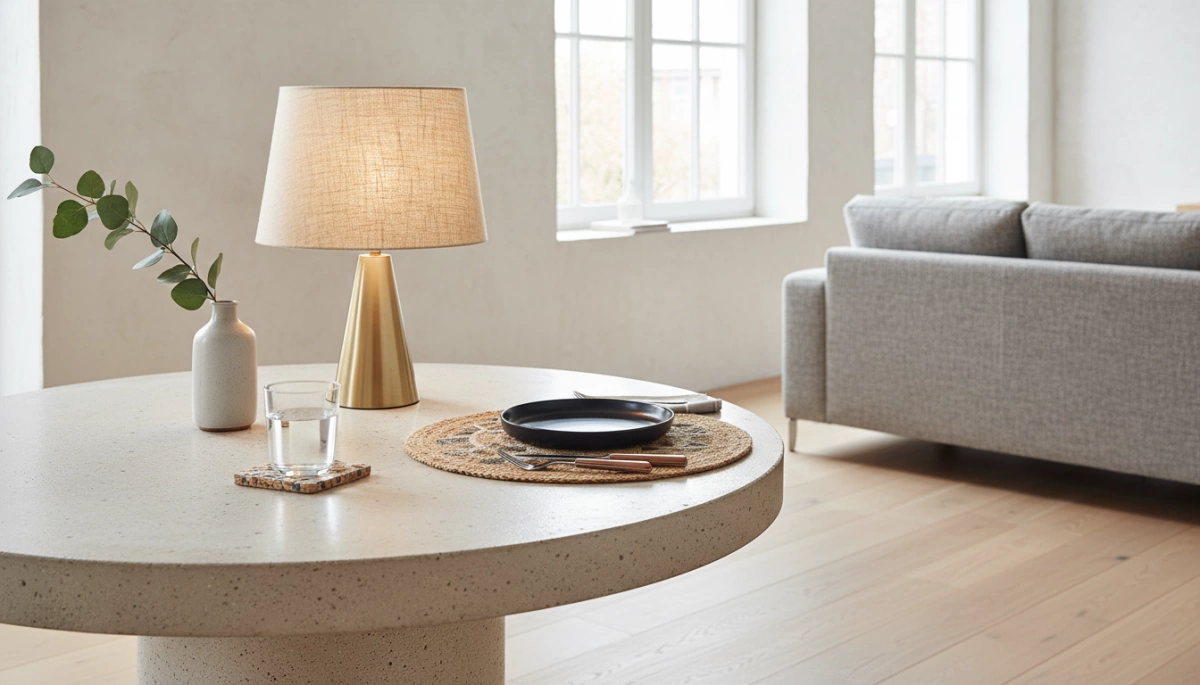
- Keep at least two different textures in every table and lamp combo: for example, wood table + ceramic lamp + linen shade.
- Use linen or paper shades to soften stronger materials like metal, marble, or high-gloss finishes.
This keeps your table and lamps styling guide grounded and easy to repeat around the house.
Rustic wood tables and glossy lamps
Rustic wood can look heavy if everything around it is also chunky. To balance it:
- Choose glossy ceramic or glass table lamps with simple shapes to freshen up rough wood.
- Try sculptural lamp bases (gourd, sphere, stacked shapes) to contrast straight farmhouse table lines.
- Stick to neutral shades (white, oat, sand) so the texture and shape do the talking.
This combo works great in U.S. living rooms with farmhouse, rustic, or modern-casual furniture.
Brass, marble, and glass on modern or classic tables
For more polished spaces, I like using lamps as the “jewelry” of the room:
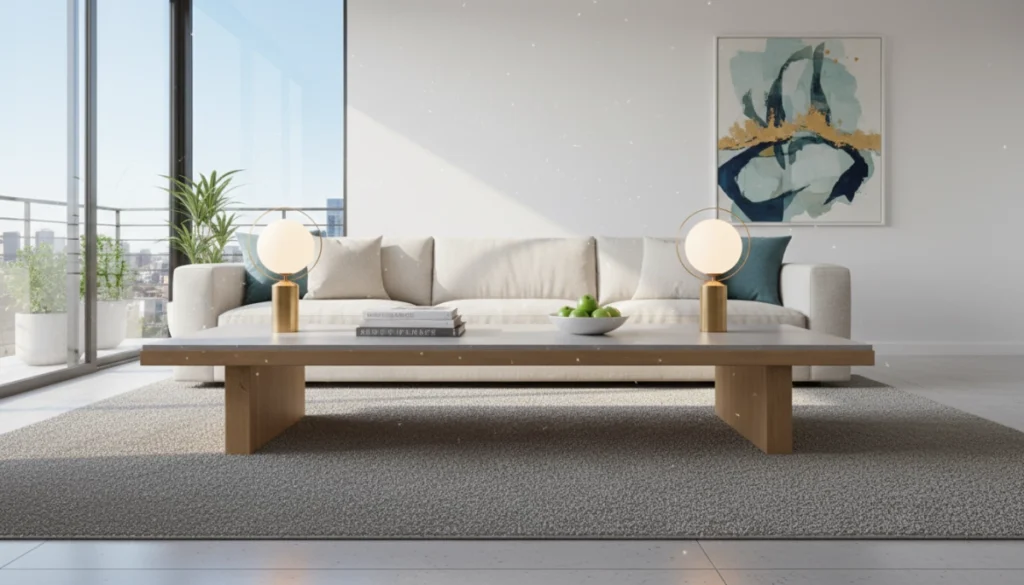
- On modern tables (clean lines, slim legs), use brass or black metal lamps with marble or glass accents for a sleek, mid-century modern table lamp feel.
- On traditional tables (curved legs, rich wood), bring in marble or crystal/glass lamps to lighten the look without fighting the classic style.
- Keep hardware finishes in the room in mind—if your room already has brass pulls or curtain rods, a brass table lamp ties it together fast.
Monochromatic table and lamp styling
If you like a calm look but don’t want “blah,” stay in one color family and play up texture:
- Use tone-on-tone combos like beige lamp on light oak table, or charcoal lamp on dark-stained end table.
- Mix matte and gloss: matte ceramic lamp base + slightly glossy shade + soft-grain wood table.
- Layer in subtle pattern on the shade (slub linen, faint stripe) to keep a monochromatic table and lamp setup from feeling flat.
This works especially well for small apartments and townhomes where you want the room to feel bigger and more pulled together.
Mid-century, traditional, and eclectic pairings
I design most of our pieces to mix across eras so you don’t have to start from scratch:
- Mid-century tables: Pair with simple drum-shade lamps, slim metal or wood bases, or a color-pop ceramic table lamp for a subtle retro nod.
- Traditional bedside tables: Classic ceramic or ginger jar lamps with a tapered or empire shade always look right and give that hotel-nightstand vibe U.S. customers love.
- Eclectic setups: Anchor the look with one “quiet” piece (usually the table), then let the lamp be more playful—patterned ceramic, sculptural base, or colored glass.
To keep eclectic table and lamps pairings cohesive, repeat at least one thing: finish (brass), color family (warm neutrals), or shape (rounded forms). That’s how you get intentional, not random.
Function-First Table and Lamps Setup
Task lighting vs soft ambient light
When I plan any table and lamps setup, I start with function first, style second.
Task lighting (focused, brighter)
- Great for reading, working, crafting.
- Look for table lamps with directional shades, adjustable necks, or swing arms.
- Use brighter bulbs: 800–1100 lumens (roughly 60–75W equivalent).
Soft ambient lighting (cozy, background glow)
- Ideal for living rooms, bedrooms, and hallways.
- Choose fabric or frosted shades that diffuse light.
- Use softer bulbs: 400–800 lumens (40–60W equivalent).
This function-first mindset keeps your table and lamps styling guide practical, not just pretty.
Best table and lamps for reading nooks
For a reading nook on an end table or side table, I focus on comfort and clarity:
- Place the bottom of the lamp shade around eye level when you’re seated.
- Choose a solid, stable base so it’s safe on smaller end tables.
- Use a medium drum or cone shade so light is directed down onto your book.
- Target 2700K–3000K warm white for a cozy, relaxed feel.
Search for end table lamp ideas that mention “reading,” “task,” or “adjustable” and you’ll be in the right zone.
Adjustable arm lamps on small tables
On tight spaces next to lounge chairs or recliners, adjustable lamps are a game changer:
- Use swing-arm or adjustable arm table lamps so you can pull light closer without a huge base.
- Pick a narrow footprint base (round or oval) to free up space for a drink and remote.
- Aim the light slightly in front of you, not directly in your eyes.
This is one of my favorite small table lamp ideas for tight spaces because it gives you flexibility without clutter.
Lighting entryway console tables with buffet lamps
For console table and lamp decor in an entryway or hallway, I like a mix of height and softness:
- Use a pair of buffet lamps or tall table lamps on each side for balance.
- Keep bases slim so they don’t eat up the console surface.
- Use shades that sit entirely inside the table edge so nothing feels top-heavy.
- Choose lower to medium brightness (400–800 lumens) so the entry feels welcoming, not harsh.
This works well with both buffet lamps for console tables and more modern, minimalist bases.
Picking bulbs and brightness for table lamp setups
Here’s how I size bulbs for most US homes:
- Bedside table and lamps: 400–800 lumens
- Living room side tables: 600–1000 lumens
- Entryway console table and lamp decor: 400–800 lumens
- Reading corners: 800–1100 lumens
Always check your lamp’s maximum wattage rating, especially on older or vintage bases.
Color temperature (Kelvin) by room
Color temperature changes everything about how your table and lamps feel:
- Bedroom / bedside lighting ideas:
- 2700K–3000K (warm white) for a calm, relaxing vibe.
- Living room table lamp placement:
- 2700K–3000K for cozy nights.
- 3000K–3500K if you like a slightly crisper, more modern look.
- Hallway and entry console tables:
- 2700K–3000K so guests walk into a warm, inviting space.
Stick with one general temperature per room to keep everything cohesive.
Smart bulbs and dimmers for table and lamps
To really control mood and function, I lean hard on smart controls:
- Use smart bulbs to switch from bright task lighting to soft ambient lighting with one tap.
- Set dimmer scenes: bright for cleaning or reading, low for movie nights or winding down.
- Try warm white vs cool white bulbs in different presets so you can adjust based on time of day.
- In rentals, plug table lamps into smart plugs or dimmer plugs so you don’t need hardwired changes.
A function-first table and lamps setup becomes way more flexible when the brightness and color temperature are just as intentional as the lamp and table themselves.
Room-by-Room Table and Lamps Pairing Guide
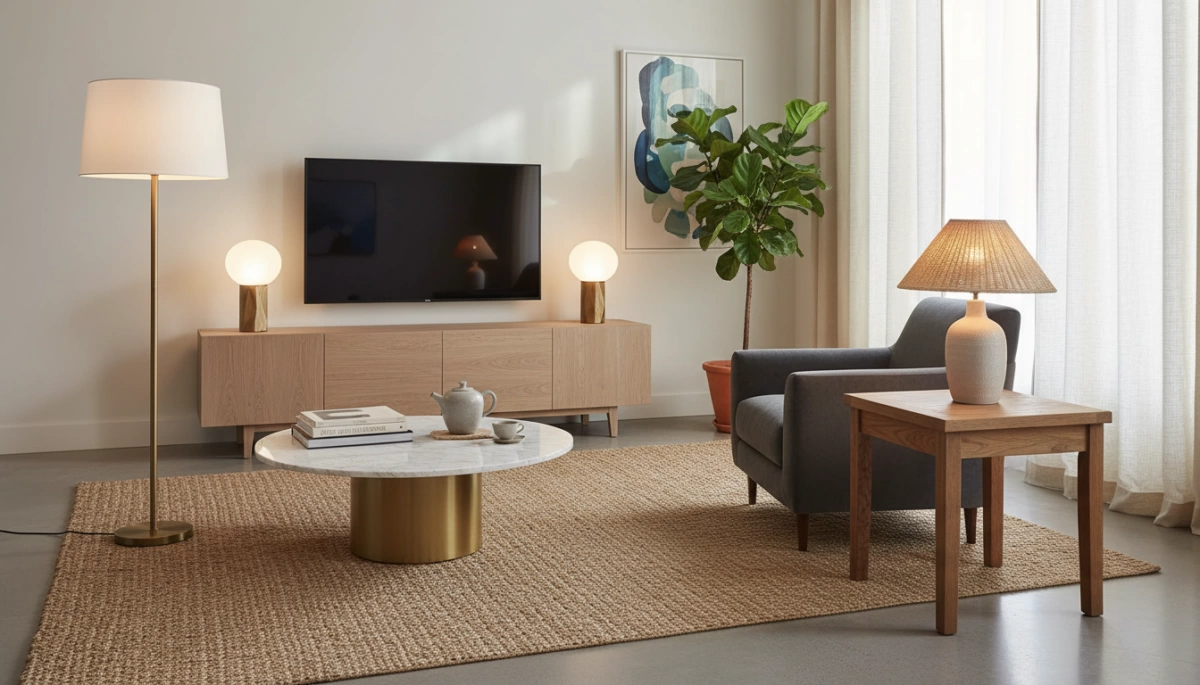
Bedside table and lamps setup
For real-life nightstands in U.S. homes, I keep bedside table and lamps pairings simple and practical:
- Aim for the top of the lamp shade to sit roughly at your eye level when you’re sitting up in bed.
- Most bedroom table lamps land in the 24\”–28\” total height range (including shade) on a standard 24\”–28\” nightstand.
- Leave room for your phone, water, and a book; if your nightstand is small, choose a slimmer lamp base or a small table lamp with a compact footprint.
Ideal bedside lamp height and shade shape
To get bedside table and lamp height right:
- Height: nightstand height + lamp height ≈ 48\”–54\” total from floor to top of shade.
- Shade shape:
- Drum or slightly tapered shades spread light evenly for reading.
- Oval shades work well on narrow nightstands in tight spaces.
When to choose sconces instead of table lamps
If your bedside tables are tiny or your bedroom is tight:
- Use wall sconces instead of bulky table and lamps setups so you keep your nightstand clear.
- Look for plug-in sconces if you rent and can’t hardwire.
- Mount the sconce so the bottom of the shade sits around eye level when you’re sitting up.
Living room end table and lamps around a sofa
For living room table and lamps styling:
- The bottom of the shade should sit near eye level when you’re seated on the sofa.
- Place table lamps on end tables just behind or beside the sofa arm so light falls over your shoulder for reading.
- For end table lamp ideas, pick slightly larger lamps than you’d use in the bedroom, since living rooms can handle more visual weight.
Matching vs mismatched lamps on side tables
Both work if you’re intentional:
- Matching lamps on both side tables = clean, classic, more formal.
- Mismatched lamps = casual and layered; keep them similar in height, brightness, and visual weight so the room still feels balanced.
Symmetry vs casual balance by the couch
To create balance with table and lamps around a couch:
- For symmetry, use the same lamp and similar size tables on each side.
- For casual balance, pair a larger lamp on one side with a smaller but taller lamp on the other so the tops sit at roughly the same height.
Console table and lamps in hallways and entryways
For console table and lamp decor in hallways and entry spaces:
- On a long console, use two buffet lamps on each end and keep the center open for a tray, bowl, or art.
- In a narrow hallway, one tall lamp plus a mirror is usually enough to feel welcoming without clutter.
Tall, slender lamps on narrow console tables
When your console table is shallow:
- Choose tall, slender buffet lamps so they add height without eating up surface space.
- Make sure the lamp shade doesn’t hang off the back or front edge of the console.
- Use warm white bulbs (2700K–3000K) so entryway light feels soft and inviting.
Common Table and Lamps Mistakes to Avoid
Table and lamps proportion mistakes
When I’m pairing a table and lamps for U.S. homes, these are the mistakes I see over and over:
Lamp shades too small or too large
- Shade width should be about 1.5–2x the width of the lamp base.
- A tiny shade on a chunky base looks cheap; an oversized shade on a slim base looks wobbly and unstable.
- For most living room table lamps, the shade should sit just wide enough to feel balanced without hanging past the table edge.
Tiny lamps on big, heavy tables
- A small lamp on a large wood coffee table or oversized end table gets visually “lost.”
- Aim for the lamp to take up about one-third of the table height so the table and lamps feel intentional, not accidental.
- Heavy stone or wood tables need a lamp with real presence—taller base, fuller shade, and solid visual weight.
Oversized lamps on tiny tables
- When the lamp base or shade is almost as wide as the top, it looks like it might tip over.
- Keep the lamp shade inside the footprint of the tabletop so there’s still room for a drink, phone, or book.
- If your favorite lamp is too big, move it to a console table or larger end table.
Table and lamp cord problems
Visible cords can ruin an otherwise great table and lamps styling setup, especially with open-leg tables that are common in U.S. apartments and newer builds.
Letting cords dangle and tangle
- Dangling cords under glass or open-leg tables draw the eye and look messy.
- Avoid bright white cords on dark floors and vice versa; they pop in photos and in real life.
Easy cord-hiding tricks
- Use clear cord clips along the back leg or underside of the table to guide the cord straight down.
- Run cords tight to the wall and hide them behind baskets, storage cubes, or a plant.
- For console table and lamp decor in entryways, use cord covers painted to match the wall baseboard.
- In bedrooms, zip-tie extra cord length and tuck it behind the nightstand.
Scale, harp height, and buying smart
The fastest way to mess up a table and lamps styling guide in real life is to ignore scale and total height.
Ignoring the lamp harp
- The harp adds 1–3 inches to the true height of the lamp and shade.
- If you skip this, you’ll end up with a lamp that’s a bit too tall and shining in your eyes when you’re seated or in bed.
- When you swap shades, make sure the harp height still keeps the shade at about eye level when seated.
Buying without checking size and purpose
- Before ordering, I always check:
- Overall height (how tall should a table lamp be for your sofa or mattress height)
- Shade width and depth relative to the table size
- Light purpose: task lighting for reading vs soft ambient lighting for mood
- For bedside table and lamp height, measure from the floor to the top of your mattress and aim for the lamp’s light source to sit near eye level when you’re sitting up.
- For living room end table lamp ideas, choose lamps that light your book or laptop without glaring directly into your eyes.
- Before ordering, I always check:
Dialing in these basics keeps your table and lamps looking high-end, balanced, and functional—without wasting money on pieces that don’t work once they land in your home.