Tables and Coffee Table Basics
When people search for “tables and coffee table”, they’re usually trying to solve one clear problem: how to pull their living room together so it feels stylish, practical, and comfortable every day. You’re not just buying a coffee table; you’re planning how every table in the room works together.
What People Really Mean By “Tables and Coffee Table”
Most of the time, this search is about:
- Finding living room coffee table ideas that actually work with a real sofa and TV, not a showroom.
- Learning how to pair a coffee table with side tables so the room feels cohesive, not cluttered.
- Choosing between round coffee table vs rectangular, especially for a smaller UK living room.
- Working out a simple coffee table size guide and coffee table height rule that’s easy to follow.
You want a clear plan: one main coffee table, a couple of side or end tables, maybe a console table behind the sofa – all working hard for you.
How Coffee Tables, Side Tables, and Console Tables Work Together
In a well-designed living room, each type of table has a job:
Coffee table – the main anchor in front of the sofa.
- Holds drinks, snacks, remote, books, a simple vignette.
- Sets the style tone for the whole seating area.
Side tables / end tables – support pieces next to sofas and armchairs.
- Keep a drink, lamp, or book within easy arm’s reach.
- Ideal where the coffee table doesn’t quite reach.
Console table (often behind the sofa or along a wall):
- Frames the back of a sofa, especially in open‑plan UK homes.
- Adds surface for lamps, baskets, or artwork without taking up too much floor space.
- Perfect for slim accent tables for living room where depth is limited.
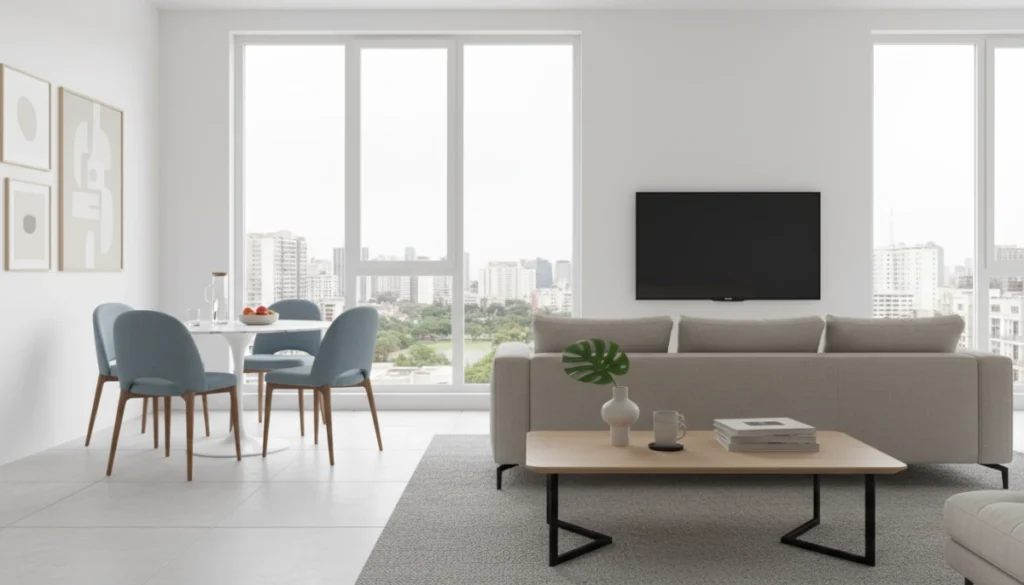
Together, these create a simple living room table layout: one central hub (coffee table) with smaller, flexible helpers around it.
Why Mixing Pieces Looks More Modern and Curated
Buying a full matching “wood and metal coffee table set” can feel easy, but it often makes a room look flat and overly staged. A curated mix looks more modern and considered:
- Combine different shapes – for example, a rectangular coffee table with small round nesting side tables.
- Mix materials – think glass coffee table with wood side tables, or a soft ottoman as coffee table with metal accent tables.
- Vary visual weight – one chunky, solid coffee table balanced with slimmer, lighter side tables.
My rule is simple: aim for pieces that relate but don’t match. Keep one or two common threads – such as a shared metal finish or wood tone – and let everything else vary. That’s how you get a relaxed, curated living room look instead of a showroom set.
Choosing the Right Tables and Coffee Table
When I’m choosing a tables and coffee table combo for a UK living room, I always start with three things: size, shape and height. If you get those right, the room instantly feels more practical and more “pulled together”.
Coffee table size guide
For most living room coffee table ideas, I use these simple rules:
- Length: aim for about ½ to ⅔ the length of your sofa
- 3-seater sofa (around 200–220 cm): coffee table around 100–140 cm
- Small 2-seater: coffee table around 80–110 cm
- Distance from sofa: keep 35–45 cm between sofa edge and coffee table so you can stretch your legs but still reach your drink
- Width: in tighter UK living rooms, I stay around 45–60 cm wide so walkways don’t feel cramped
Coffee table height rule
Height is what makes a coffee table feel “right” with your sofa:
- Aim for level with your sofa seat or up to 5 cm lower
- If you use your coffee table for laptops or meals, go slightly higher (but never higher than the top of the sofa seat by more than a couple of centimetres)
- With a deep, low modern sofa, a low, chunky coffee table usually looks best
Shape: round coffee table vs rectangular
I match shape to the living room layout and the sofa:
- Rectangular or oval coffee table
- Best with standard 3-seater sofas or longer rooms
- Works well when the room is more narrow and you need clear paths either side
- Round or square coffee table
- Great for small living room coffee table setups where corners would be in the way
- Ideal with a corner sofa or sectional sofa so everyone can reach the surface
- In very small UK flats, I often use nesting side tables instead of one big table so you can move pieces around when needed
Picking a coffee table that fits your layout
I look at how people actually use the room:
- For TV nights and feet up: a soft ottoman as coffee table with a tray works better than a hard surface
- For families: rounded corners, wipeable finishes and a sturdy base are non‑negotiable
- For open‑plan spaces: you can go bigger and heavier because the room can visually handle it
Think about your living room table layout like this:
- Can everyone seated reach a drink without leaning too far?
- Is there at least 60–80 cm for main walkways to pass around the table?
- Does the coffee table sit centred with the sofa, not drifting towards one side?
Balancing storage, durability and style
For most UK homes, a coffee table has to work hard:
- Storage:
- Drawers or a lower shelf are ideal if you need to hide remotes, chargers and toys
- In very small living rooms, I lean towards closed storage to keep things looking calm
- Durability:
- Solid wood, wood and metal coffee table sets, or laminate tops are more forgiving for everyday use
- Glass coffee table with wood side tables can keep the room light but still grounded
- Style:
- For a modern coffee table decor look, keep the lines simple and avoid heavy carved details
- For a farmhouse coffee table styling feel, I use warm wood, a chunkier top and softer edges
When I design coffee table and side table combinations, I always balance practical use first, then layer in style. If it’s the right size, the right height, and easy to live with, it will look intentional and make the whole living room feel more curated and cohesive.
Coffee table shapes and room layout
When rectangular or oval coffee tables work best
For most UK living rooms, a rectangular or oval coffee table is the most practical choice. It sits neatly in front of a standard three–seater sofa and gives you a clear, simple layout.
Rectangular or oval tables and coffee table layouts work well when:
- You’ve got a long sofa or a corner/chaise sectional and need a table that runs along the length
- You want easy reach for drinks and remotes from every seat
- Your living room table layout is more narrow and you need a clear front‑to‑back walkway
- You like a more modern, streamlined look, especially with slim metal or wood and metal coffee table frames
Oval coffee tables are good if you want the look of a rectangular table but softer corners for kids or tight spaces.
When round or square coffee tables make more sense
Round and square coffee tables suit more compact or balanced layouts, which is common in UK new builds and flats.
A round or square living room coffee table works best when:
- You’ve got a smaller living room and want to keep the corners from feeling boxy
- Your seating wraps around more evenly (for example, two sofas facing each other)
- You want to soften a lot of straight lines from radiators, TV units and alcoves
- You’re planning to mix in nesting side tables or a small ottoman as coffee table for extra flexibility
Round shapes are especially handy in tighter spaces, as you can walk around them without catching shins on corners.
How table shape affects walkways and traffic flow
The shape of your tables and coffee table has a big impact on furniture spacing and traffic flow in a UK home, where every centimetre counts.
I stick to a few simple rules:
- Keep around 40–45 cm between the sofa and coffee table so you can walk through but still reach your drink
- Use oval or round tables on tight routes to patio doors, hallway doors or under-stairs areas
- In narrow living rooms, choose a slimmer rectangular table and add a small side table vs end table by the arm for extra surface
- If the room feels crowded, swap a chunky rectangular piece for a glass coffee table with wood side tables or a lighter frame to improve visual flow
Get the shape right, and your tables and coffee table will feel built into the room, not dropped in the way.
Side tables vs coffee table
What side tables, end tables and console tables actually do
In a UK living room, each table has a clear job:
- Coffee table – the main hub in front of the sofa; for drinks, remotes, laptops, board games and a bit of decor.
- Side table / end table – sits beside a sofa or armchair; for a cuppa, a lamp, and somewhere to put your phone or glasses.
- Console table – long and slim; ideal behind a sofa or along a wall for lamps, storage baskets and display, without eating into your floor space.
If you’re tight on space, a slim console table behind the sofa can replace bulky storage units and still keep the room feeling open.
How side tables support the main coffee table
Side tables make your tables and coffee table layout actually usable day to day:
- They bring a surface within easy reach so you’re not leaning over the coffee table every time you want your drink.
- They give each seat its “own” spot for a lamp, book or charger – useful in UK homes where sockets are never quite where you want them.
- They take the pressure off the coffee table, so you can style it a bit and still keep things practical.
Good coffee table and side table combinations mean every seat has a handy surface without cluttering the room.
When to skip a matching side table set
I rarely buy a full matching tables and coffee table set – it can look flat and showhome-like. Mixing styles feels more modern and curated:
- Pair a wood coffee table with metal or glass side tables to lighten the look.
- Use different shapes – for example, a rectangular coffee table with a small round drink table.
- Keep one thing consistent (wood tone, metal finish or colour) so your living room coffee table ideas still feel cohesive.
If your living room is small, skip bulky matching end tables and go for nesting side tables or one slim accent table instead – you’ll keep the function without crowding the space.
Proportion rules for tables and coffee table
Getting the proportions right is what makes a living room feel comfortable and easy to use, not just pretty. When I’m choosing tables and a coffee table for a UK home – whether it’s a small terrace or a larger open-plan space – I stick to a few simple rules.
Simple height rules for coffee table vs sofa seat
For most living room coffee table ideas, I follow this:
- Coffee table height: aim for the same height as your sofa seat, or up to 2–5 cm lower.
- As a rough guide in UK homes, that’s usually around 40–45 cm tall.
- Avoid going higher than the seat height – it can feel clunky and awkward for your legs.
This basic coffee table height rule works whether you go for a round coffee table vs rectangular or an ottoman as coffee table.
Ideal height for side tables next to sofa arms
Side tables and end tables should work hard in a living room, not just sit there looking nice.
- Side table height: aim for the same height as the top of your sofa arm, or up to 5 cm higher.
- If it’s too low, you end up reaching down uncomfortably for your drink or lamp.
- For low-armed, modern sofas, I sometimes use nesting side tables to get a bit more flexibility.
This keeps side table vs end table choices simple: whatever you pick, match it to the arm height and it will feel right.
How far to place a coffee table from the sofa for comfort
Furniture spacing and traffic flow matter just as much as style in a UK living room, especially in smaller rooms.
- Keep the front of the sofa and the coffee table about 40–45 cm apart – close enough to reach your mug, far enough to move your legs.
- In a tight space or small flat, I’ll go down to 35 cm, but never so close you have to twist to stand up.
- For a coffee table for sectional sofa, I keep that same distance along the longest side so everyone can reach.
These proportion rules for tables and coffee table layouts help every piece feel intentional, whether you’re pairing a chunky wood design with slim accent tables for living room or planning a more curated living room look.
Sizing Tables for Small and Large Living Rooms
Coffee table sizes that work in small spaces
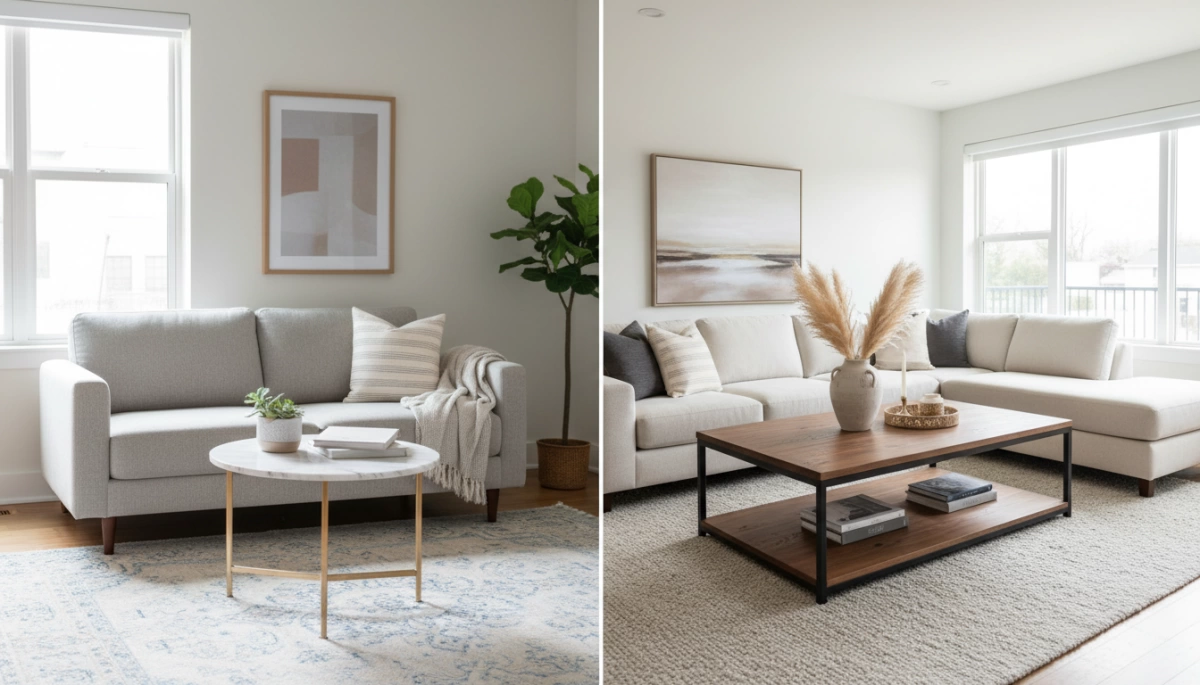
When I’m sizing tables and coffee table options for a small living room, I keep them compact but still practical.
For a small living room coffee table, I usually aim for:
- Length: about ½ to ⅔ the width of your sofa
- Width: 40–55 cm so you can still walk around it
- Height: follow the basic coffee table height rule – level with or 2–3 cm below the sofa seat
Good small living room coffee table ideas:
- A round coffee table to soften corners and ease traffic flow
- A glass coffee table or slim metal frame to reduce visual weight
- An ottoman as coffee table if you want extra comfort and hidden storage
Pairing a coffee table with nesting tables in tiny living rooms
In very small UK living rooms and flats, I rely on nesting side tables to boost flexibility without crowding the room.
Strong coffee table and side table combinations:
- One modest coffee table in the centre
- Nesting side tables that can slide under each other when not in use
- Tiny drink tables by the arm of a sofa or chair instead of full side tables
This gives you:
- Extra surface when guests are round
- Easy-to-move accent tables for living room movie nights
- A curated living room look without a heavy, bulky set
Choosing bigger tables for open plan or large living rooms
For open concept spaces and larger UK living rooms, tables and coffee table choices need more presence so the seating area feels grounded.
I usually size up to:
- Length: ⅔ to ¾ the width of the main sofa or sectional
- Width: 60–80 cm so the piece fills the rug area properly
- Height: still follow the coffee table height rule so it’s comfy to use
For a large living room table layout:
- Use a substantial wood and metal coffee table for anchor and warmth
- Add two side tables or a console table behind sofa to frame the space
- Consider a round coffee table vs rectangular depending on traffic flow and how people move through the room
Getting the scale right is key – small space living room furniture should feel light and flexible, while larger rooms can handle bigger, bolder tables without feeling cluttered.
Balancing Visual Weight Between Tables and Coffee Table
When I plan tables and a coffee table for a UK living room, I always think about visual weight first. You want the room to feel calm and open, not cramped and heavy.
Avoid heavy, crowded table layouts
To stop your tables and coffee table layout feeling bulky:
- Keep bigger, solid pieces (like a chunky wood coffee table) closer to the centre of the room.
- Use fewer large surfaces rather than lots of tiny accent tables scattered everywhere.
- Leave clear floor around each piece – aim for at least 40–45 cm walk space where you can.
- Avoid lining every wall with furniture; let at least one wall breathe.
Pairing a chunky coffee table with lighter side tables
If you love a substantial, block-style coffee table, balance it out with lighter side tables:
- Choose slim side tables with open frames instead of solid bases.
- Go for nesting side tables that tuck away when not in use.
- Pick side tables with a smaller top so they feel visually lighter next to the sofa.
- Try a glass or metal accent table on one side to cut through all the timber.
Using slim metal or glass tables with solid wood
Mixed material living room furniture works well in British homes, especially where space is tight:
- Pair a solid oak or walnut coffee table with slim black metal side tables for contrast.
- Use a glass coffee table with wood side tables if your sofa is large and you don’t want the centre to feel heavy.
- Add one airy console table behind the sofa in metal or glass to stop the layout feeling boxy.
- Repeat one finish (for example, black metal legs) across tables so the mix still feels cohesive.
Mixing Materials in Tables and Coffee Table
When I design a living room, I always mix materials in the tables and coffee table – that’s what makes a space feel considered, not copied from a showroom. The trick is to be intentional so it looks curated, not chaotic.
Combining wood, metal, glass and stone
To keep mixed-material living room tables under control, I stick to a simple framework:
- Pick a lead material: usually wood for UK homes, as it feels warm in our light. Let the coffee table be wood, then bring in metal, glass or stone on side tables and console tables.
- Repeat each material at least twice: for example, a wood coffee table, a wood and metal side table, plus a wood frame on the wall mirror. Repetition makes the mix feel deliberate.
- Balance hard and soft: if the coffee table is stone or glass, I add softness with a textured rug or upholstered sofa so the room doesn’t feel cold.
Warm vs cool finishes
Using contrast between warm and cool finishes stops your tables and coffee table from blending into one flat tone:
- Warm finishes: oak, walnut, brass, brushed gold – ideal in north-facing UK living rooms that can feel a bit grey.
- Cool finishes: black metal, chrome, smoked glass, concrete – great for modern coffee table and side table combinations.
- I usually anchor with one temperature (for example, warm wood) and use the opposite (black metal, chrome) as an accent in legs, frames or handles, so the room feels balanced instead of busy.
Blending chunky and airy pieces
Visual weight matters just as much as size. To get a cohesive living room design:
- If the coffee table is solid and blocky (like a chunky wood or stone piece), I pair it with lighter, open-frame side tables in slim metal or glass. This keeps the layout from feeling heavy and crowded.
- In a small UK living room, I often use a glass coffee table with wood side tables – the glass keeps the centre of the room visually light, while the wood still brings warmth.
- For larger spaces or open-plan rooms, a substantial coffee table works well, as long as end tables and accent tables for the living room have thinner legs or open bases to keep the mix airy.
Used well, mixed materials in your tables and coffee table make the whole living room feel more high-end and intentional, without needing a matching set.
Popular Tables and Coffee Table Styles
Modern tables and coffee table combos that work
For a modern living room in the UK, I keep tables and coffee table choices clean and simple:
- Go for a low, rectangular or round coffee table with slim metal legs or a simple plinth base.
- Pair with slim side tables or nesting side tables that tuck neatly beside or slightly under the sofa.
- Mix finishes like black metal with oak, or glass coffee table with wood side tables for a light but practical feel.
- Use modern coffee table decor: a tray, a small stack of coffee table books, and one strong object like a bowl or candle.
This keeps your living room coffee table ideas looking current without feeling cold.
Mid-century modern tables and coffee table pairings
Mid-century works well in UK homes because it suits both compact terraces and open-plan flats:
- Pick a mid century modern coffee table with tapered legs and warm wood tones (walnut or teak-style).
- Add mid century modern side tables with similar leg styles but not identical shapes, so it feels curated, not “set-like”.
- Combine with simple accent tables for living room in muted colours – moss green, charcoal, rust.
- Stick to 2–3 key finishes (for example: walnut, black metal, off-white) for a calm, cohesive living room design.
Farmhouse and modern farmhouse table ideas for living rooms
For a UK farmhouse or modern country look, I focus on warmth and texture:
- Choose a farmhouse coffee table in chunky wood, or an ottoman as coffee table with a tray on top for a softer, family-friendly option.
- Pair with lighter side tables in painted wood, rattan or slim black metal so the room doesn’t feel too heavy.
- Try a wood and metal coffee table set if you want that modern farmhouse mix – rustic timber with simple steel frames.
- Style with woven baskets, stoneware and a couple of coffee table books and trays to keep it practical for daily use.
These coffee table and side table combinations work well in typical UK living rooms where you need style, storage and durability in one.
Colour and finish for tables and coffee table
When to match finishes vs mix them
For most UK living rooms, I keep tables and coffee table finishes simple:
- Match finishes when the room already has a lot going on – patterned rug, bold sofa, busy artwork. A matching wood tone on the coffee table and side tables calms everything down.
- Mix finishes when the shell of the room is quite plain – neutral walls, simple curtains, minimal pattern. Mixing wood, metal and stone stops it feeling flat or “showroom”.
- I usually match style or mood, not the exact product. For example: warm oak coffee table with slightly darker oak side tables still feels intentional.
Using one main metal or wood tone
To keep different tables and coffee table combinations feeling cohesive, I anchor everything with one main material:
- Pick one dominant wood (oak, walnut, black-stained, etc.) or one dominant metal (black, brass, chrome) and repeat it across at least two tables.
- If I use a glass coffee table, I’ll repeat the same metal frame colour on a console table or small accent table nearby.
- With mixed material living room furniture, I often pair a wood coffee table with metal-framed side tables, but keep all the metal in one tone so the room doesn’t feel bitty.
Stick to three main finishes max
In most British homes, especially terraces and flats, too many finishes make a living room feel small and messy. I stick to three main finishes across my tables and coffee table:
- 1–2 wood tones (for example: natural oak + black-stained wood)
- 1 metal tone (for example: black metal or soft brass)
- Optional glass or stone, but I treat it as part of an existing finish rather than “another” one
Quick check I use before buying:
- If I’ve already got two wood tones + one metal in the living room table layout, I stop there.
- If I want to add something new, I swap out an older piece instead of piling on another finish.
- This keeps the tables and coffee table looking curated and calm, not like a mix of random sale finds.
Styling A Coffee Table
How I Build A Simple Coffee Table Vignette
When I’m styling a coffee table, I always build one simple vignette rather than scattering bits everywhere. I usually follow a quick formula:
- Base: one tray to ground everything and protect the table (especially on wood or stone).
- Height: a vase with fresh flowers, stems or a sculptural object for a bit of drama.
- Books: 1–3 coffee table books stacked for interest and an easy perch for a candle or small bowl.
- Personality: a small item that feels like “you” – a travel find, a ceramic from a local maker, or a framed photo.
This keeps the tables and coffee table looking pulled together, not fussy, and still practical for a normal UK living room.
Using Trays, Books And Decor Without Clutter
To avoid clutter, I always treat the coffee table like prime usable space, not a display cabinet:
- Use one main tray rather than lots of little coasters and bowls.
- Keep decor to one half or two-thirds of the surface, leaving clear space for mugs, remotes and laptops.
- Stick to a tight colour palette that ties in with your sofa and side tables – usually 2–3 main colours.
- Rotate decor seasonally instead of piling more on; if something new comes in, something else comes off.
This works especially well in small UK living rooms where every centimetre counts and you still want the modern coffee table decor look.
Creating A Centrepiece That Suits Your Living Room Style
I always match the coffee table centrepiece to the style of the room so it feels intentional:
- For a modern living room: low, clean-lined tray, a single striking vase, and one bold object – nothing fussy.
- For mid-century modern: stack of design books, a simple bowl, and a slim candle or vintage piece.
- For farmhouse / modern farmhouse: woven or wooden tray, chunky candle, relaxed greenery and a small rustic pot.
- For family homes: lidded boxes for remotes, rounded objects instead of sharp ones, and decor that can cope with knocks.
Whatever the style, I make sure the tables and coffee table talk to each other – repeating one material (like black metal or oak) so the whole living room feels cohesive, not random.
Styling Side Tables and End Tables
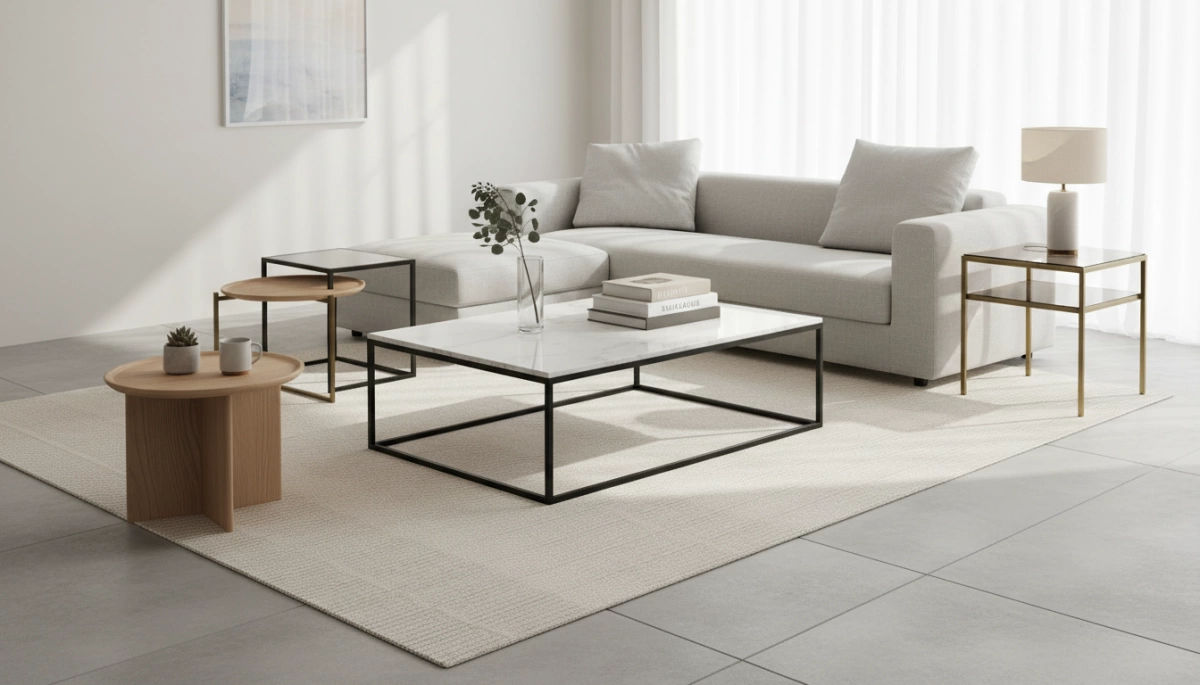
Minimal decor that keeps side tables useful
With side tables and end tables, I always keep the tops mostly clear so they actually work in everyday life. In a UK living room, surfaces get used a lot for tea, remotes and phones, so I aim for simple, low‑effort styling.
A few easy rules that work well:
- Keep at least half the table top empty for mugs, glasses and a book.
- Use one small lamp or one decorative piece, not three or four.
- Choose closed dishes or small trays for bits and bobs (remote, lip balm, charger) so it still looks tidy.
- Avoid tall, wobbly decor that’s easy to knock over, especially in smaller terraces and flats.
What to put on a tiny drink table vs larger side table
Tiny drink tables and accent tables for the living room need different styling from full-size side tables:
Tiny drink table (20–35 cm wide):
- Space for just one drink and maybe a coaster.
- Skip decor completely or keep it to one very slim item (like a tiny bud vase) if you’re not using it daily.
- Works best next to a tight armchair or in a small living room with limited floor space.
Larger side table / end table (40–60 cm wide):
- One table lamp or small plant.
- A small tray for remotes or glasses.
- Room for a stack of 1–2 small books, but keep them to one side so the table still feels practical.
This is how I pair a coffee table with side tables in most UK homes: the coffee table takes most of the decor, while side tables stay more functional.
Repeating colours and materials from the coffee table
To get a cohesive living room design, I repeat colours and materials from the main tables and coffee table so everything feels intentional, not random:
- If you have a wood and metal coffee table, echo that with black metal legs on a side table or a similar wood tone on a console table behind the sofa.
- For a glass coffee table, pick side tables with glass tops or similar light metals so the mix feels deliberate, not messy.
- Repeat two or three key colours (for example, black, oak, and soft grey) across your tables, lamps and decor.
- Use matching trays, similar ceramic finishes or the same fabric tone on lampshades to tie the living room coffee table ideas and side table decor together.
These small repeats make mixed tables and coffee tables look curated rather than thrown together, which is exactly the look most of my UK customers want.
Tables and Coffee Table Layout Examples
Standard sofa and coffee table layout
For a classic three–seater sofa, I keep the tables and coffee table layout simple and practical:
- Place the coffee table centred with the sofa, around 40–45 cm away for easy reach.
- Aim for a table that’s roughly two-thirds the length of the sofa so it feels balanced.
- Add one side table at the main “tea and phone” seat, or two end tables if you’ve got the space.
- Keep at least 75–90 cm of clear space for the main walkway in your living room table layout.
This setup works in most UK living rooms, from new-builds to Victorian terraces.
Sectionals with coffee tables and side tables
With a corner sofa or L-shaped sectional, the trick is to keep every seat within reach of a surface:
- Use a round or square coffee table in the centre so no one is too far from it.
- Add a slim console table behind the sofa if the back faces a wall or floats in the room – ideal for lamps and extra drinks space.
- Slot in nesting side tables at the open end of the sectional so you can move them around for guests.
- If space is tight, an ottoman as a coffee table (with a tray) softens the room and doubles as extra seating.
Small apartments and narrow living rooms
Most UK flats and terraces have tight living rooms, so I lean on flexible tables and coffee table combinations:
- Swap a chunky piece for a small living room coffee table with open legs or glass to keep things feeling light.
- Use narrow accent tables for living room corners instead of large end tables so walkways stay clear.
- Pick nesting side tables you can tuck under each other when not in use.
- In very narrow rooms, try a round coffee table vs rectangular to make it easier to move around the sofa.
These simple layout tweaks keep your living room usable, comfortable, and still stylish.
Common mistakes with tables and coffee table
When I’m planning tables and coffee table layouts for a UK living room, the same mistakes come up again and again. They’re easy to fix once you know what to look for.
Coffee tables that are too small, too tall, or too far away
If the coffee table isn’t the right size or position, the whole living room feels off.
- Too small: A tiny coffee table gets lost, especially with a large sofa or corner sofa. Aim for around half to two-thirds the length of your sofa so it feels grounded and actually useful.
- Too tall or too low: The basic coffee table height rule is simple – the top should sit roughly level with, or up to 5 cm below, the sofa seat. Anything much higher or lower feels awkward to use.
- Too far away: In a good living room table layout, you should be able to put a drink down without leaning forward too much. Keep the coffee table roughly 35–45 cm from the front of the sofa so it’s easy to reach but walkable.
- Wrong shape for the room: A big rectangular coffee table in a tight walkway or in front of a chaise can block traffic. In smaller UK living rooms, a round coffee table vs rectangular can be the difference between “flows well” and “always in the way”.
Side tables that make the room feel cramped
Side tables, end tables and a console table behind sofa can quietly ruin the room if they’re the wrong size.
- Too bulky next to the sofa: Chunky side tables rammed into a small space make the room feel boxed in. If you’ve got a deep, solid wood and metal coffee table set, go slimmer on the side tables so the corners of the room feel light.
- Wrong height: As a simple sofa table height guideline, side tables should sit roughly level with the sofa arm, not way higher or lower. If they’re too tall, lamps glare in your eyes; too low, and they’re awkward for a drink.
- Too many tables: In tighter UK homes and flats, adding a side table at every seat often clutters the space. Sometimes one nesting side table that moves around works better than three separate accent tables.
Overloading surfaces with decor so nothing feels usable
I see this a lot with modern coffee table decor and farmhouse coffee table styling – great pieces, just too many of them.
- No space for real life: If there’s no room for a mug, remote or laptop, the styling has gone too far. Keep at least one clear zone on your coffee table and each side table.
- Too many small bits: Lots of tiny ornaments make a coffee table feel busy. Use one tray, a couple of coffee table books and trays, and one stronger focal piece instead of ten small items.
- Side tables used as shelves: End tables piled high with candles, photo frames and plants stop being practical. Follow simple end table decor tips – 1–3 items max, and always leave space for a drink.
- No link between pieces: If your glass coffee table with wood side tables has completely different decor on each surface, the room feels messy. Repeat a couple of key colours or materials across your tables for a more cohesive living room design.
Avoiding these mistakes is the quickest way to get a more relaxed, curated living room look with tables and coffee table that actually work for everyday life in a UK home.
Creating Your Own Tables and Coffee Table Look
Before you jump online for new living room tables, I always recommend “shopping your home” first. You’ll be surprised what you already own that can work as a coffee table, side table or console table.
Shop your home before buying tables and coffee table
I start by walking room to room and pulling anything that could stand in as a table or coffee table:
- Sturdy stools or pouffes used as a small living room coffee table
- A storage trunk or ottoman as an ottoman as coffee table
- A slim chest of drawers or narrow unit as a console table behind sofa
- Spare bedside tables as accent tables for living room
In a UK home, space is tight, so reusing pieces saves money and keeps clutter down. Once I test them in the living room layout, I only buy what’s genuinely missing.
Questions I ask before choosing tables and coffee table
When I’m deciding on a tables and coffee table combo, I ask myself:
- Does this coffee table size work with my sofa – can everyone reach a drink easily?
- Does the coffee table height sit roughly level with the sofa seat?
- Do my side tables vs end tables actually get used, or are they just filling space?
- Is there enough furniture spacing and traffic flow, or do the tables feel in the way?
- Do the finishes tie into the room – e.g. could I repeat one wood and metal coffee table set tone elsewhere?
These checks stop me buying pieces that look nice online but don’t work in a real UK living room.
Turning a mix of tables into a cohesive look
A mix of coffee table, side tables and console tables can still feel curated and calm. I stick to a few simple rules:
- Keep to three main finishes max (for example: light oak, black metal, clear glass).
- Repeat one element at least twice – same metal, same wood tone, or similar leg style.
- Balance visual weight in interior design: chunky coffee table with slimmer nesting side tables or glass side tables.
- Use decor to link pieces – coffee table books and trays, a matching lamp base, or repeated black frames.
That’s how I build a cohesive living room design that feels personal, not like a matching set from a catalogue, while still working for everyday life in a UK home.