

If you’ve ever looked at your rooms and felt they seemed a little plain, even after fresh paint and new furniture, you’re not imagining it. Often, what’s missing is that crisp line where the wall meets the ceiling – and that’s where crown molding quietly transforms everything.
With the right ceiling trim styles, you can add instant architectural depth, make modest rooms feel taller, and give a standard space that “designer-finished” look. But before you start shopping, you’ll want to understand how MDF vs wood molding, polyurethane trim, and even plaster all perform differently – especially in real homes with real budgets.
In this guide, you’ll discover which crown molding profiles suit your style (from classic dentil to clean, modern lines), what it actually takes to install them (yes, including those intimidating compound mitre saw cuts and coping inside corners), and when it’s wiser to call in a professional. By the end, you’ll know whether crown molding is right for your home, which material to choose, and how to get a result that looks far more expensive than it really was.
Choosing the Best Crown Molding Material
When I help homeowners pick crown molding, I always start with the material. It affects the look, the cost, and how easy it is to install and maintain.
Solid Wood Crown Molding
Solid wood crown molding is the classic choice if you want a natural, upmarket feel.
Pros:
- Takes stain beautifully and suits traditional crown molding and period homes
- Strong, long‑lasting, and easy to repair or sand back
- Works well with dentil molding, cornice details and bespoke profiles
Cons:
- Higher cost than MDF or polyurethane trim
- Can warp or move slightly with humidity in UK homes
- Needs careful priming, sealing and regular repainting in humid rooms
I usually recommend solid wood in formal living rooms, dining rooms and period properties where character is key.
MDF Crown Molding for Painted Trim
If you want smooth, painted ceiling trim styles, MDF crown molding is often the best value.
- Best for: modern interior trim, sleek painted finishes, tight budgets
- Benefits:
- Cheaper than solid wood, but still looks high‑end once painted
- Very smooth surface for crisp white or two‑tone paint schemes
- Stable and less prone to warping than timber in centrally heated homes
Avoid MDF near heavy moisture, like over showers or in poorly ventilated bathrooms, as it can swell if water gets in.
Polyurethane and Foam Crown Molding
For easy installs and tricky ceilings, I lean towards polyurethane trim and foam crown molding.
- Why I like it:
- Lightweight and easy to cut, even for DIY home improvement projects
- Ideal for vaulted ceiling trim and long runs where weight is an issue
- Moisture‑resistant, so great in kitchens and bathrooms
- Often pre‑primed, needing just a light sand and paint for a clean finish
This is a smart option if you want quick, tidy results without hiring a large team.
Plaster Crown Molding for Historic or Luxury Homes
Plaster crown molding (often called plaster cornice) suits historic and high‑end interiors.
- Strengths:
- Sharp, crisp detailing for period and traditional crown molding designs
- Perfect for Georgian, Victorian and Edwardian homes in the UK
- Can be custom‑run on site to match original cornice molding
Plaster is heavier and usually needs a skilled installer, so it’s more of an investment piece than a DIY option.
Best Crown Molding Materials by Room
Here’s how I usually match crown molding styles and materials to typical UK rooms:
| Room Type | Recommended Material | Why It Works |
|---|---|---|
| Kitchen | Polyurethane / foam crown molding | Moisture‑resistant, easy to clean, ideal for cabinets and ceilings |
| Bathroom | Polyurethane trim or good quality hardwood | Handles steam better than MDF, stays stable over time |
| Living Room | Solid wood or MDF crown molding | Warm, refined look; MDF is ideal for painted modern schemes |
If you’re unsure, think this way:
- Want durability and character? Go solid wood or plaster.
- Want a smooth painted look on a budget? Choose MDF.
- Want easy fitting and moisture resistance? Go polyurethane or foam.
Crown molding styles and profiles
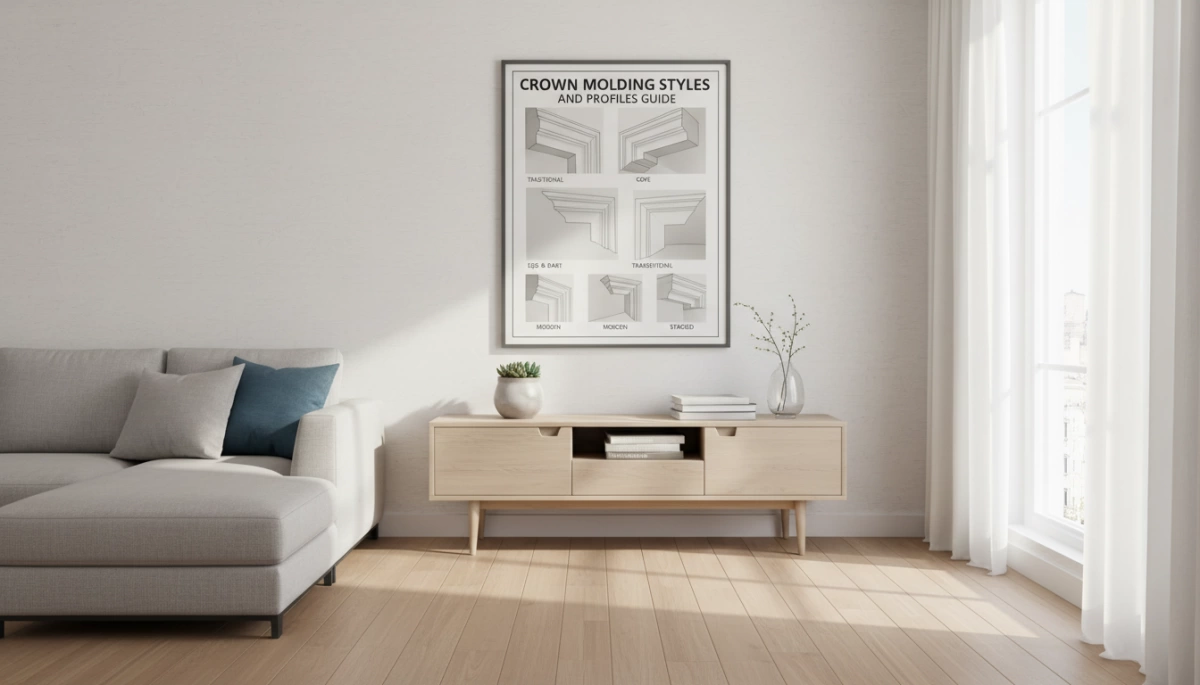
When I’m planning crown molding for a UK home, I always start with style and profile. The right ceiling trim style can completely change how a room feels.
Traditional and colonial crown molding designs
Traditional crown molding styles suit period UK homes, terraces and semis with character features. I lean on:
- Ogee and dentil molding for formal living rooms and dining rooms
- Layered cornice molding to tie in with ceiling roses and picture rails
- Soft curves and small beads that match existing baseboards and casing
These traditional crown molding profiles work best in rooms with picture rails, fireplaces and original doors, and they sit well with neutral paint and classic interiors.
Craftsman and Shaker crown molding profiles
For simple, honest joinery, I prefer Craftsman crown molding and Shaker style trim:
- Clean, squared profiles with very little curve
- Works brilliantly with painted MDF skirting and simple door casings
- Ideal for 1930s houses, ex‑local authority homes and modern refurbs aiming for a calm, minimal look
These profiles are easy to keep clean and don’t fight with contemporary kitchen cabinets or fitted wardrobes.
Modern and contemporary crown molding styles
In new‑builds and modern flats, I keep crown molding styles slim and crisp:
- Flat, stepped or very shallow profiles for a modern interior trim look
- Long, straight runs that work with open‑plan layouts
- Perfect for vaulted ceiling trim when you want definition without fuss
If you like LED features, these modern profiles pair well with crown molding with LED lighting channels.
Cove, cornice and step crown profiles
A few core crown molding profiles cover most UK projects:
- Cove molding: a simple concave curve; soft, understated, ideal for small rooms and low ceilings
- Cornice molding: broader, more detailed, suited to high ceilings and period properties
- Step crown profiles: square, layered steps; great for contemporary and Art Deco‑inspired interiors
I mix these with simple skirting and architraves so the whole trim package feels intentional.
Crown molding size and ceiling height
Getting the size right matters more than the pattern. As a rule of thumb for UK ceilings:
- 2.2–2.4 m ceilings (many new‑builds): keep crown molding small and simple, roughly 60–90 mm projection
- 2.5–2.7 m ceilings: medium profiles around 90–120 mm sit well without feeling heavy
- 3 m+ ceilings in Victorian or Edwardian homes: larger cornice molding, 120–170 mm or layered builds
I always check how the crown molding lines up with door casings, window trim and baseboards so the proportions feel balanced across the whole room.
DIY Crown Molding vs Hiring a Pro
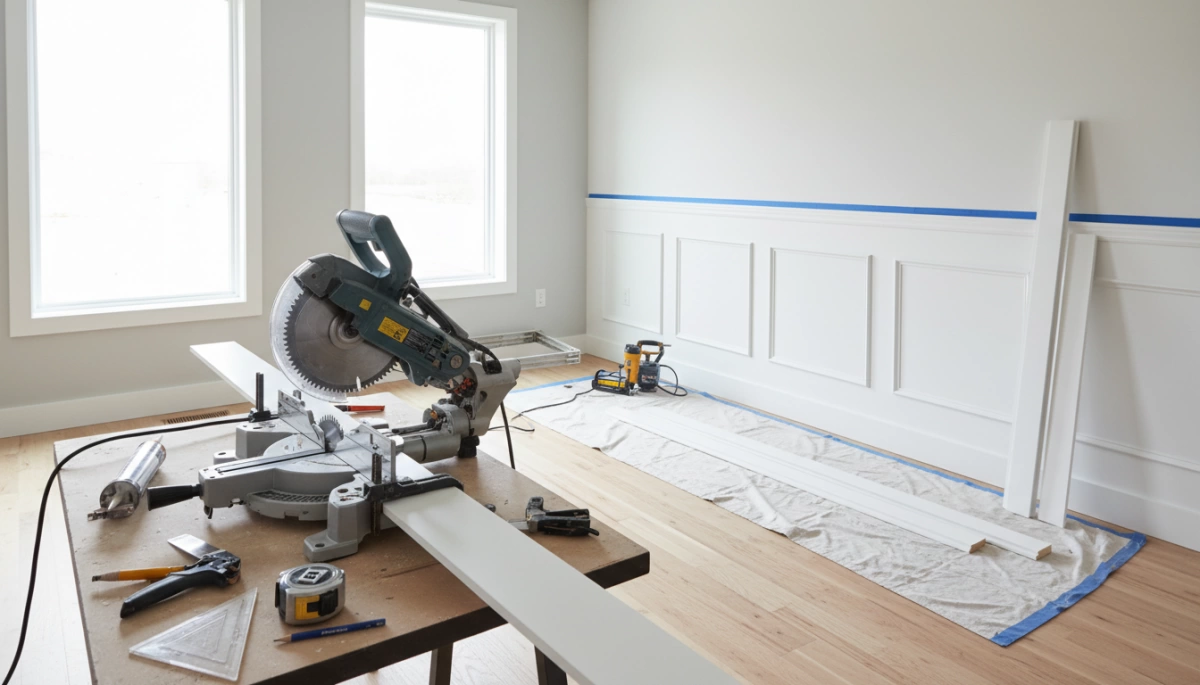
How hard is DIY crown molding?
Crown molding looks simple, but it’s one of the trickier bits of DIY home improvement. In a typical UK home you’re dealing with:
- Out‑of‑square walls and ceilings
- Awkward corners, chimney breasts and alcoves
- Old plaster that can crumble when fixing into it
If you’re confident with a tape measure, angles, and power tools, you can DIY crown molding. If you’re new to trim work, expect a learning curve and a few wasted lengths.
Tools you need for crown molding installation
For a clean, modern interior trim finish you’ll usually need:
- Compound mitre saw (essential for accurate angle cuts)
- Fine‑tooth saw and mitre box (bare minimum for small jobs)
- Nail gun and compressor or hammer and lost‑head nails
- Stud/joist detector and good quality filler
- Caulk and paint finish, dust sheets, PPE (mask, goggles, ear protection)
Having the right tools matters more than people think; it’s the difference between sharp ceiling trim styles and gappy, messy joints.
Cutting crown molding corners with a mitre saw
Most crown molding styles need compound cuts:
- Set the mitre and bevel angles on the saw rather than guessing
- Hold the cornice molding in the saw as it will sit on the wall/ceiling
- Always cut slightly long, then trim back for a tight fit
- Label each piece (left, right, inside, outside) to avoid mix‑ups
For vaulted ceiling trim or angled ceilings, test off‑cuts first and write down the angle settings that work.
Coping vs mitering inside corners
In older UK properties, inside corners are rarely perfect. That’s where coping inside corners beats simple mitre cuts:
- Mitering: both pieces cut at 45°. Quick, but small gaps show as the house moves
- Coping: one piece runs straight in, the other is cut to follow the moulding profile
Coping takes longer to learn, but it hides movement and gives tighter joints on traditional crown molding, cove molding and more detailed dentil molding.
When to hire a carpenter for crown molding
I always tell customers: bring in a pro when the risk of ruining the finish is higher than the saving:
- You want flawless cornice molding in a main living room or period hallway
- You’ve chosen expensive solid wood crown molding or plaster crown molding
- The room has lots of angles, bay windows or a vaulted ceiling
- You haven’t got a compound mitre saw and don’t plan to buy one
A local carpenter who does crown molding regularly will cut labour time, reduce waste and usually deliver better value than a full DIY redo, especially once you factor in crown molding installation cost and your own time.
Crown moulding design ideas
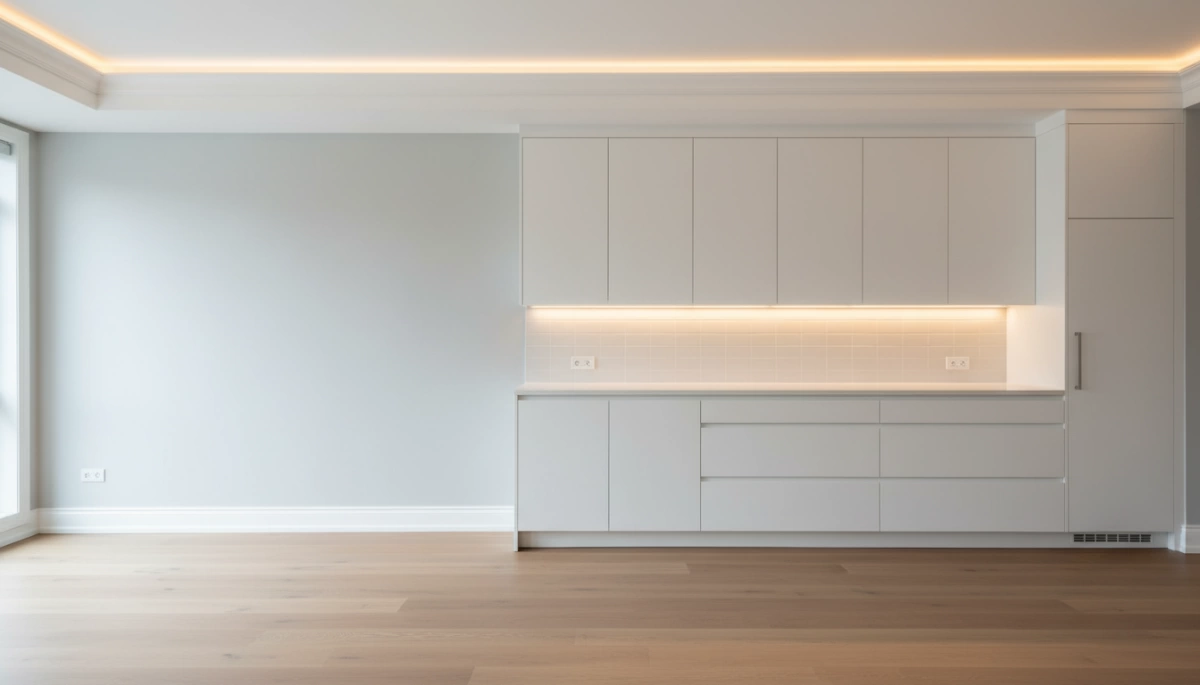
Crown moulding with LED lighting
Crown moulding is a simple way to add indirect lighting without seeing the fittings. In UK homes, I see three options work best:
- Fit a small cove or cornice crown moulding 50–75 mm off the ceiling and run LED strips in the gap for a soft glow.
- Use polyurethane trim or lightweight foam crown moulding if you’re sticking LEDs to it – it handles heat changes better than MDF.
- Add a dimmer so the crown moulding with LED lighting can switch from task lighting to a warm evening mood.
It works especially well in living rooms, bedrooms and cinema rooms where you want ambience, not harsh downlights.
Crown moulding on kitchen cabinets
If you want a built‑in look on standard kitchen units, crown moulding on top of the cabinets makes a big difference:
- Run crown moulding on kitchen cabinets up to the ceiling so there’s no dust‑collecting gap.
- Match the profile to your style: Shaker style trim or simple Craftsman crown moulding for clean lines, more detailed traditional crown moulding for period kitchens.
- Use moisture‑resistant MDF vs wood moulding wisely – MDF for painted kitchens, solid wood crown moulding for stained timber doors.
This is an easy win if you’re refreshing an older kitchen without changing the carcasses.
Crown moulding paint ideas and two‑tone schemes
Colour makes as much impact as the profile itself. For UK interiors, I tend to use:
- Ceiling and crown moulding same colour (usually white or off‑white) for a taller, cleaner look.
- Two‑tone crown moulding – walls in colour, ceiling and crown in a warm white – for modern interior trim that still looks calm.
- Darker cornice moulding in deep greens, blues or charcoal in period homes to frame the ceiling and show off dentil moulding or more ornate profiles.
Use a durable eggshell or satin finish so the caulk and paint finish stays sharp and easy to wipe.
Coordinating crown moulding with baseboards and casing
To keep everything looking intentional, tie your ceiling trim styles into the rest of the room:
- Match the style: Craftsman crown moulding with square‑edged baseboards and casing, or curved traditional crown with more detailed skirting and architraves.
- Keep proportions balanced – taller skirting boards need a slightly larger crown moulding profile so the room doesn’t feel top‑heavy or bottom‑heavy.
- For modern homes, keep all trim simple: one or two crown moulding profiles throughout the house so it feels consistent from hallway to living room.
Done right, the crown moulding becomes part of a full trim story, not just a strip at the ceiling line.
Crown moulding cost and value in the UK
Crown moulding material cost comparison
When I price crown moulding in the UK, I look at both material and long‑term value:
- MDF crown moulding: from around £3–£6 per metre primed; best for painted ceiling trim styles and modern interior trim on a budget.
- Solid wood crown moulding (pine, oak, etc.): usually £6–£20+ per metre depending on species and profile; ideal if you want classic traditional crown moulding or Craftsman crown moulding with visible grain.
- Polyurethane and foam crown moulding: roughly £5–£12 per metre; lightweight, good for DIY crown moulding and tricky ceilings, including vaulted ceiling trim.
- Plaster crown moulding / cornice moulding: from £20 per metre upwards; suits period homes and luxury spaces where you want deep cove moulding, dentil moulding or ornate cornice profiles.
I always match the material to the room: MDF or polyurethane for most modern homes, real wood or plaster for premium projects.
Crown moulding labour cost per linear foot (metre)
In the UK, most fitters still think in metres, but per‑foot costs convert easily:
- Skilled carpenter or decorator: around £10–£25 per metre (about £3–£8 per linear foot) for standard crown moulding installation on straight runs.
- Complex jobs (high ceilings, vaulted ceiling trim, lots of coping inside corners): expect £25–£40 per metre.
- Plaster cornice: often priced as a full supply‑and‑fit package, commonly £35–£80 per metre depending on profile and access.
Rates vary across the UK; London and the South East usually sit at the top of these ranges.
Budgeting a crown moulding project
To budget a crown moulding project properly, I break it down:
- Measure the room: add up all wall lengths to get total metres of crown moulding required (add 10–15% for waste and mis‑cuts when using a compound mitre saw).
- Choose the profile: simple cove moulding or step crown profiles are cheaper than deep cornice or dentil moulding.
- Add materials: moulding, adhesive, fixings, filler, caulk and paint finish.
- Add labour: based on local rates per metre and the number of rooms.
- Include extras:
- crown moulding with LED lighting or integrated pelmets,
- crown moulding for kitchen cabinets,
- scaffolding or towers for very high ceilings.
For a typical UK living room, most clients land somewhere between a few hundred pounds and £1,500+, depending on material and finish.
How crown moulding impacts home resale value
Crown moulding can be a strong, low‑risk upgrade in the UK if it’s done well:
- Perceived quality: clean, well‑proportioned crown moulding profiles instantly make a room feel more finished and expensive, especially when coordinated with baseboards and casing.
- Best rooms for ROI: living rooms, entrance halls and main bedrooms give the most bang for your buck; crown moulding in kitchens (especially on cabinets) also reads as a high‑end touch.
- Modern buyers: many UK buyers expect some level of modern interior trim in renovated homes; neat DIY home improvement like this helps listings stand out in photos.
- Return on investment: while exact numbers vary, crown moulding installation cost is relatively low compared to the uplift in perceived value, so it often pays for itself as part of wider décor upgrades.
When I’m planning resale‑focused work, I push for simple, timeless crown moulding styles, good prep, and sharp caulk and paint finish rather than the most expensive profile.